
Peru 2026
Cusco, Peru 2026
Second stop on 2026 South America Walkabout
Peru was the second stop on my 2026 South America Walkabout after Quito, Equador. Breathing was noticeably harder in Quito and Cusco is an even higher elevation of over 3,400 meters. Or, if I convert that to Imperial…let’s see…borrow one…carry the three…subtract 32 degrees…ask Google…11,000 feet. The higher elevation and growing distance south of the equator during winter in the southern hemisphere dropped the temperature range to the 40’s in the morning to the 60’s during the day.
This time, I didn’t pick the hotel; the Intrepid tour I purchased for Machu Picchu did. But in order to meet the required start and end times of the tour, I reserved an additional day before and after the tour at the same hotel. Plus the Inkarri Cusco Hotel met my requirements of 1) cheap, and 2) located near the historic city center. The room even included toilet paper, something I learned to not take for granted. No heat or A/C; only a plug-in electric radiator-type space heater that did little to take the chill out of the room. Just like the hotel in Quito, it was on a very narrow street with cars and motorcycles constantly zipping by with barely enough room for pedestrians to squeeze by on the 18 inch-wide sidewalk. Or for the metric-minded, three liters. The Incas were amazing engineers and constructed some incredible wonders that I don’t think could be accomplished today with modern equipment. But they sure didn’t know how to allow for cars in their city planning. Unlike the haunted hotel in Quito, however, there were a lot of other guests staying at this hotel and there was always someone at the front desk.
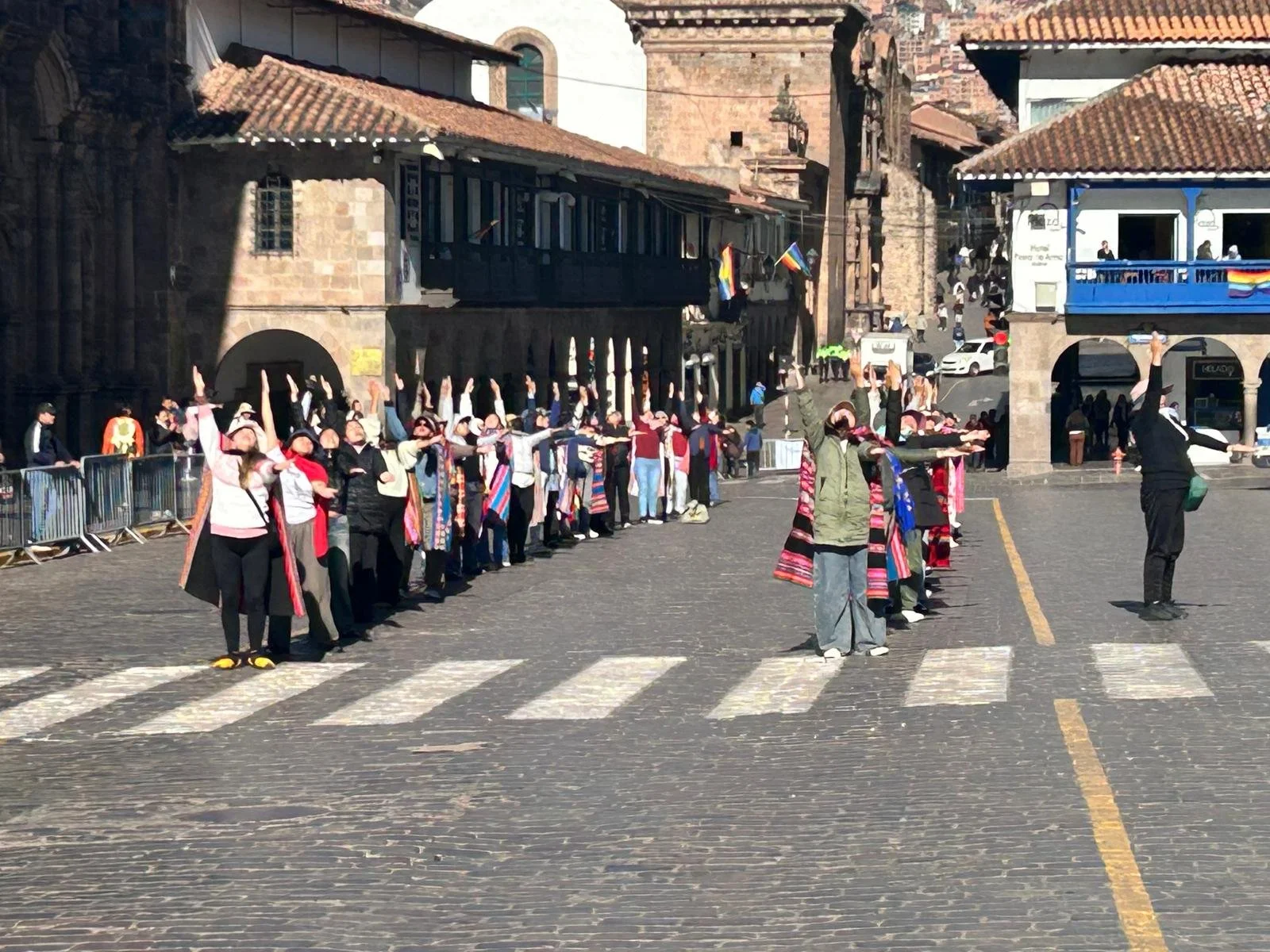
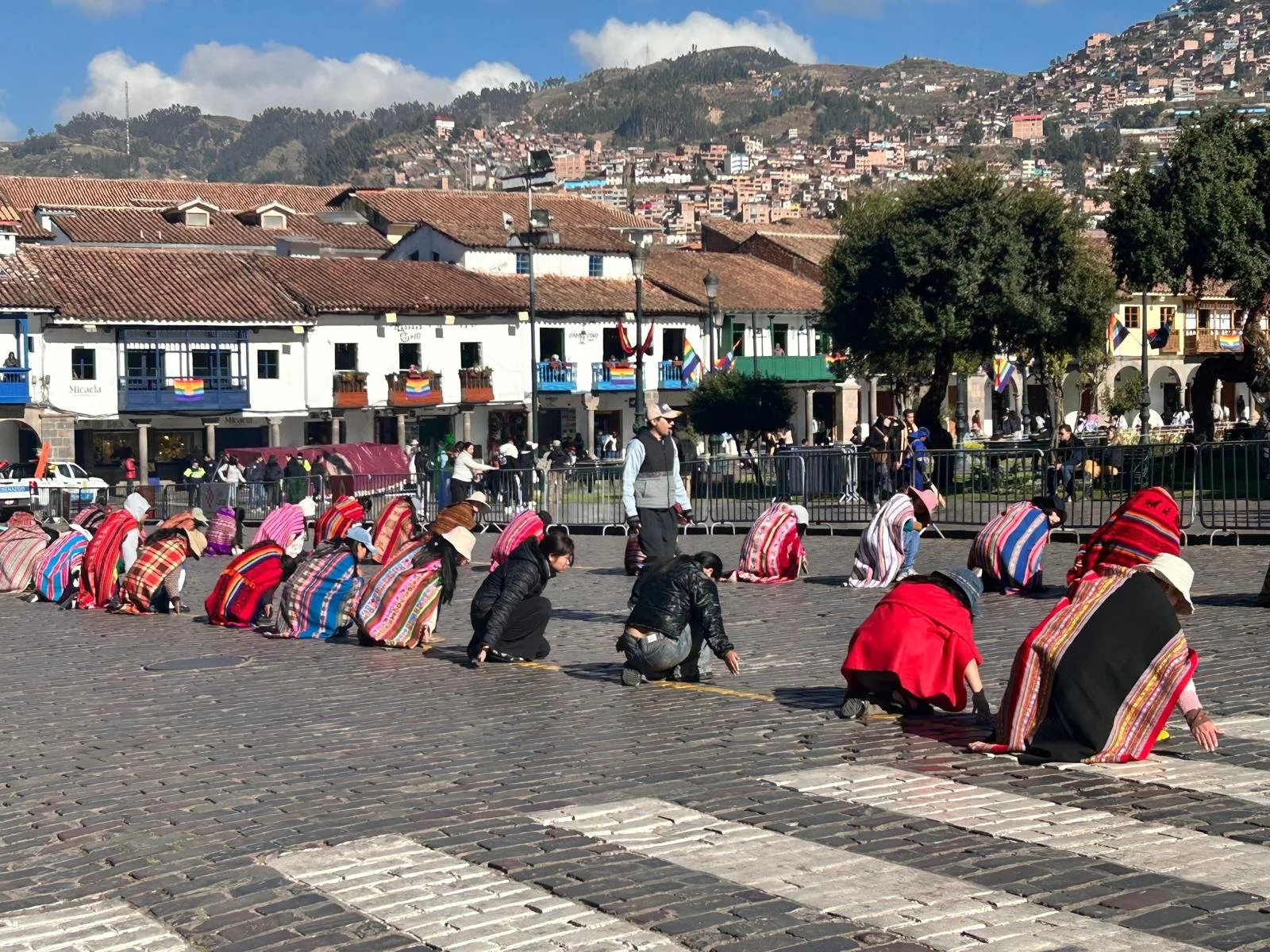
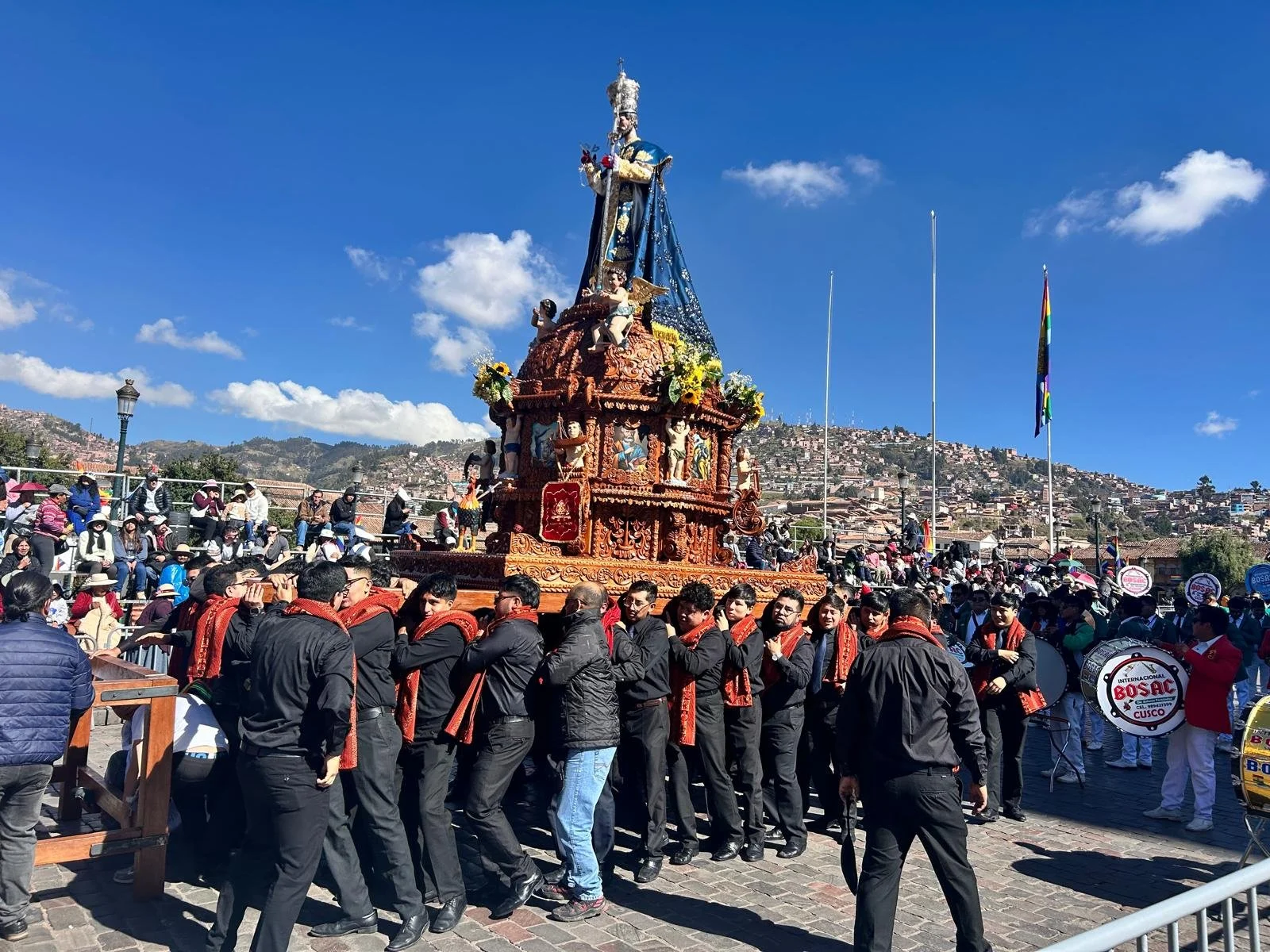
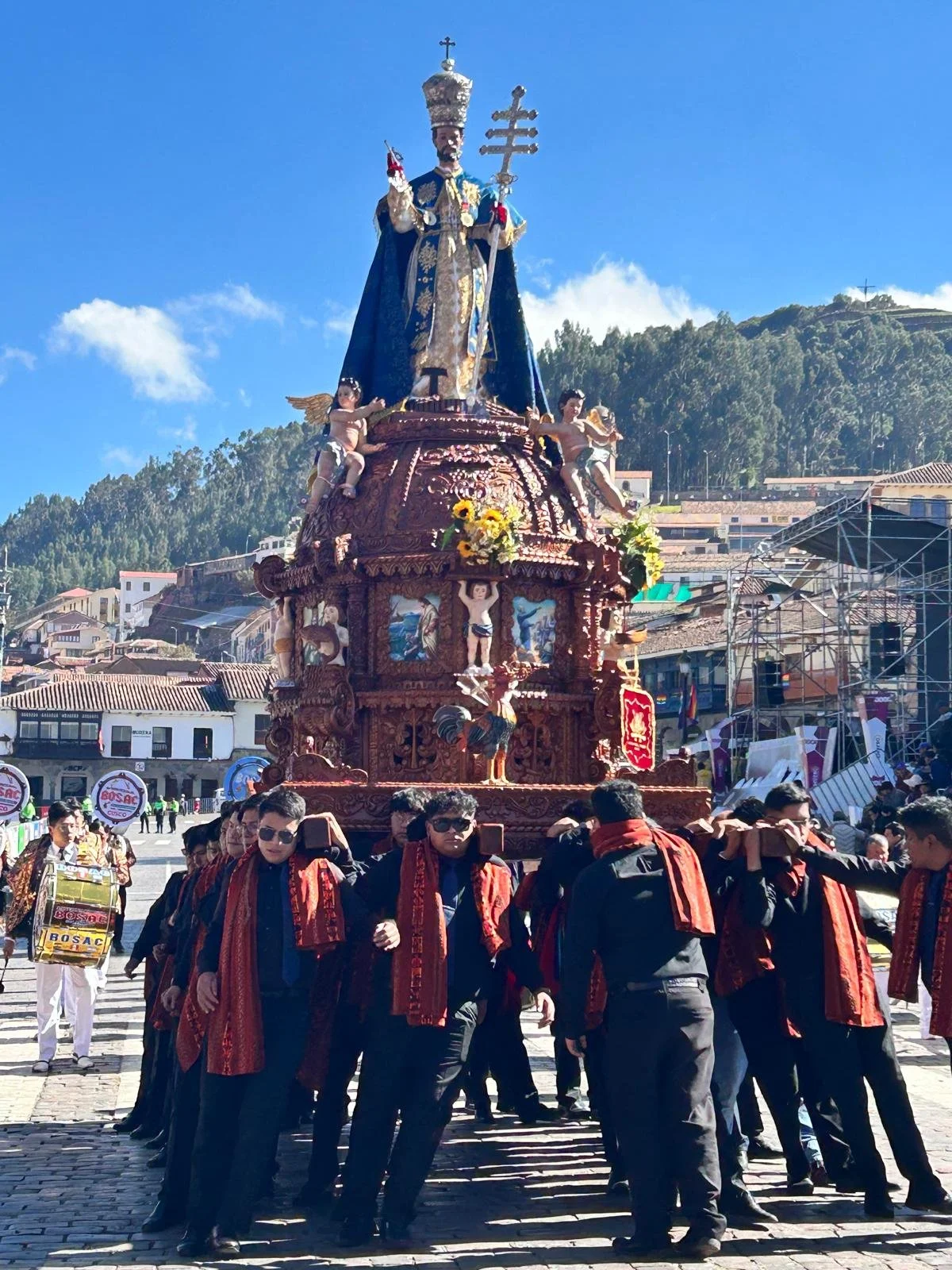
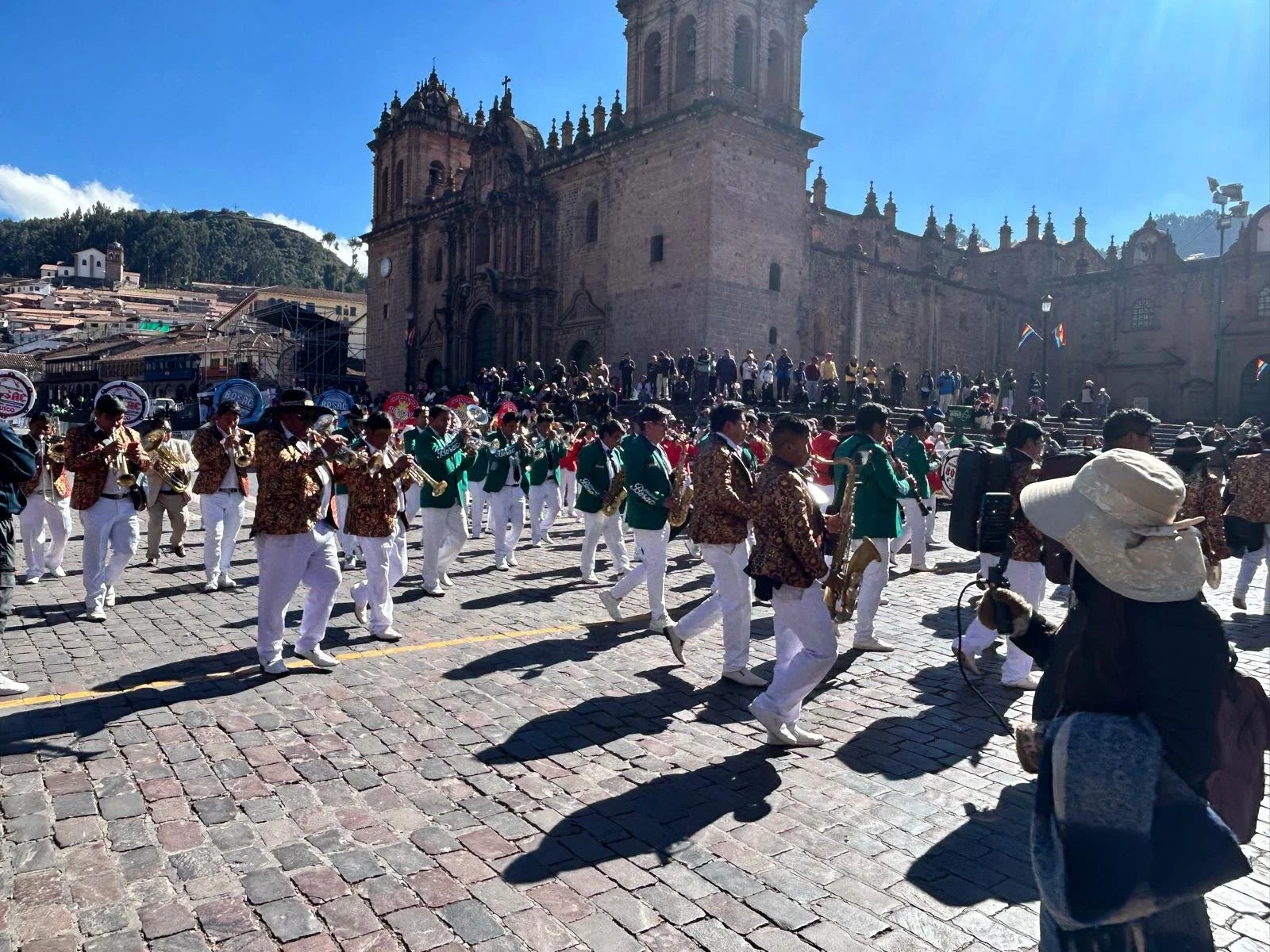
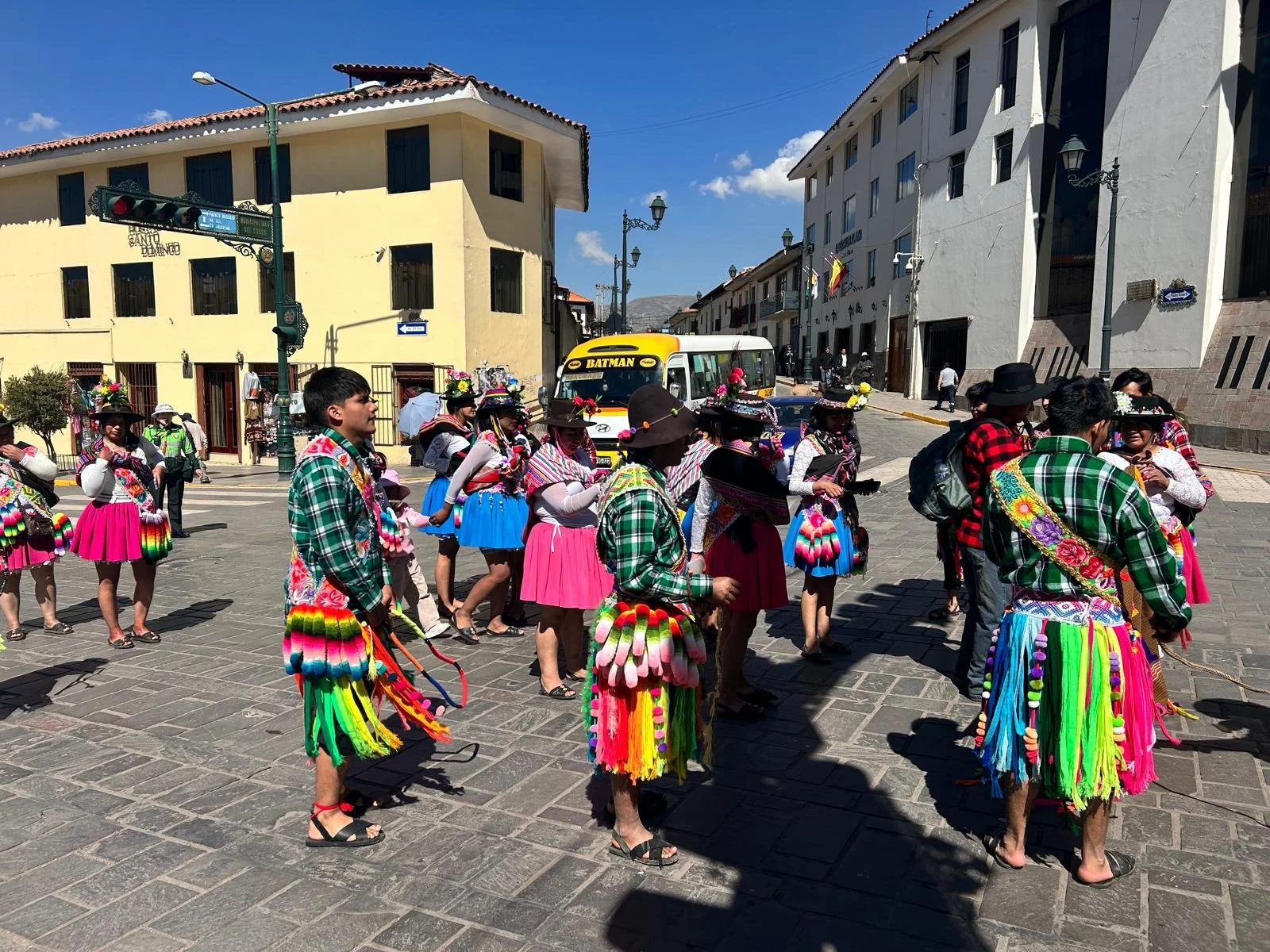
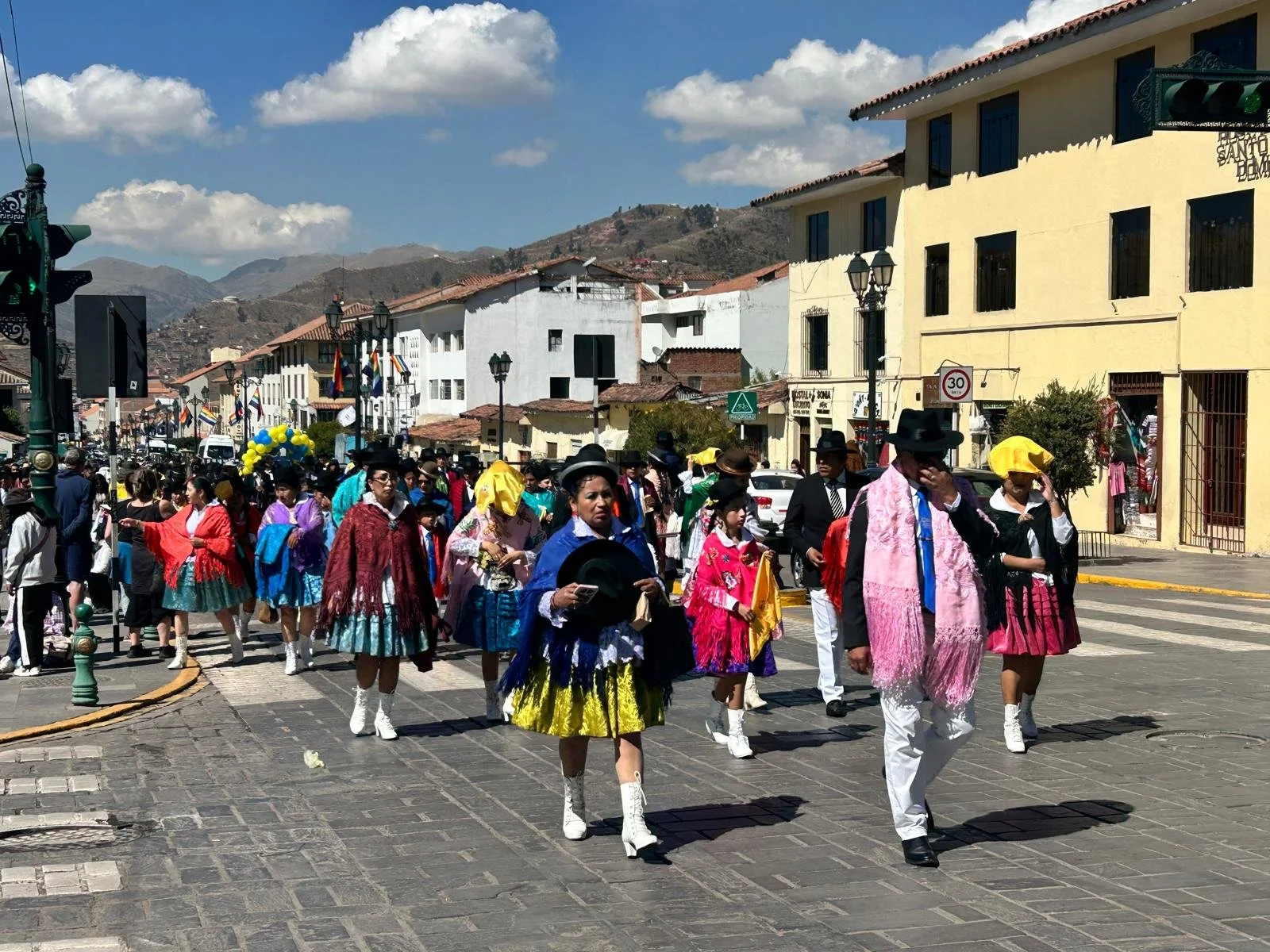
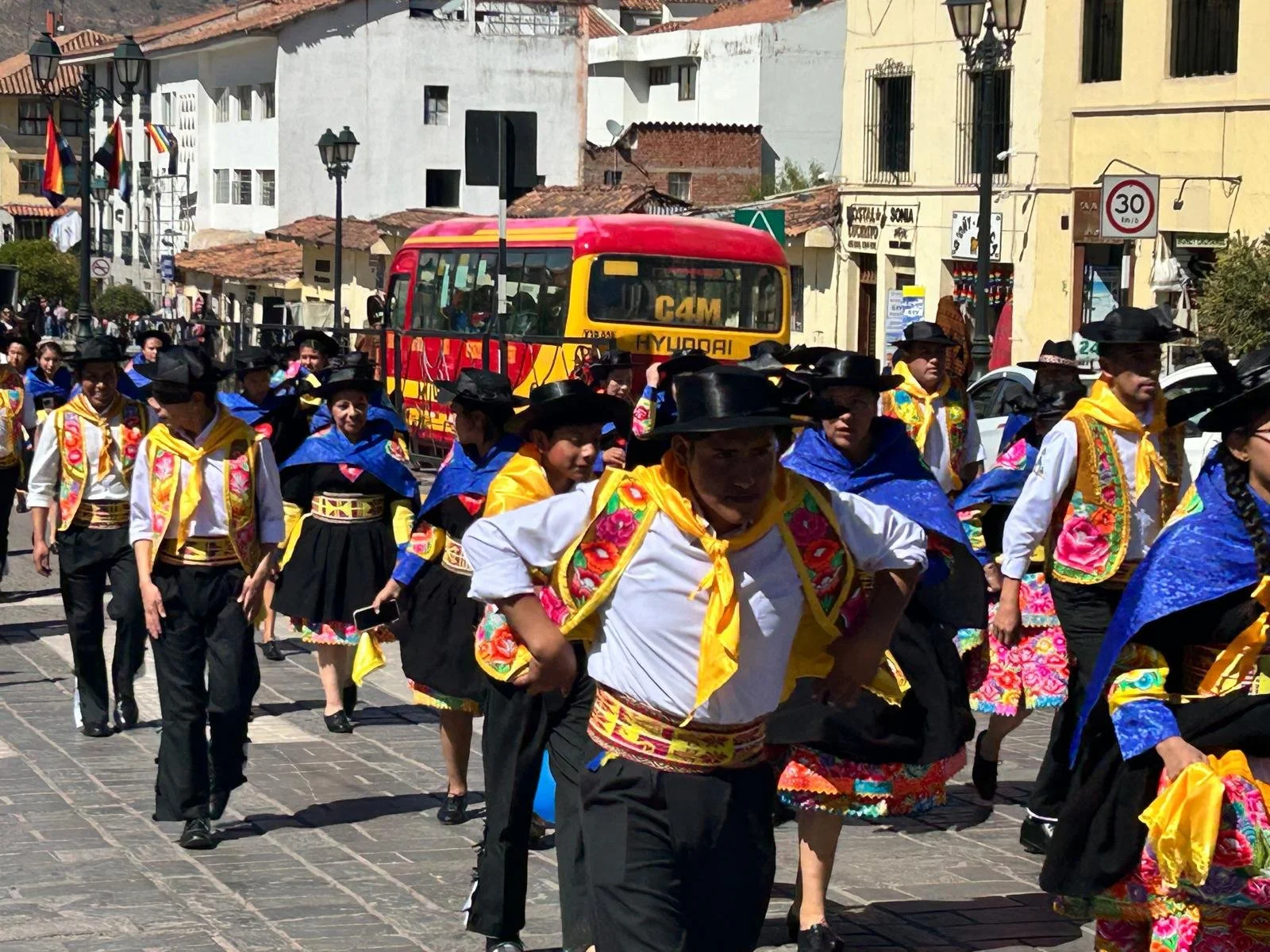
My first day was free until mid-afternoon so I headed out for the town square, the Plaza de Armas, about five or six blocks away. To my surprise, there were grandstands set up in front of the Catedral del Cuzco on the square. A full marching band was standing in front of the church playing local music. A hundred or more Peruvians in colorful local garb paraded around the square doing ritual movements to the music. After the parade, separate groups of adults, teens, and children performed traditional dances and routines for an hour or more in groups around the plaza. The culmination of the morning parades was several giant floats honoring saints that emerged from the Catedral del Cuzco, each carried by several dozen men dressed in black with a red sash. From the expressions on their faces, these floats were extremely heavy. About every 100 yards, they would set the float down and rest while a marching band that followed the float belted out a tune.
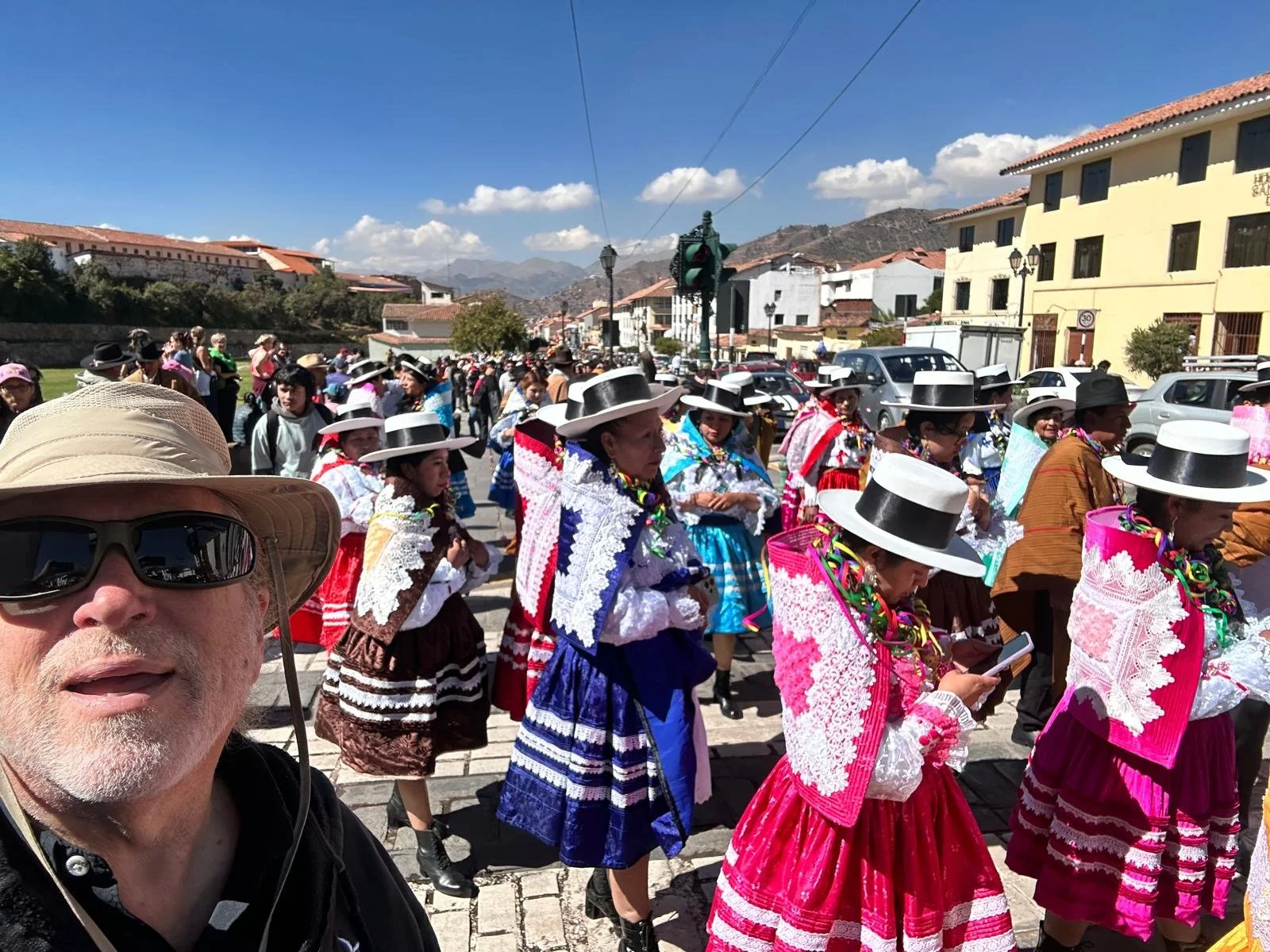
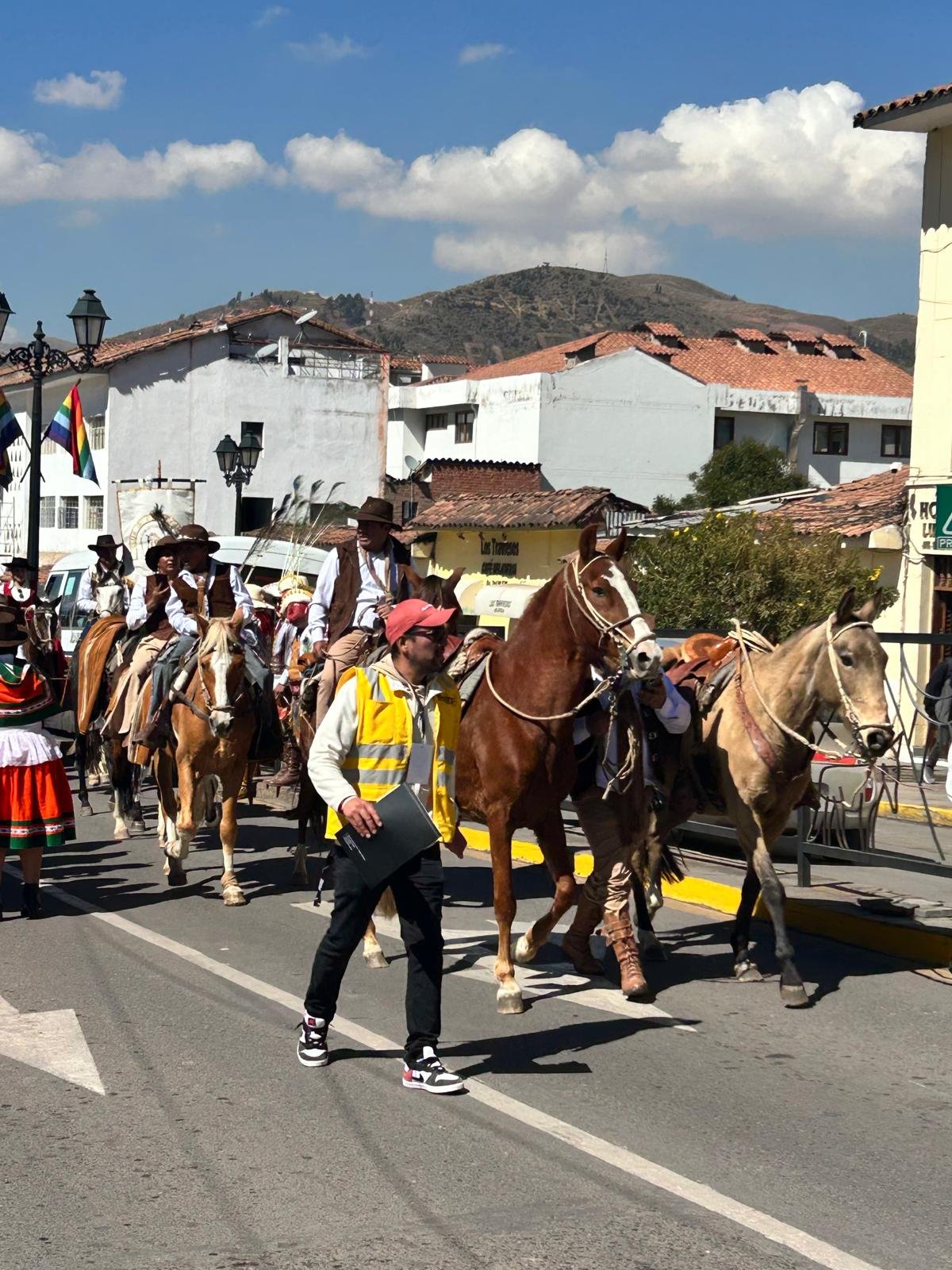
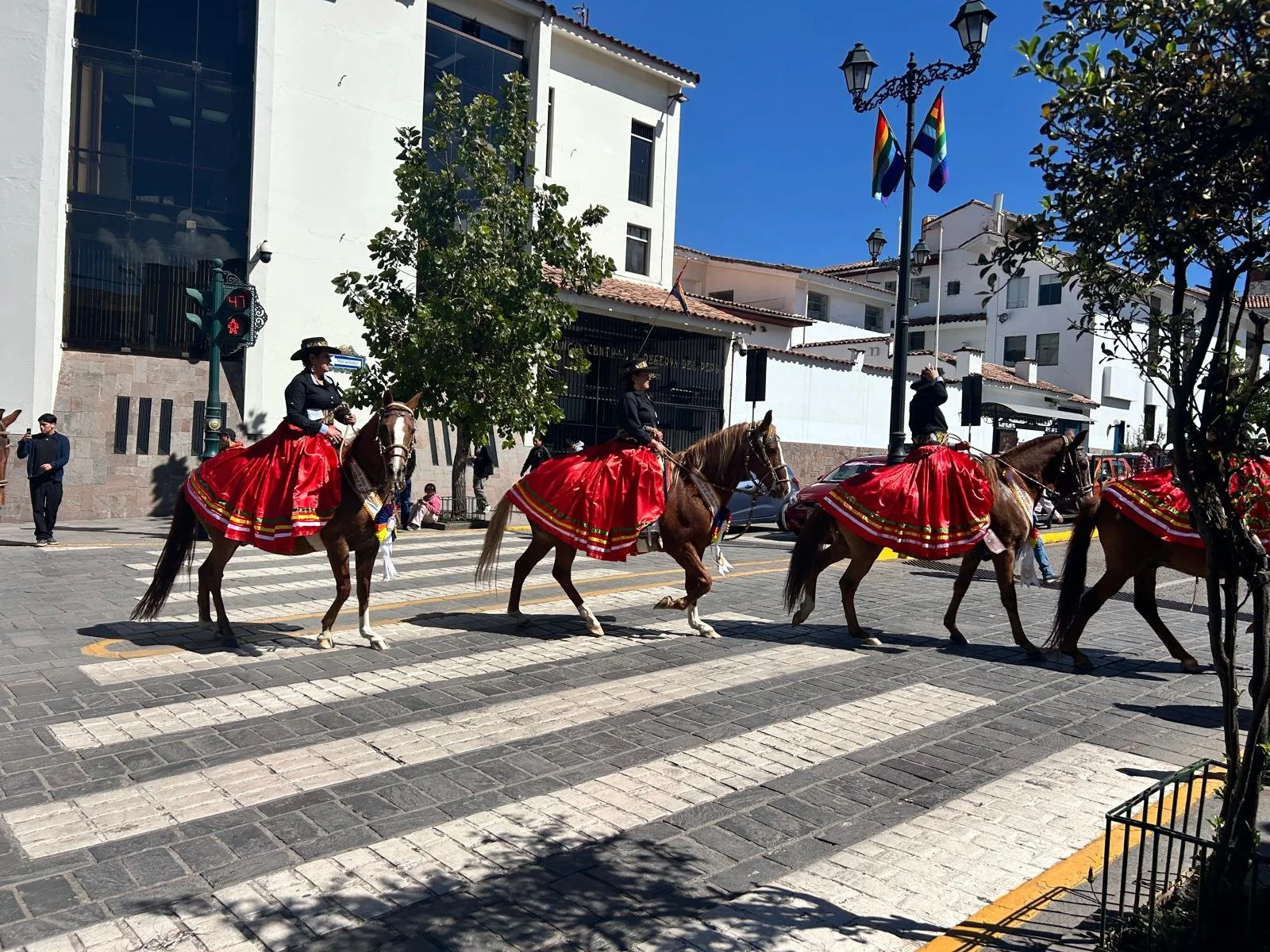
It seemed to me that the celebration was winding down and I saw some horses and riders pass by one of the streets in the far corner of the square, so I thought I would wander down that street to see what was up. I ran into the staging for another parade by dozens of groups, each group decked out in a unique traditional garb. Most walked, but a couple of the groups were on horseback. I watched until the last of these formed up and marched by, headed to the Plaza, then wandered back to my hotel to meet my tour guide. I asked several times why all the parades and just kept getting a reply that June is a celebration month and that I should see the really big celebration on June 21. And it didn’t stop with the parades. There were fireworks from dark until about midnight all three nights I spent in Cusco. While I tried to sleep.
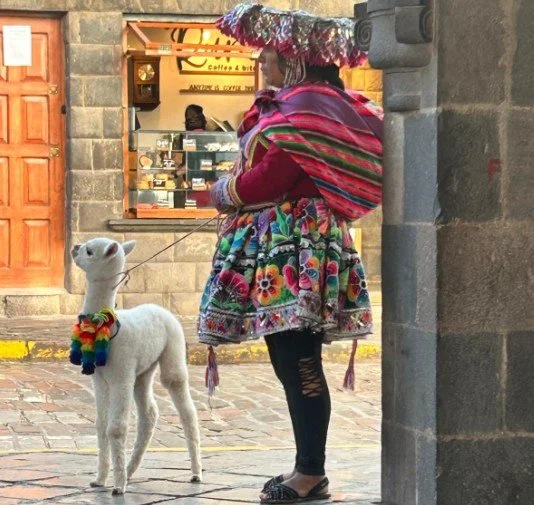
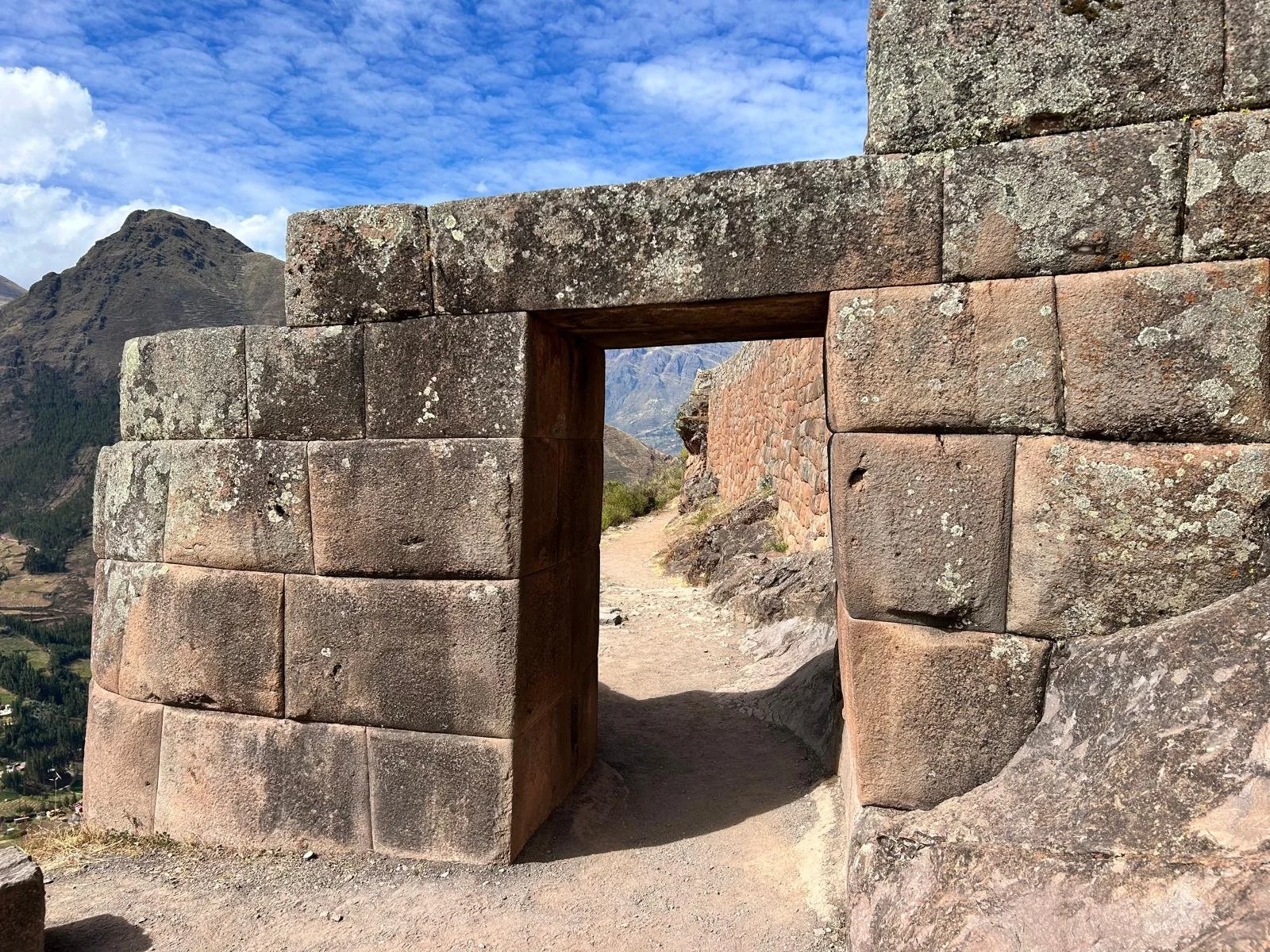
My tour for Machu Picchu covered three days. The first day started in the afternoon with an orientation of all meeting points and tickets (two buses, two trains and entry tickets for the Sacred Valley and Machu Picchu) for the following two days. My guide, Beto, took me around Cusco and pointed out the original Inca trail into the town and explained some of the original construction of walls and roads. The Incas had trails all over the Andes connecting all their towns. It has been estimated that at their peak, these trails may have covered as many as 28,000 miles. Nearly all up, down, or around mountains. The Incas never had the wheel and the closest thing they had to a draft animal were the llamas and alpacas they domesticated. However, llamas and alpacas can only carry about 50 pounds in loads, so they could not be ridden. All travel was on foot. For comparison, the greater Houston metropolitan area has 20,235 total roadway miles. However, unlike the Incas, whose trails and roads are still functioning after 500 years, about 20,000 of Houston’s total roadway miles are either under repairs or have random lane closures for no apparent reason.
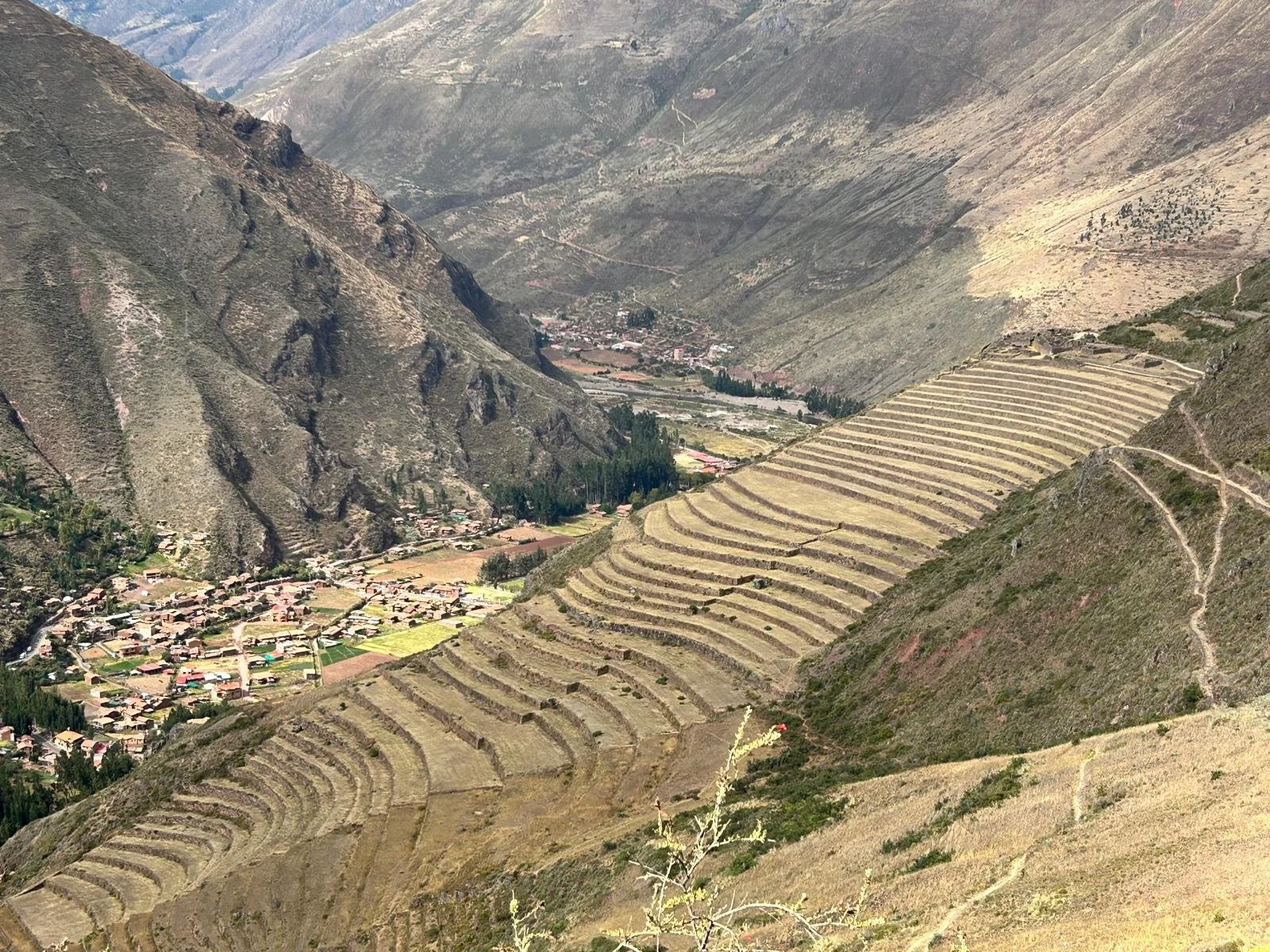
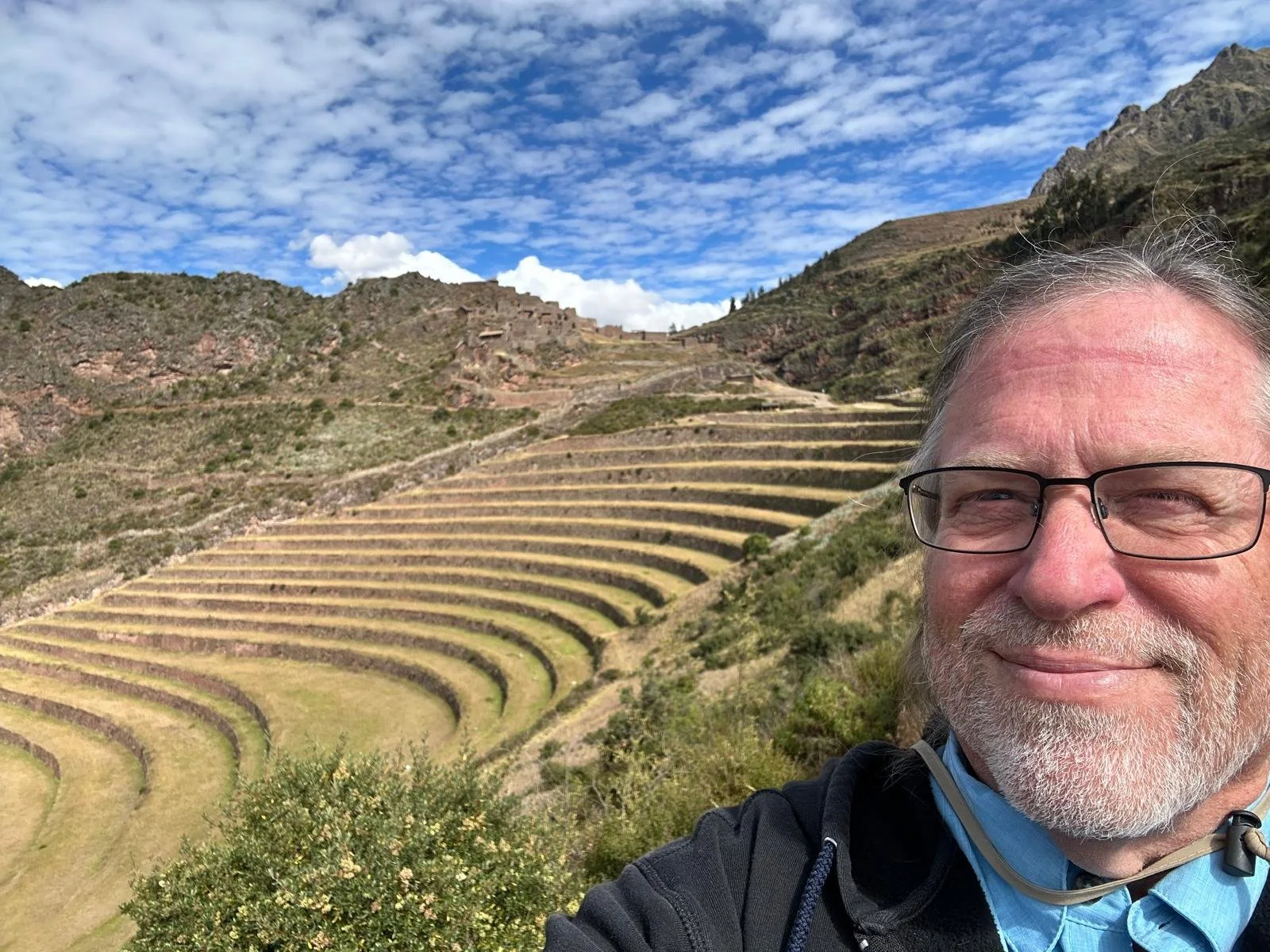
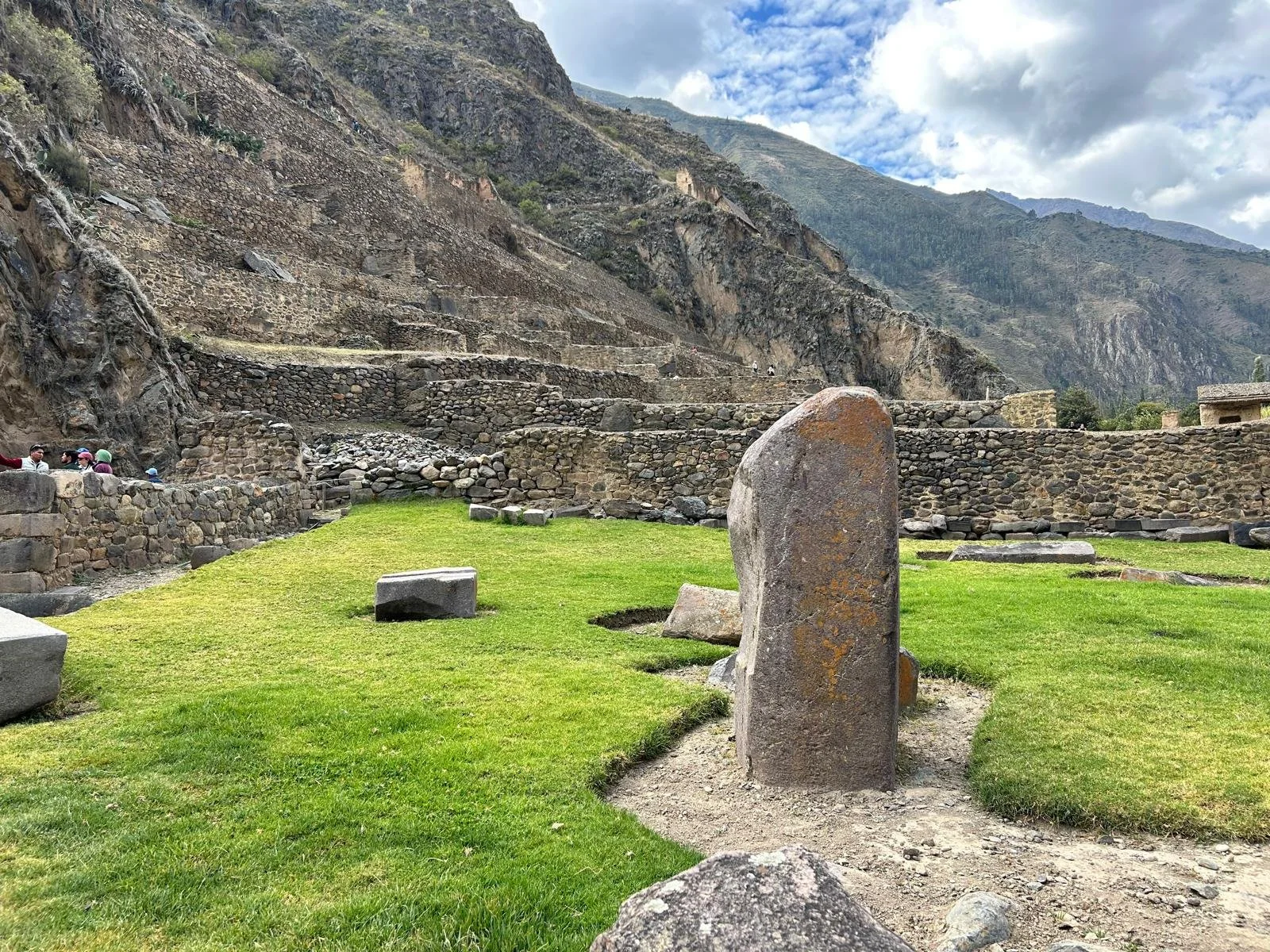
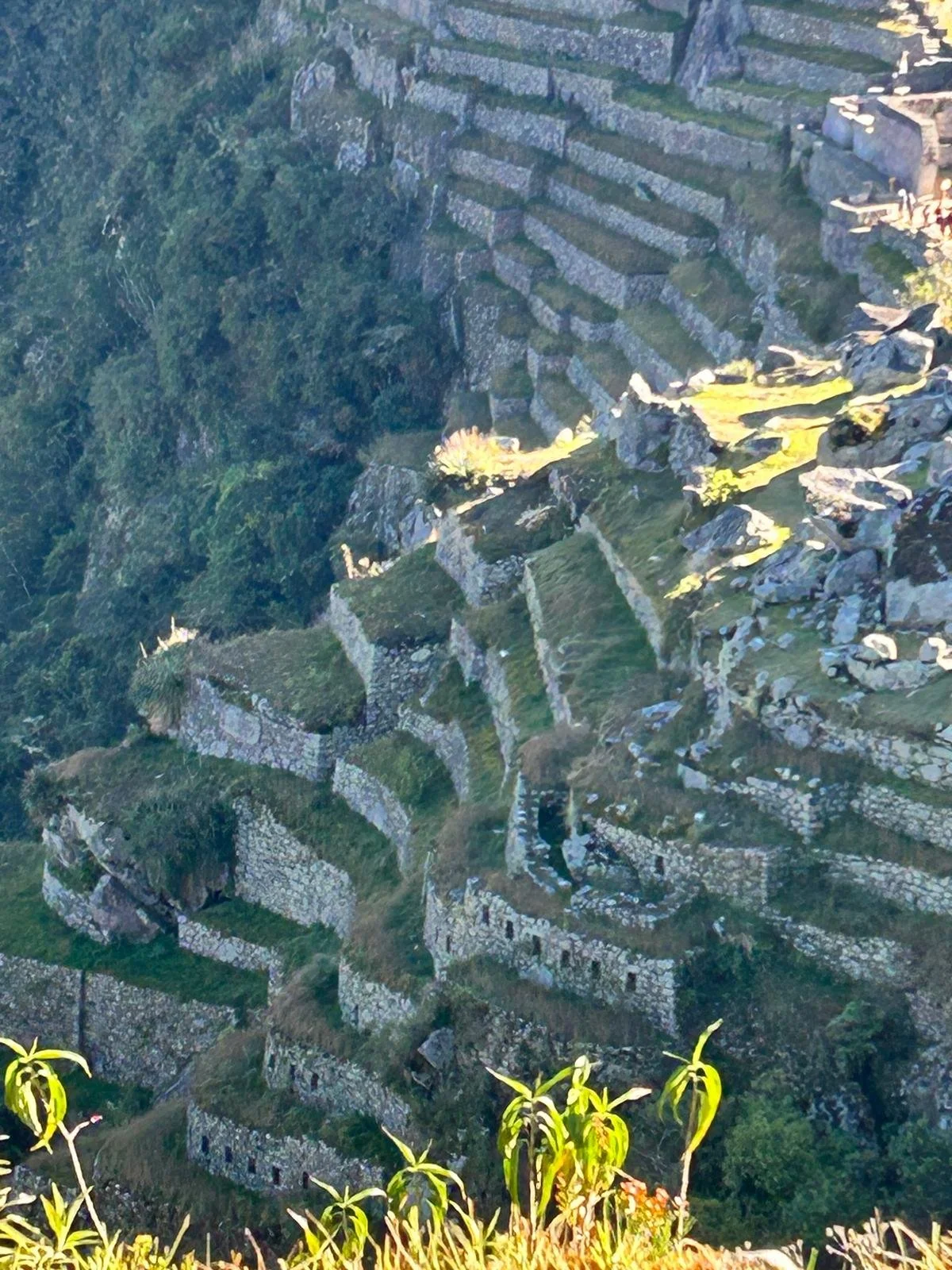
The second day was a group tour led by Raul with about 14 other tourists. We visited the Sacred Valley in the morning, which was the primary agricultural site for the Incas. They sculpted the mountainsides into terraced fields, using rocks cut out to build the terrace walls. They also used rocks to fill the bottom of the terrace which allowed water to effectively irrigate downward underground. Finally they filled the terrace tops with fertile soil hauled from the river valleys. Some of the terraces extended so far from the bottom to high up on the mountain that the climate varied and enabled a variety of crops to be planted. They built storehouses for the excess production at the top of the mountains where the high, dry air helped with preservation.
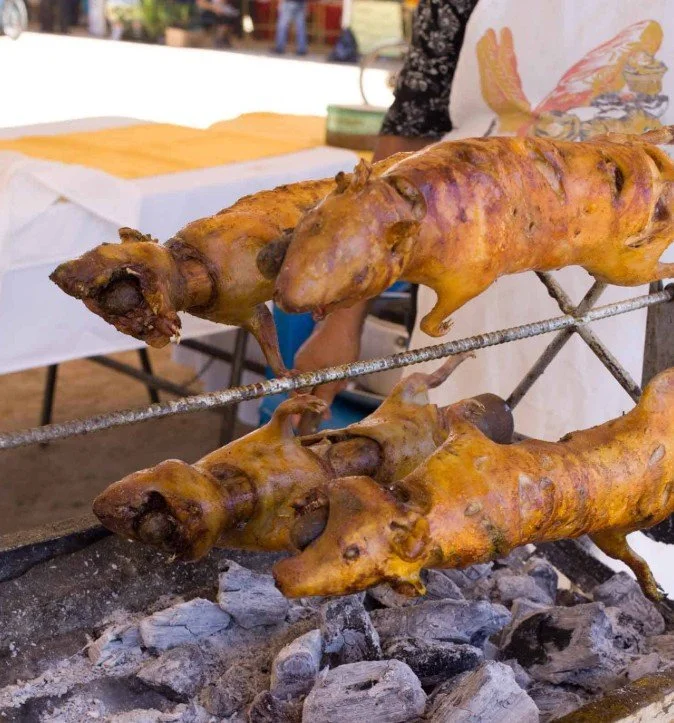
Starting in the late morning, nearly every village we drove through on this day had fires next to the road in open top ovens that had a compound spit with 4-6 skewers turning. Each skewer had one or two chunks of meat…with four stubby legs? Raul said this was cuy, a favorite meat of the Peruvians and I should try some. I asked what cuy was in English and Raul said guinea pig. There were a hundred or more cuy roasting next to the road in a dozen villages we drove through. When we stopped for lunch at a huge buffet filled with traditional Peruvian dishes, I stuck with the alpaca. It tasted like beef. In my head, a guinea pig is just a cuter version of a rat. If Peruvians consider small vermin a delicacy, perhaps they should move to New York City. From what I’ve read, the sewers are teaming with cuy, or at least a close cousin.
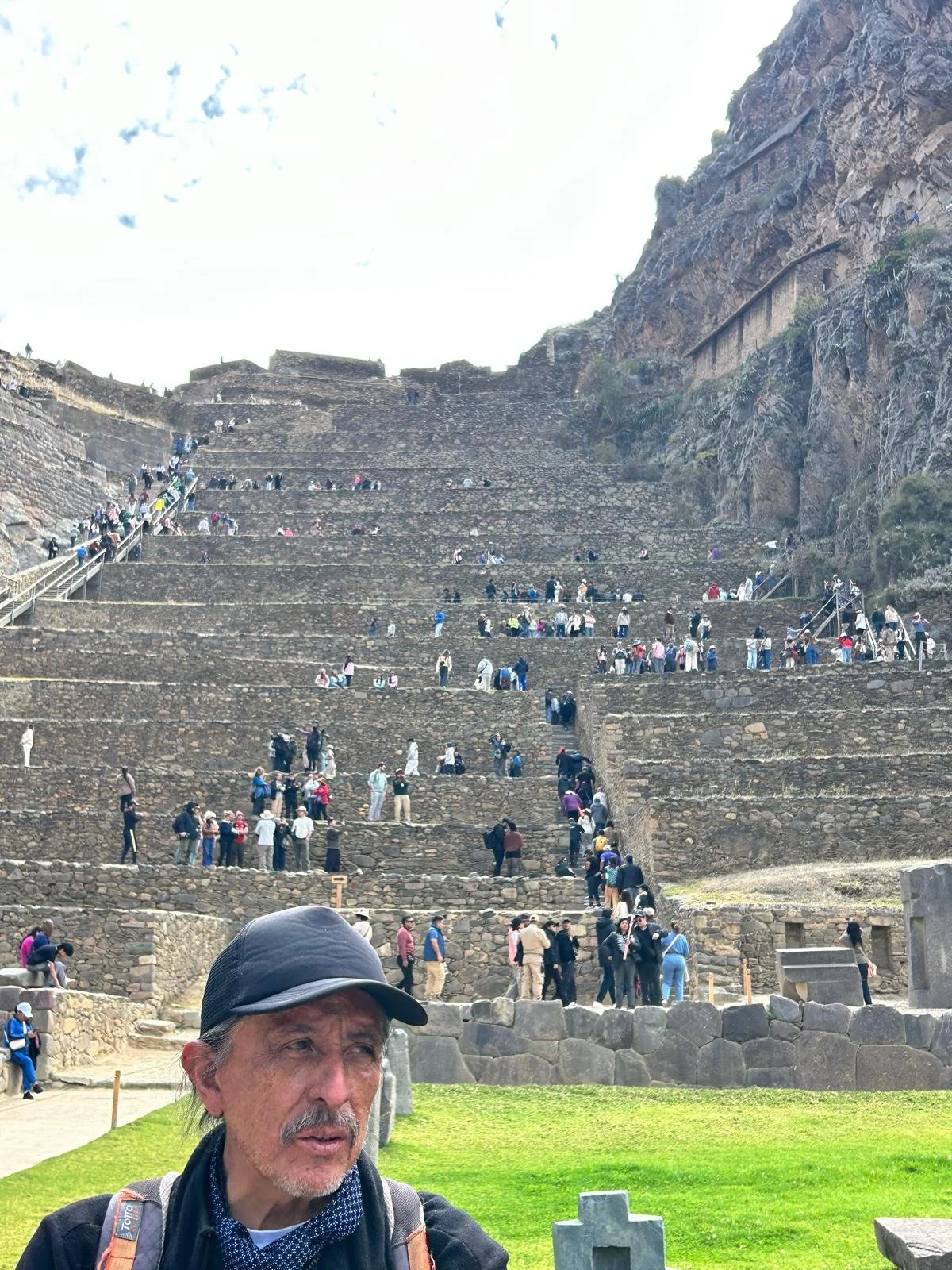
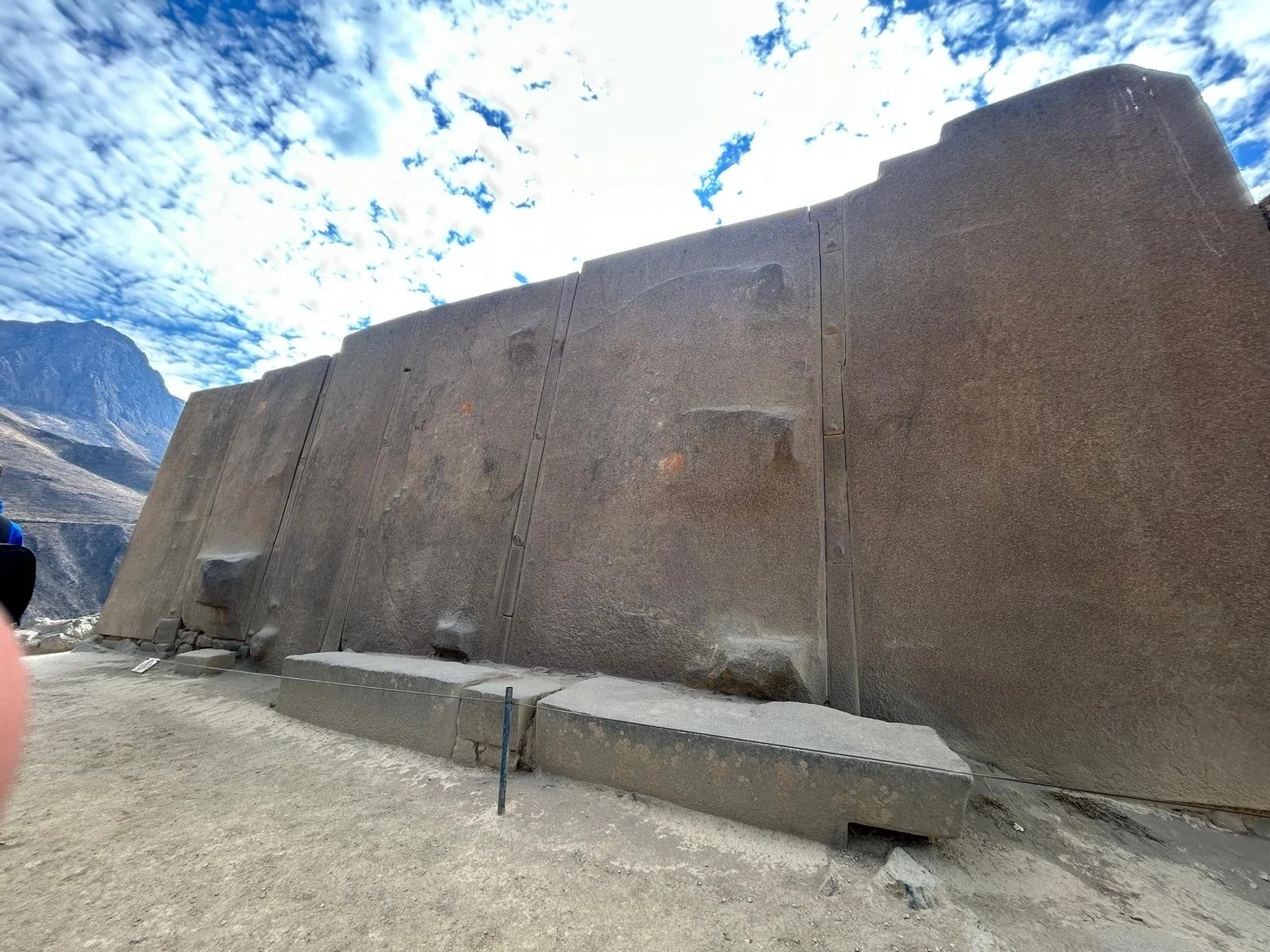
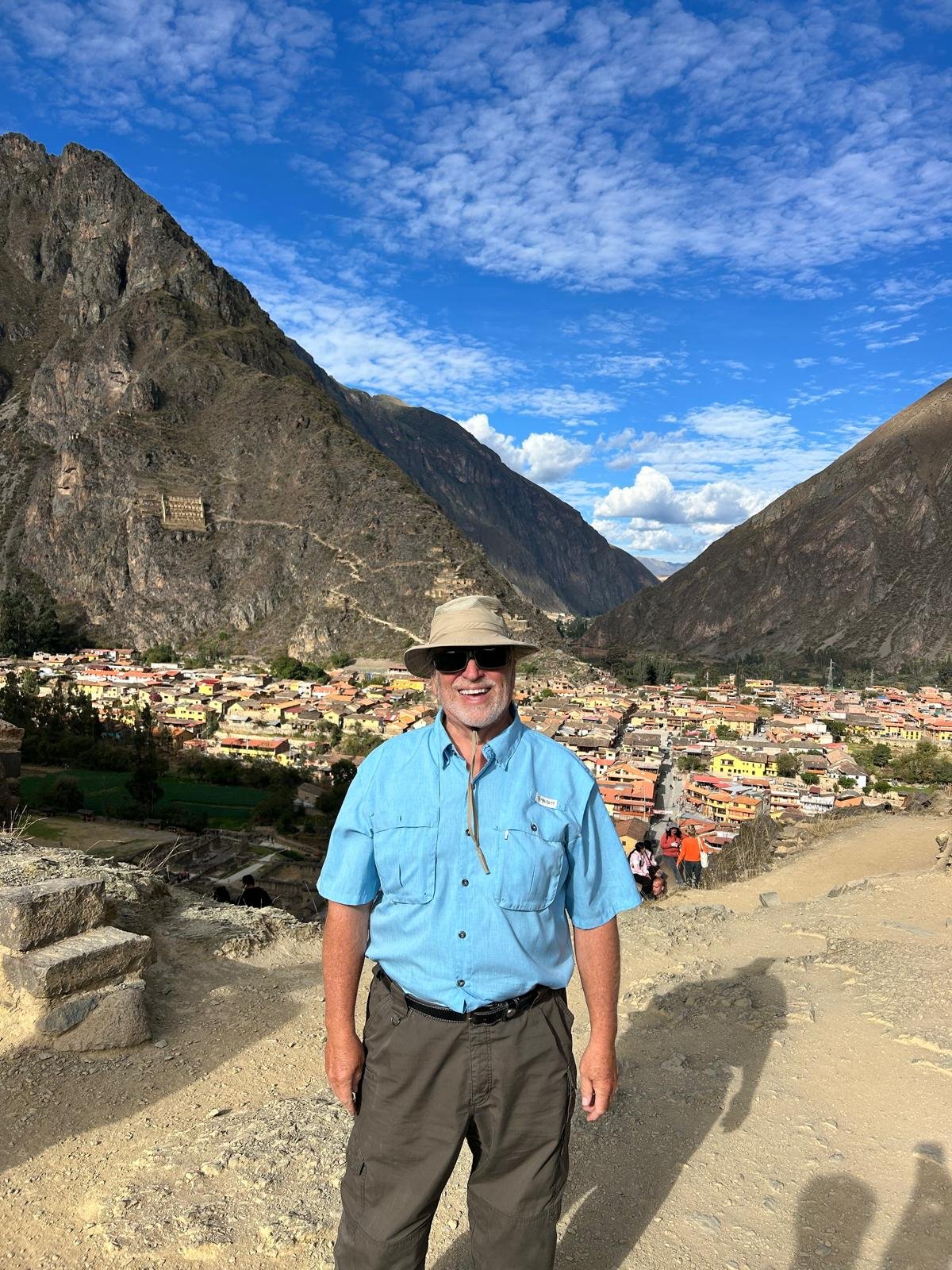
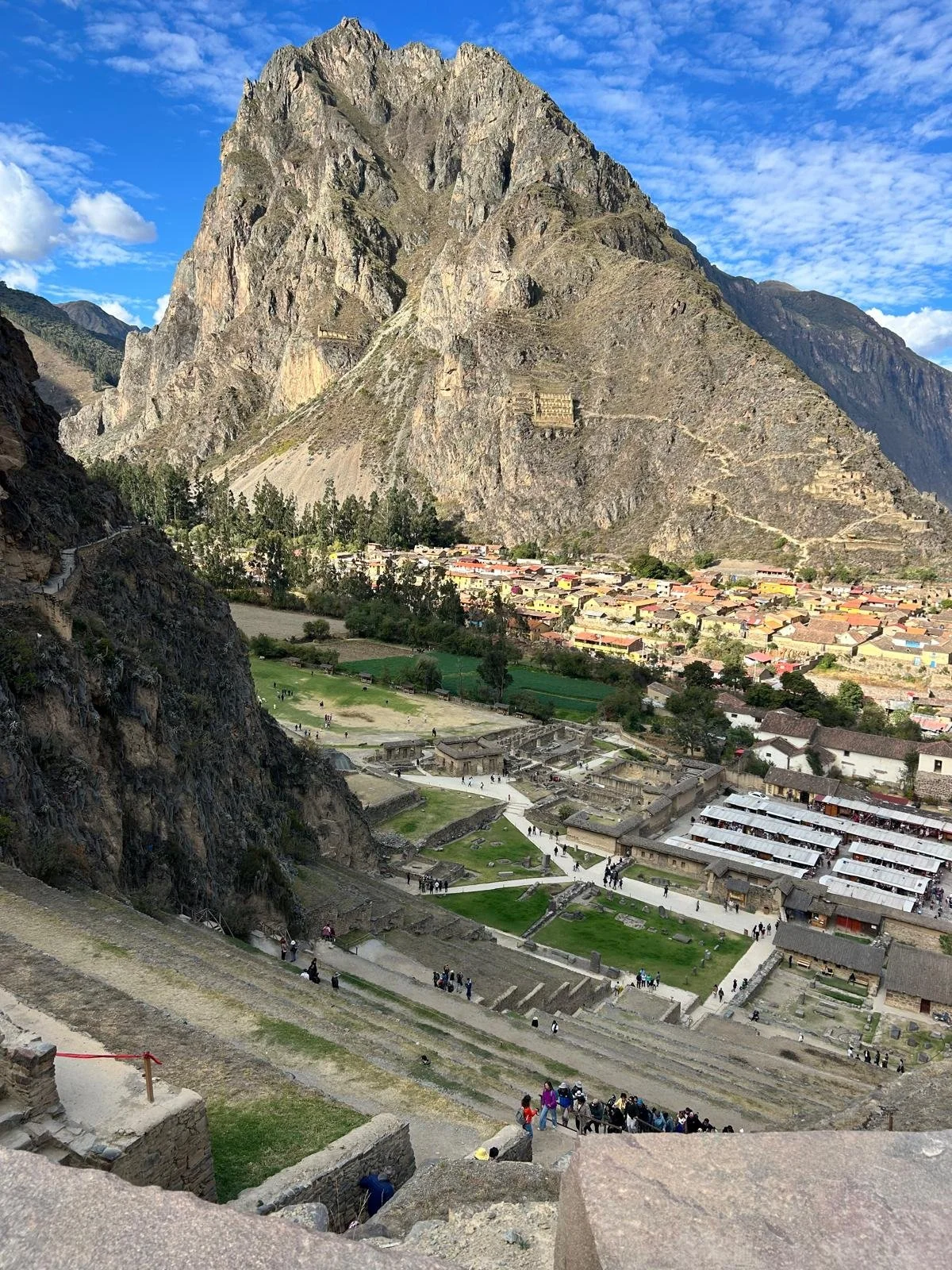
After lunch we continued on to Ollantaytambo, a fortified Inca town and the place of the Inca’s most decisive victory over the Spanish Conquistadors. But we all know how the war ended. Next to the town is a mountain with 17 terraces and the Temple of the Sun at the top. The crowning feature of the Temple are six huge granite stones, carved to intricately fit together called the Wall of the Six Monoliths. These stones each weigh up to 70 tons and were cut from a mountain on the other side of the Urubamba River. Just another mystery from around the world on how ancient man moved huge rocks, but yet couldn’t envision the wheel.
My tour ended at Ollantaytambo. The others in the van were headed back to Cusco, but I had a ticket for the train to Machu Picchu Pueblo. Until recently, the town was named Aguas Calientes, or Hot Springs in English. But it is the entry point to Machu Picchu so they changed the name so tourists could find it. Roger, my Machu Picchu tour guide, met me at the train and took me to the Hotel Mamasara. I should have stayed at this hotel my whole trip. It not only had toilet paper, heating and cooling, and a chair (not provided in my next country), it even had a ceiling fan.
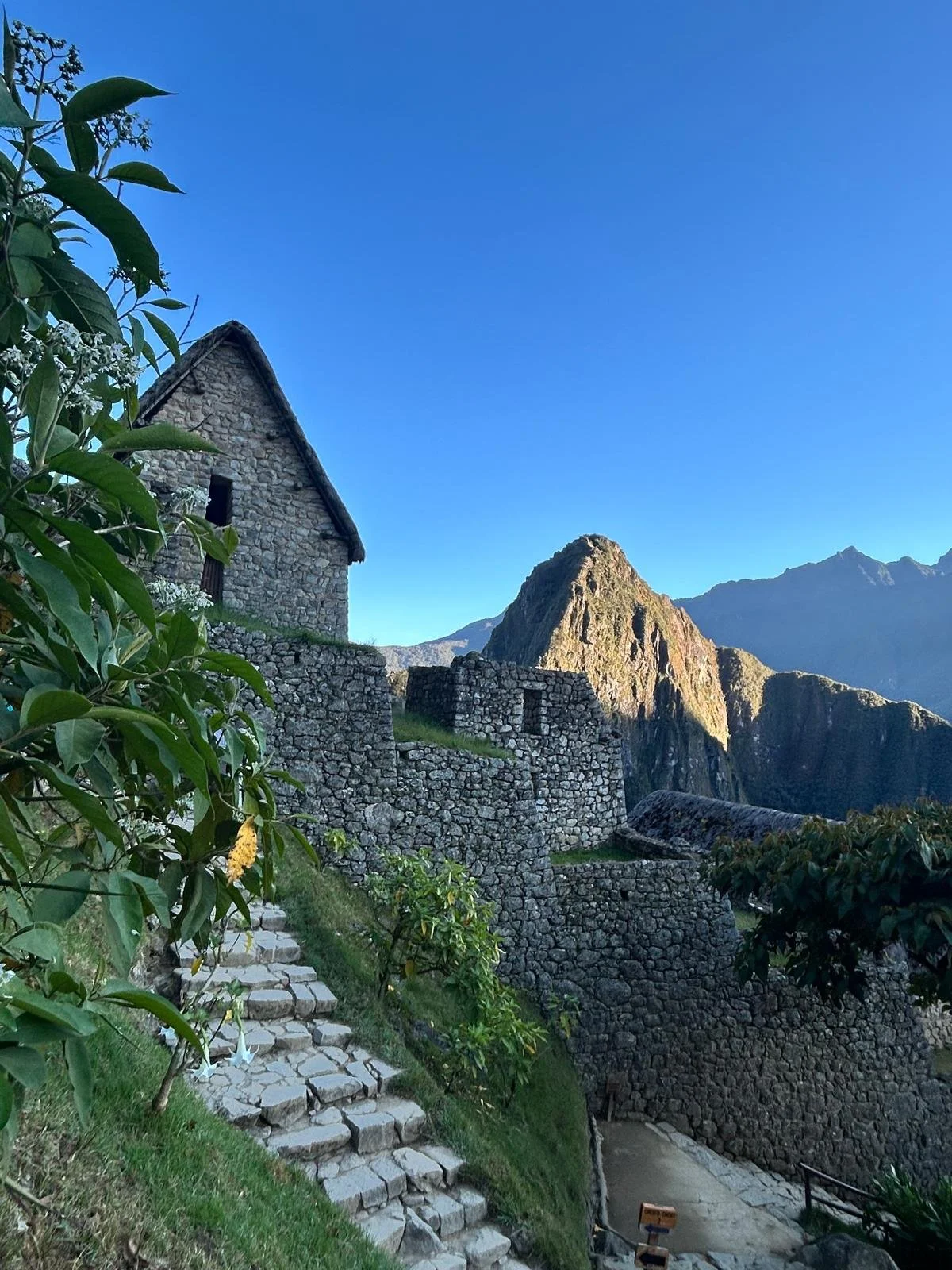
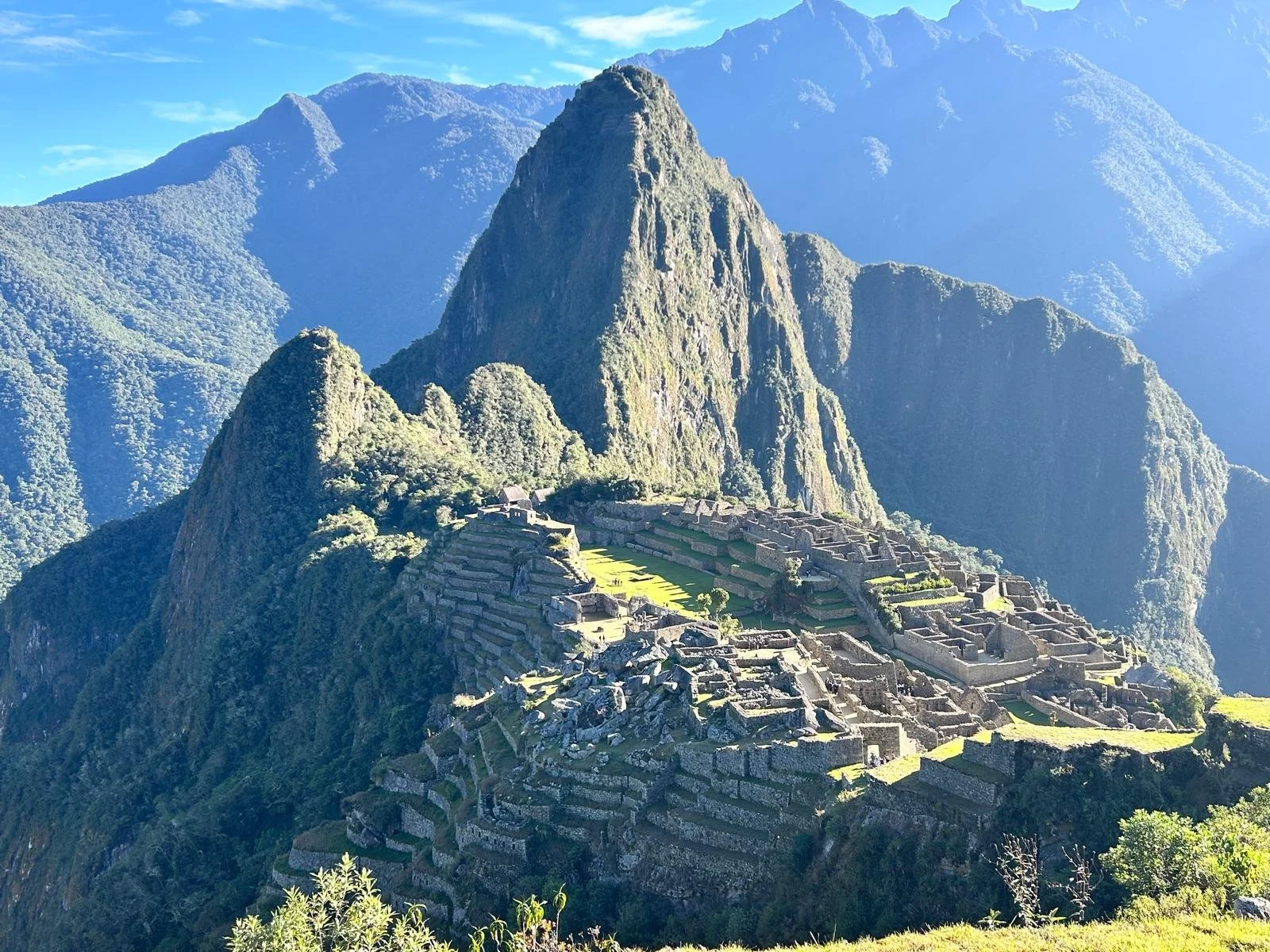
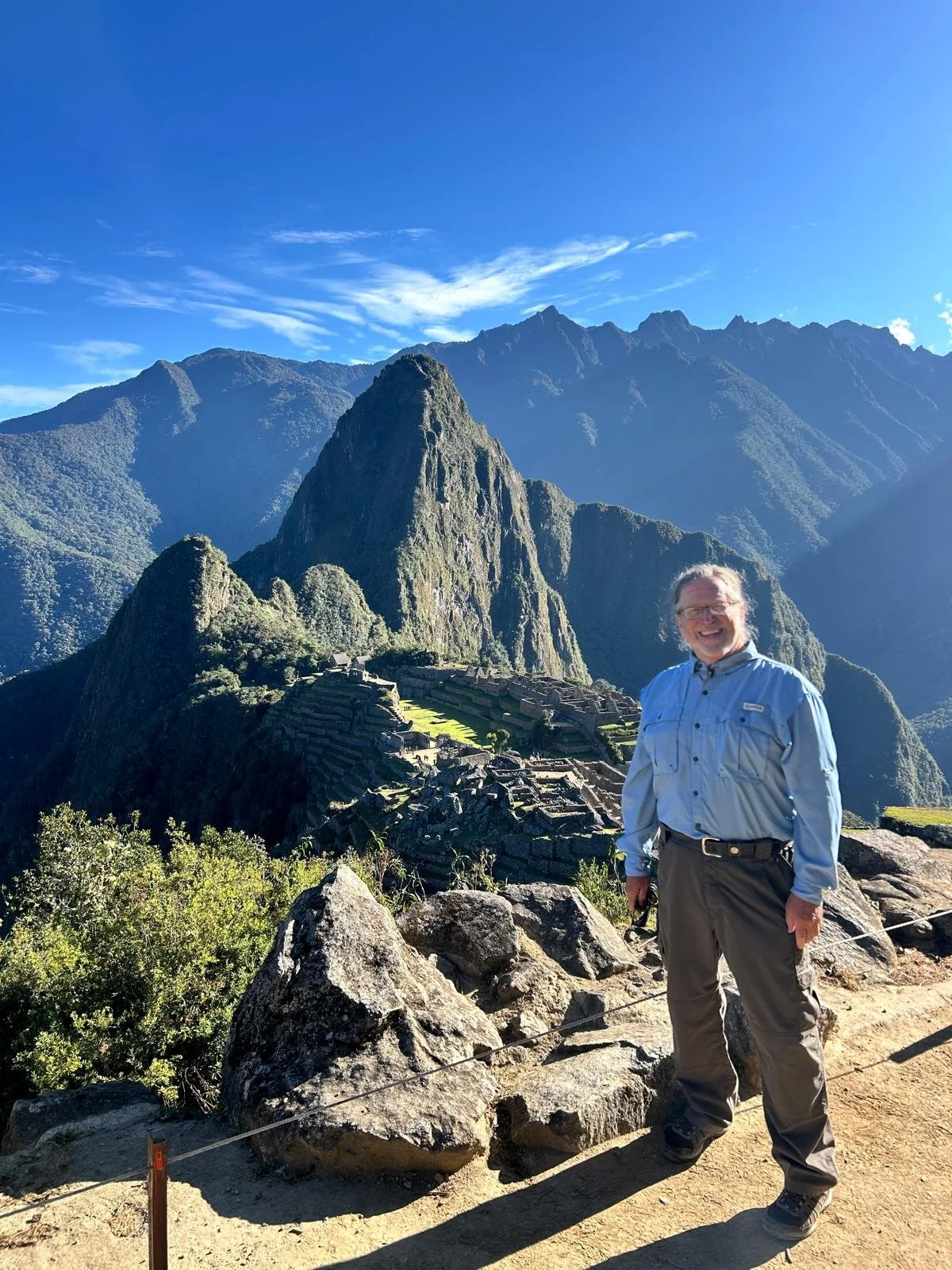
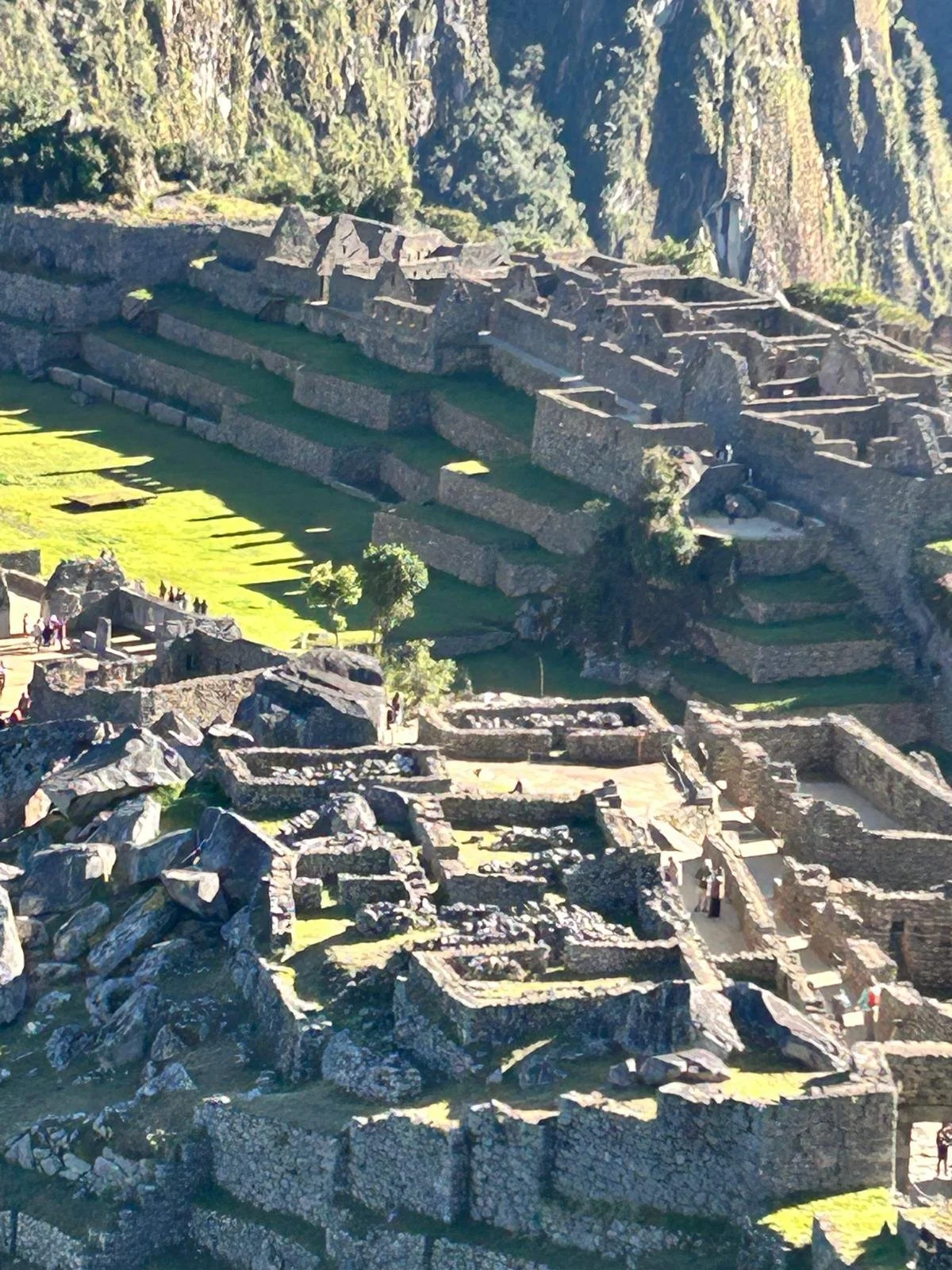
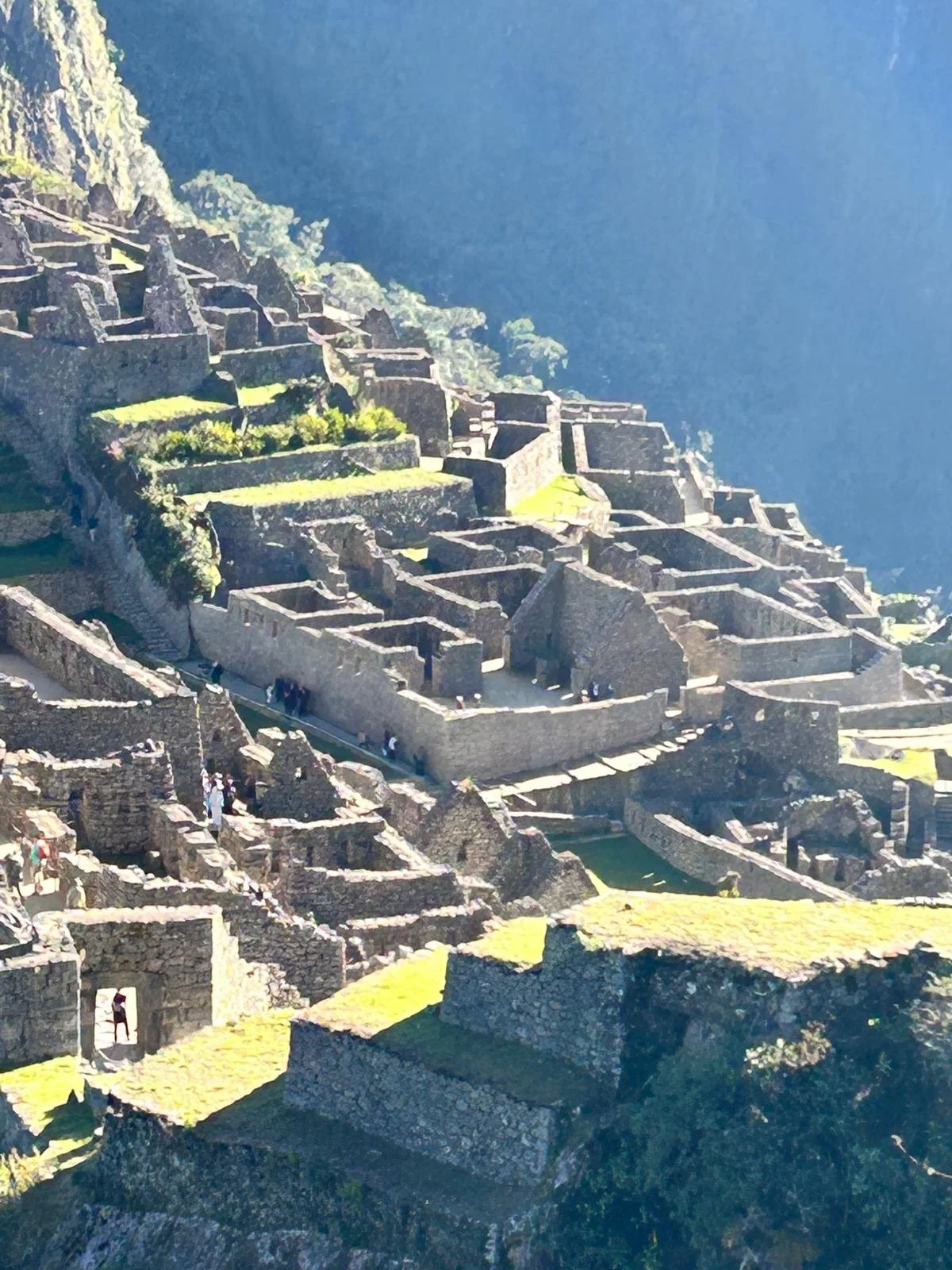
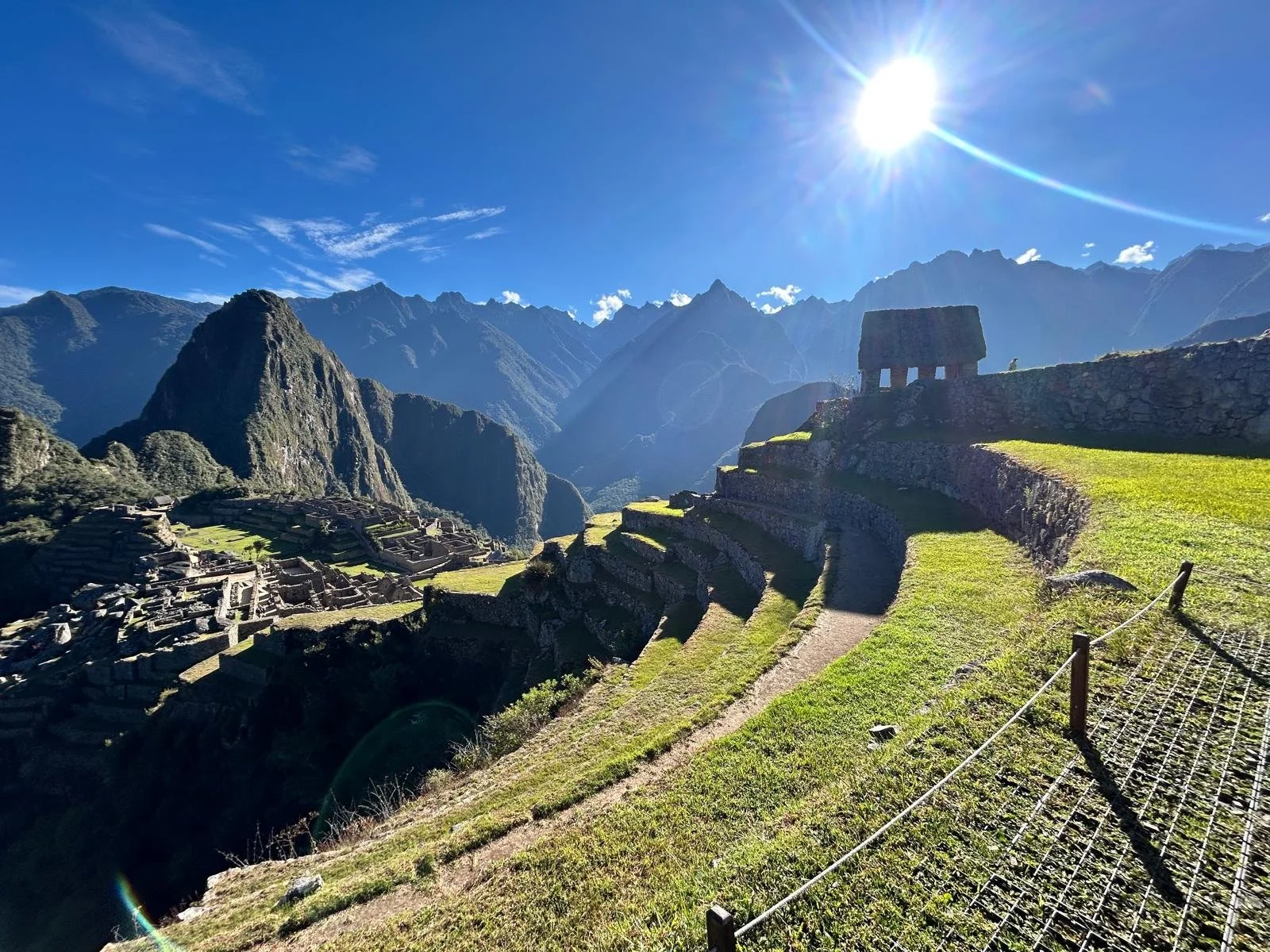
Roger met me at 6:00 the next morning. Entry to Machu Picchu is controlled and I had a 7:00 bus ticket and an 8:00 entry into Circuit 1. There are three circuits that are strictly enforced. Circuits 1 and 3 don’t go into Machu Picchu, but circle above and across for great photos. Only Circuit 2 actually enters the ruins, but it usually has a waiting list of six months. There are a lot of steps to navigate the Inca sites. The Sacred Valley terraces up to ruins on top of the mountain, the 17 terraces to get up to the Temple of the Sun, and now, Machu Picchu. And while these sites are lower than Cusco at 12,000 feet, they are still over 9,000 feet and the air is thin. Beto the first day, then Juan the second day, and now Roger, kept turning around expecting to see Darth Vader due to my heavy breathing. All the guides carry binders with photos and diagrams of the sites. They will climb the steps until they feel their charges need a break and then stop and give a lesson while pretending to not see the wheezing and gasping slugs before them.
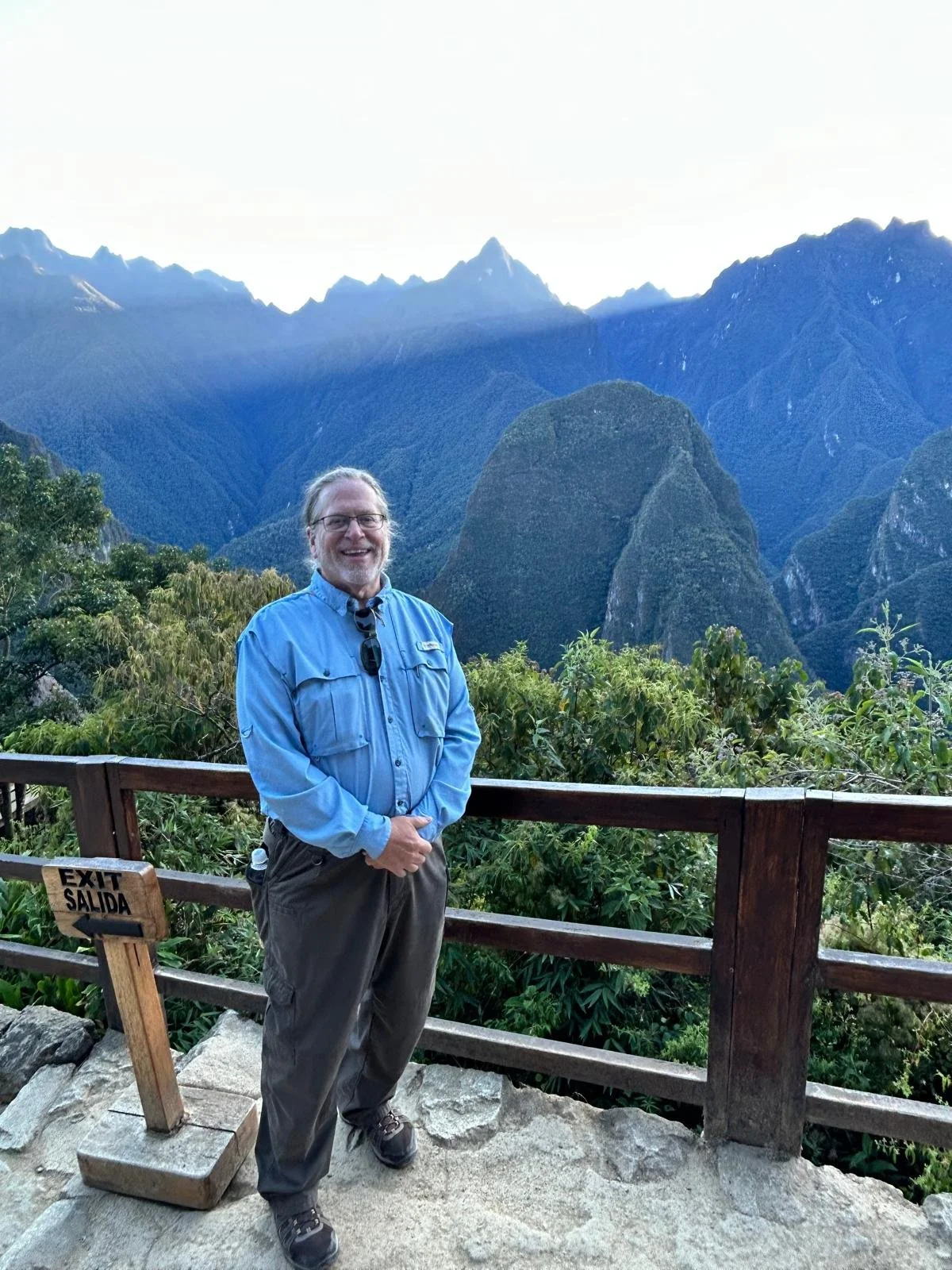
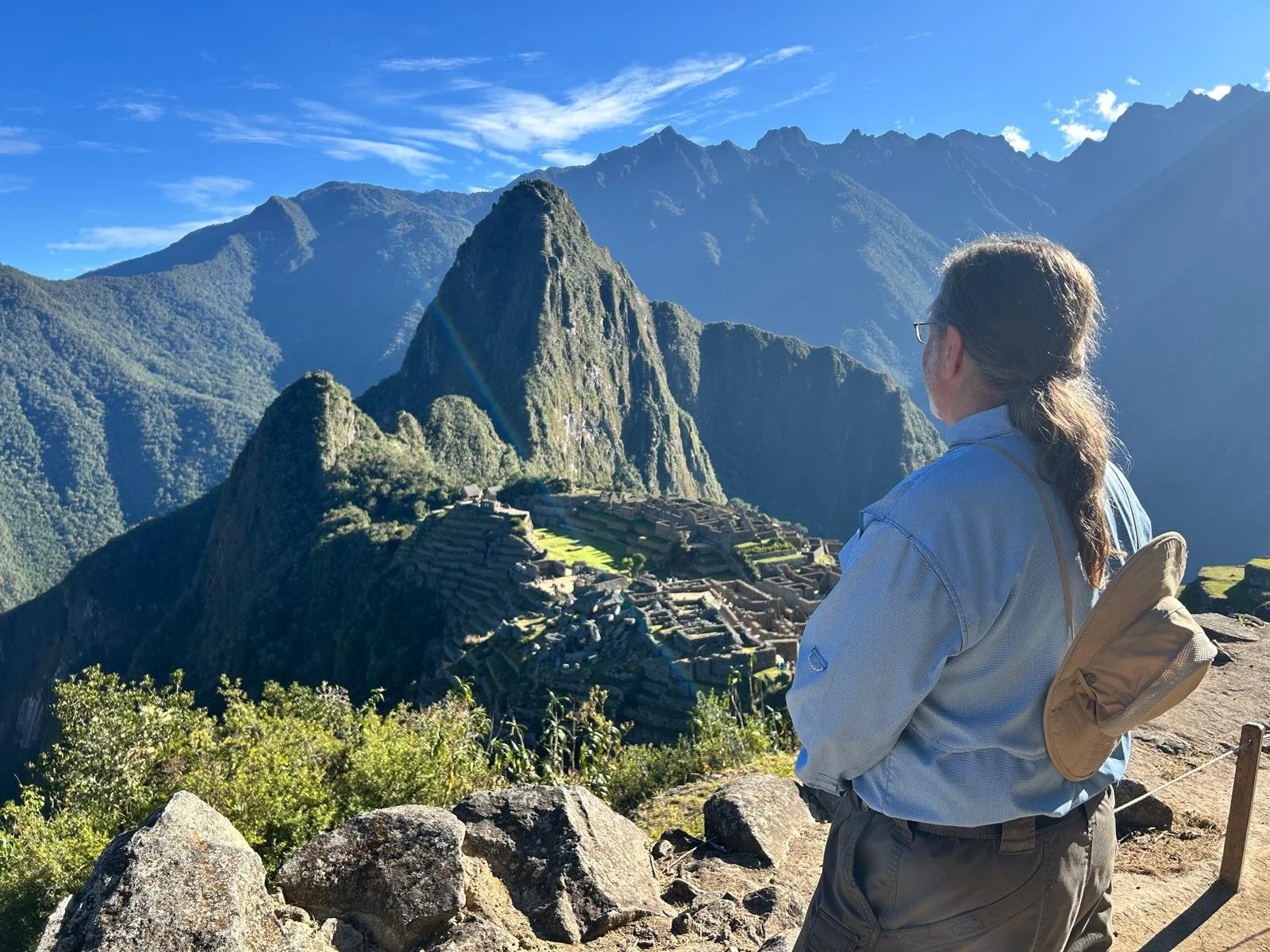
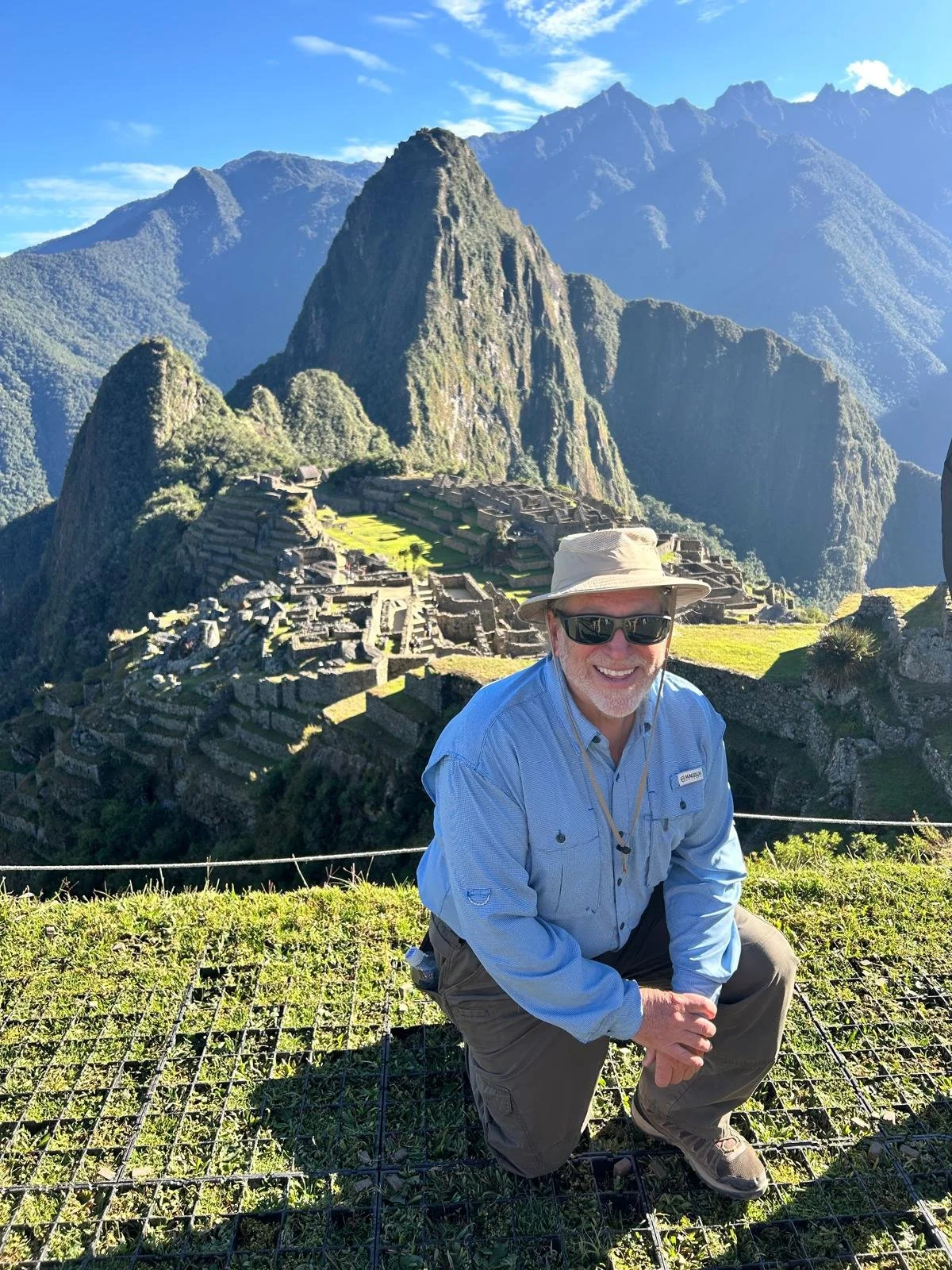
What can I say about Machu Picchu that hasn’t been said or the photos haven’t portrayed? It is very impressive. Just think that this was where the Inca royalty stayed. There were no horses. Or buses. Or Chevys. Some debate on this, but the royalty and upper class of Incas lived in the capital, which was in Cusco. Machu Picchu was like a vacation home. On the Inca trail across the mountains, the distance is 65 miles. All ages of Incas walked this. The roads for cars and buses have to wind around the mountains. If I take out idle time, my commute from Machu Picchu back to the hotel in Cusco, via bus, train, then car, took about 6 hours over a much longer route.
My route to Cusco was probably more hair-raising than the Inca Trail. The huge buses the park services uses on the one-lane switchbacks going up and down the mountain from Machu Picchu Pueblo to Machu Picchu or back can be white-knucklers. To up the ante even more, they will meet 10 or more buses going the opposite direction on each trip. The very narrow places where a bus had enough extra inches to pull over enough and let other buses pass are few and far between. Often one bus will have to back up to allow one or more contra-flow buses to pass. The route my driver took to Cusco once I got off the train in Ollantaytambo was nearly as bad in some places. And when it wasn’t one lane, it was covered in potholes. Fortunately I have ridden with drivers in locations that actively manufacture potholes. I was familiar that drivers suddenly swerving into our lane, or my driver suddenly swerving into an oncoming car,was not a game of chicken, but just drivers familiar with the road swerving around potholes.
Machu Picchu was the culmination and conclusion of my Peruvian adventure. I caught an Uber the next morning for the airport and my journey onward to hell. Bolivia. I meant Bolivia. My next stop was La Paz, Bolivia. Hell is much nicer.
Rimaykullayki, (An Inca greeting…or it could be a dry cleaning order)
Keith