


Antarctica
(Note: photos are all labeled, but the label only displays on an iPad or PC.)
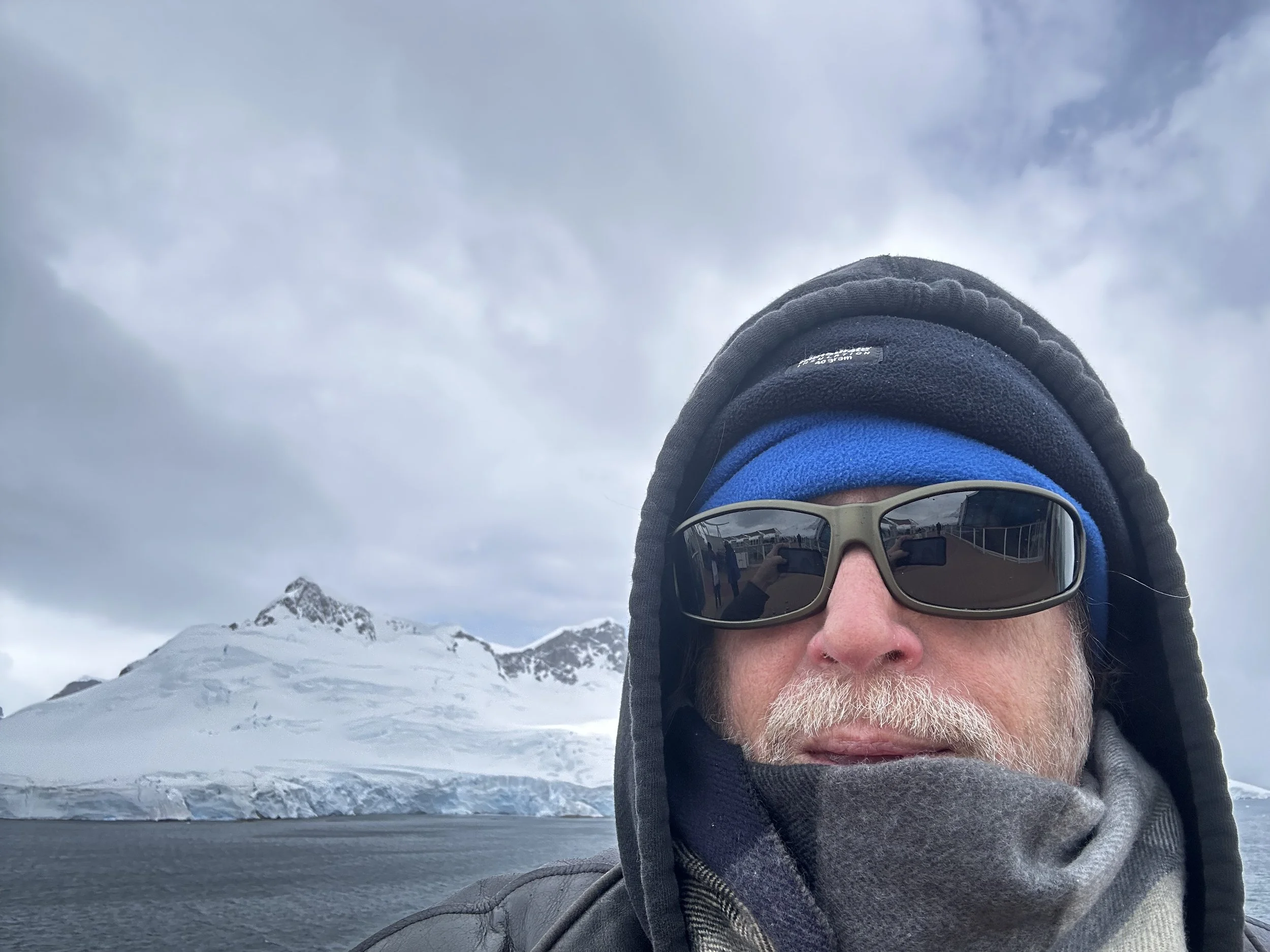
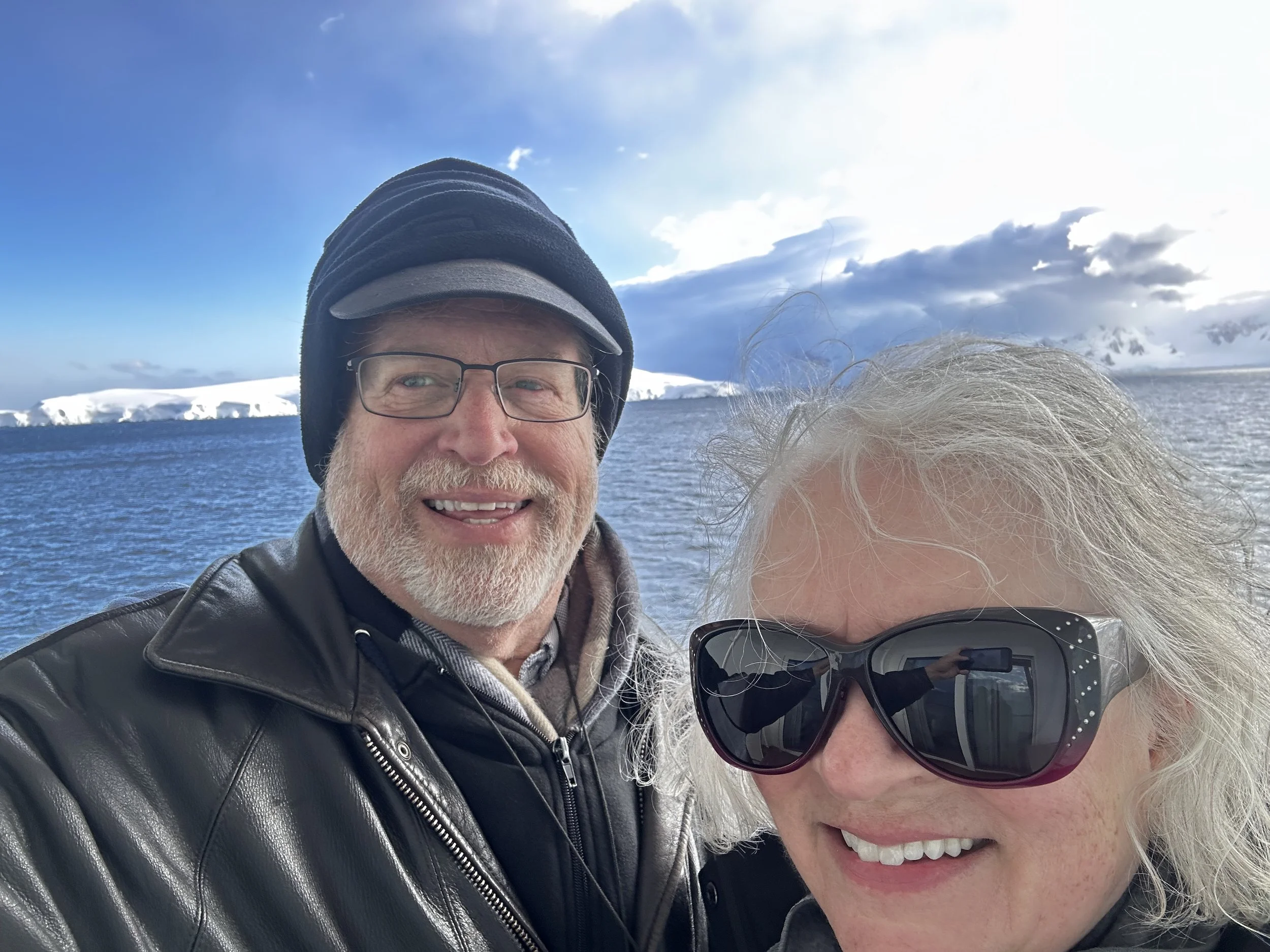
In January 2026, my Bride and I set out to conquer Antarctica. On a cruise ship. With 2,800 of our closest friends.
We began our sojourn by traveling in the most uncivilized manner ever known to mankind. Flying coach. We arrived in Buenos Aires the day before our departure on the Celebrity Equinox ship in immediate need of chiropractic services from our inhumane torture. I was fortunate in my professional life to fly business class. Business class is to coach/economy class what the Vanderbilt Mansion is to sleeping in a burned out 1977 Chevy Vega. I have to ask - exactly how do airline executives fly? If the FAA would require all airline execs to fly a minimum of once a quarter cross-country in coach, I think we’d all benefit from the results. At least the cheap, the poor, the coach/economy class. (I think that is on the Statue of Liberty?) We had booked a tour of Buenos Aires in 14 days when the cruise ship returned, so the rest of the day of our arrival, we took it easy and stayed around the hotel.
Once on board the ship and setting sail, we headed due south for Ushuaia in Terra Del Fuego. As I have written from my last trip to Argentina 20 years and one month ago, Terra Del Fuego translates to the Land of Fire. This was the name given by the sailors rounding Cape Horn when they saw the huge bonfires that would make any Aggie go maroon with envy. The sailors saluted the bravery of the natives who kept the fires burning day and night to keep themselves and their livestock alive during the harsh winters. The natives kept the signal fires lit day and night trying to no avail get a ship to stop and take them out of this ice coffin.
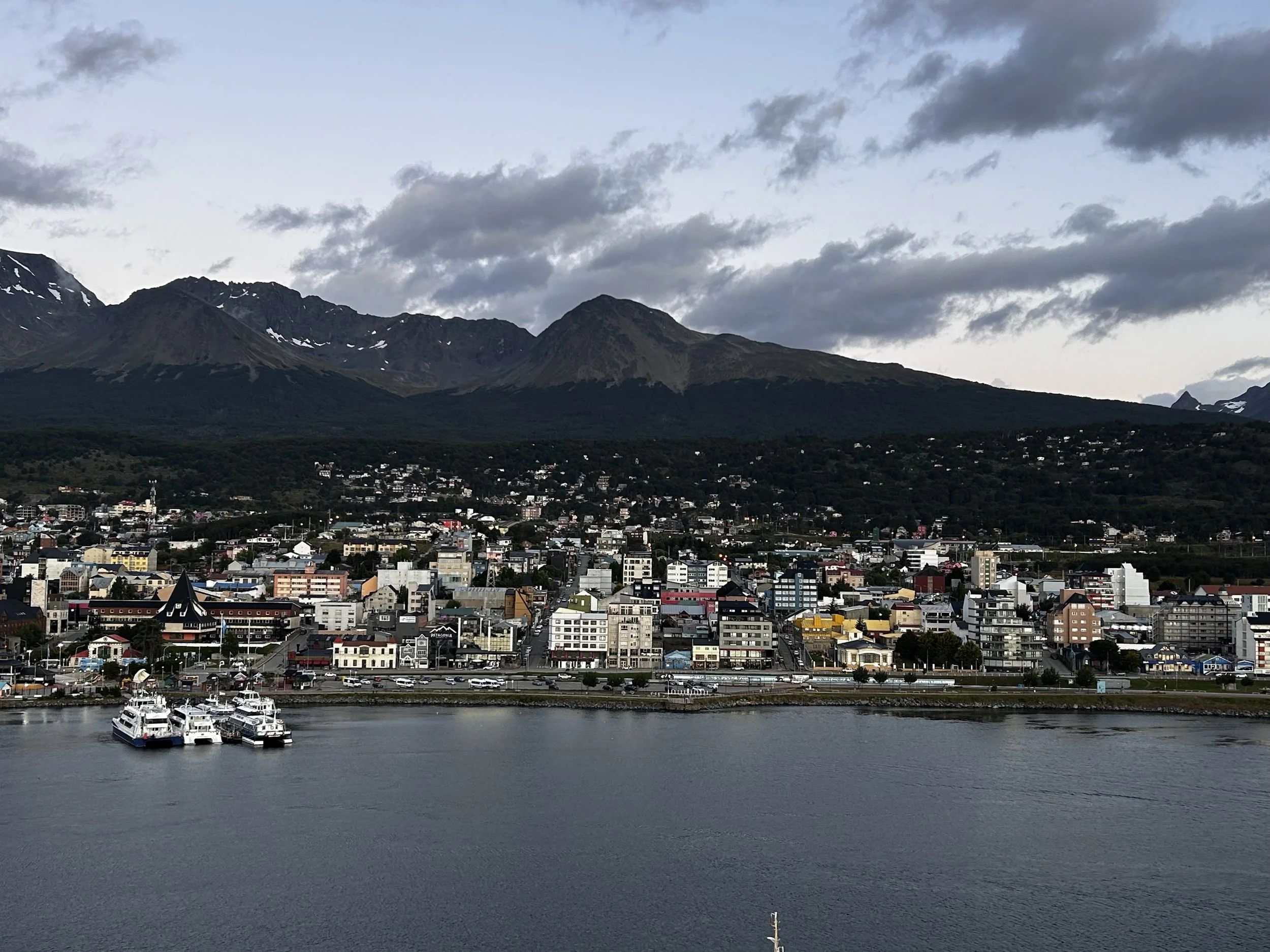
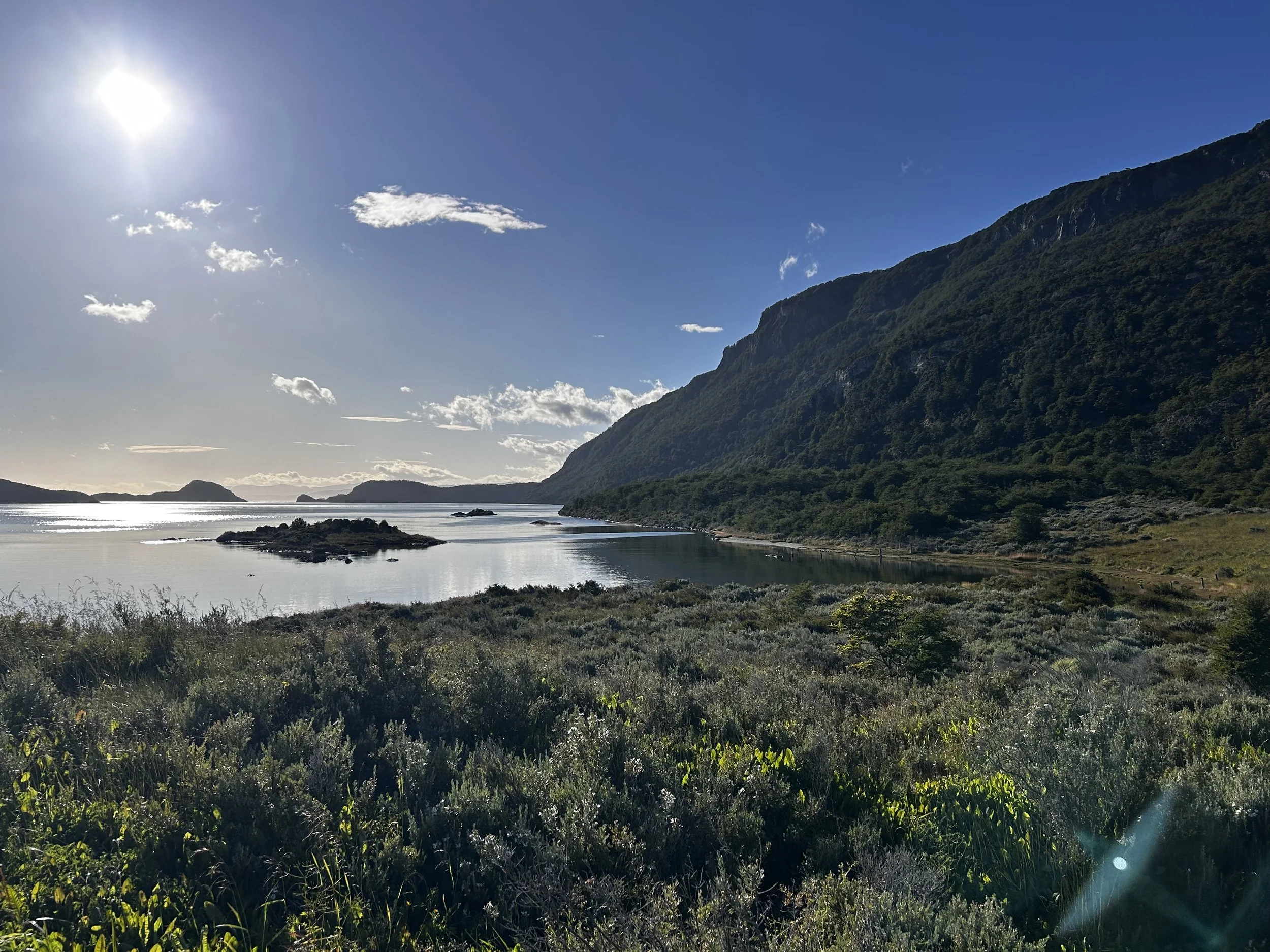
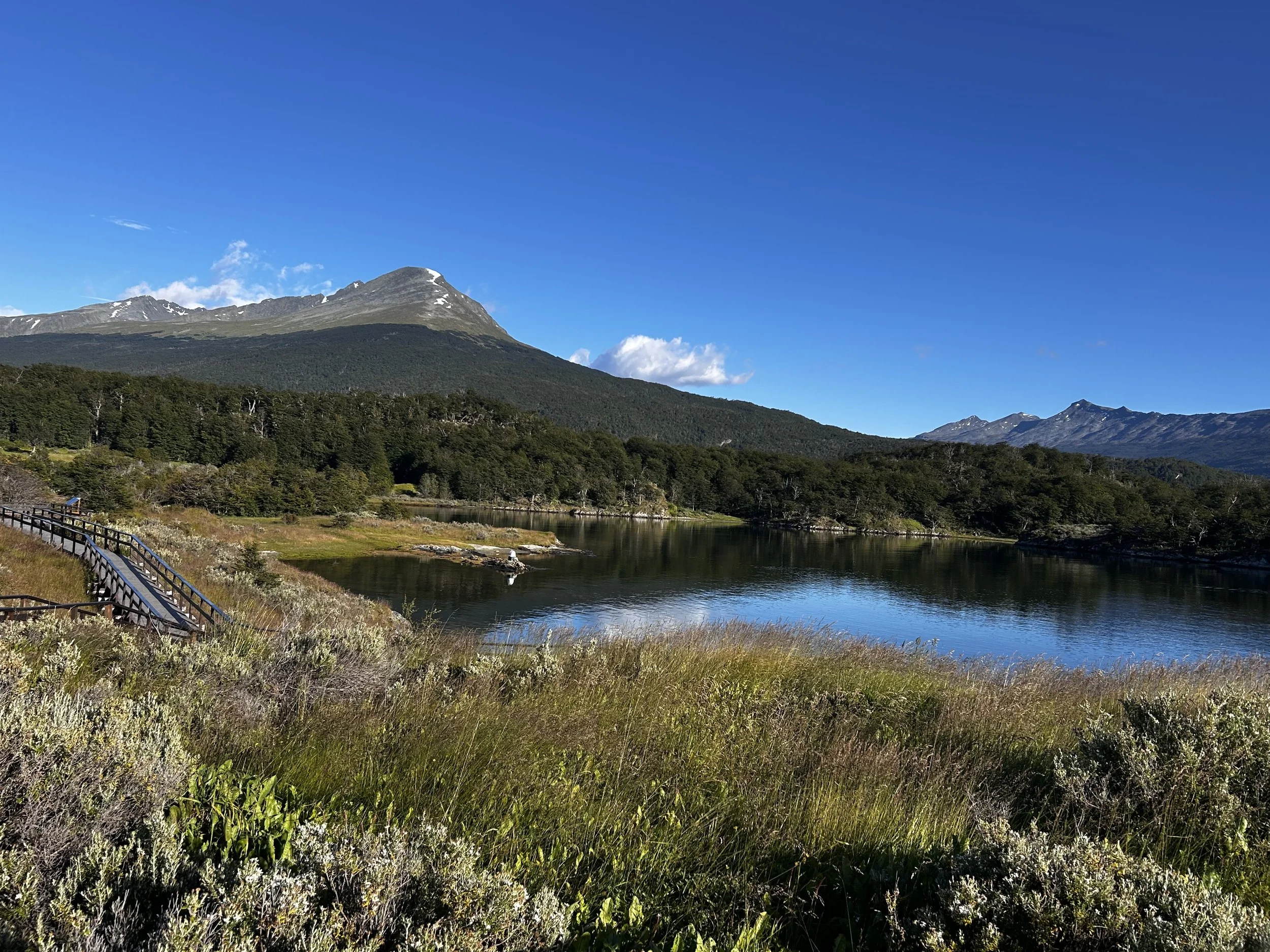
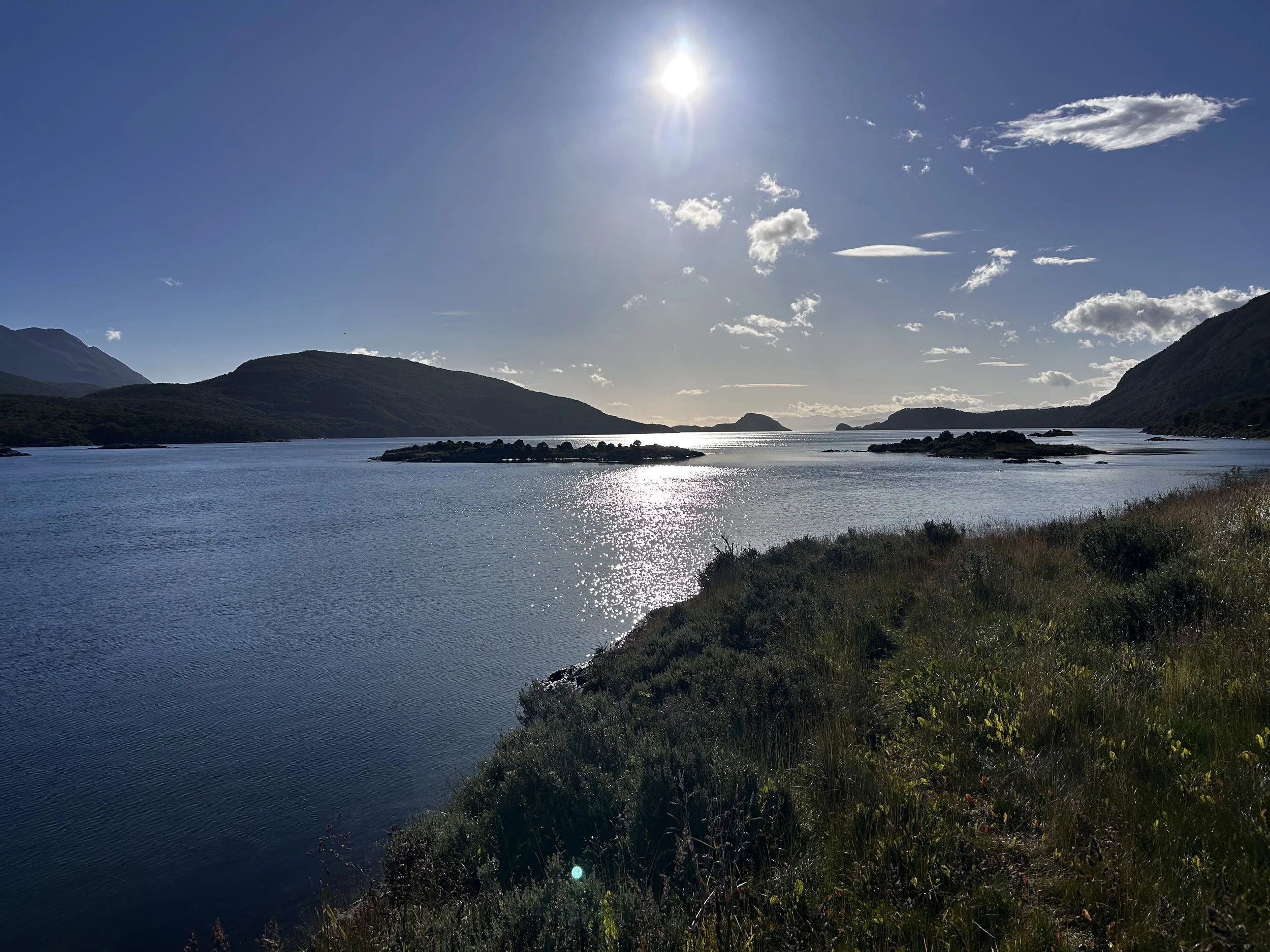
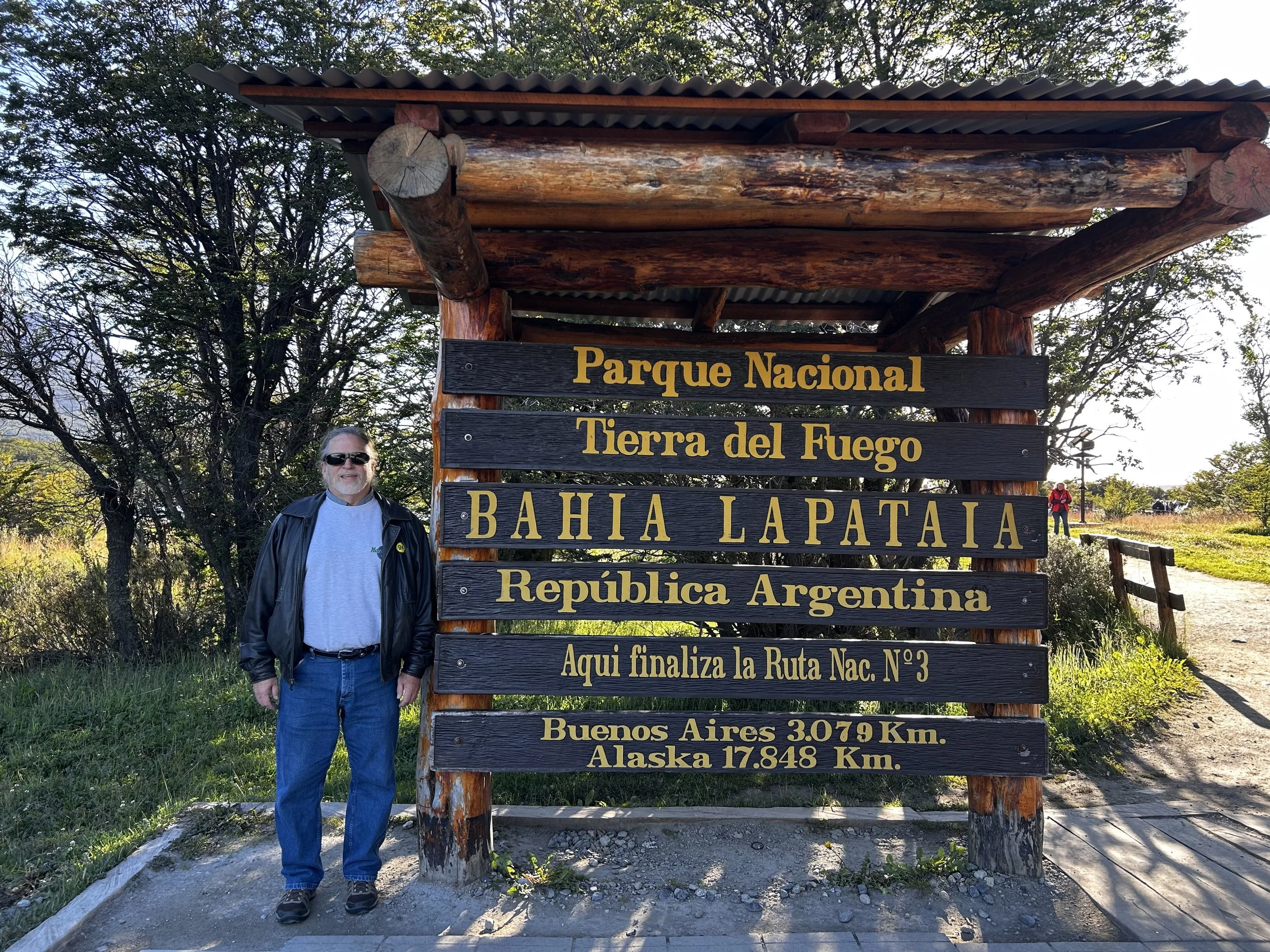
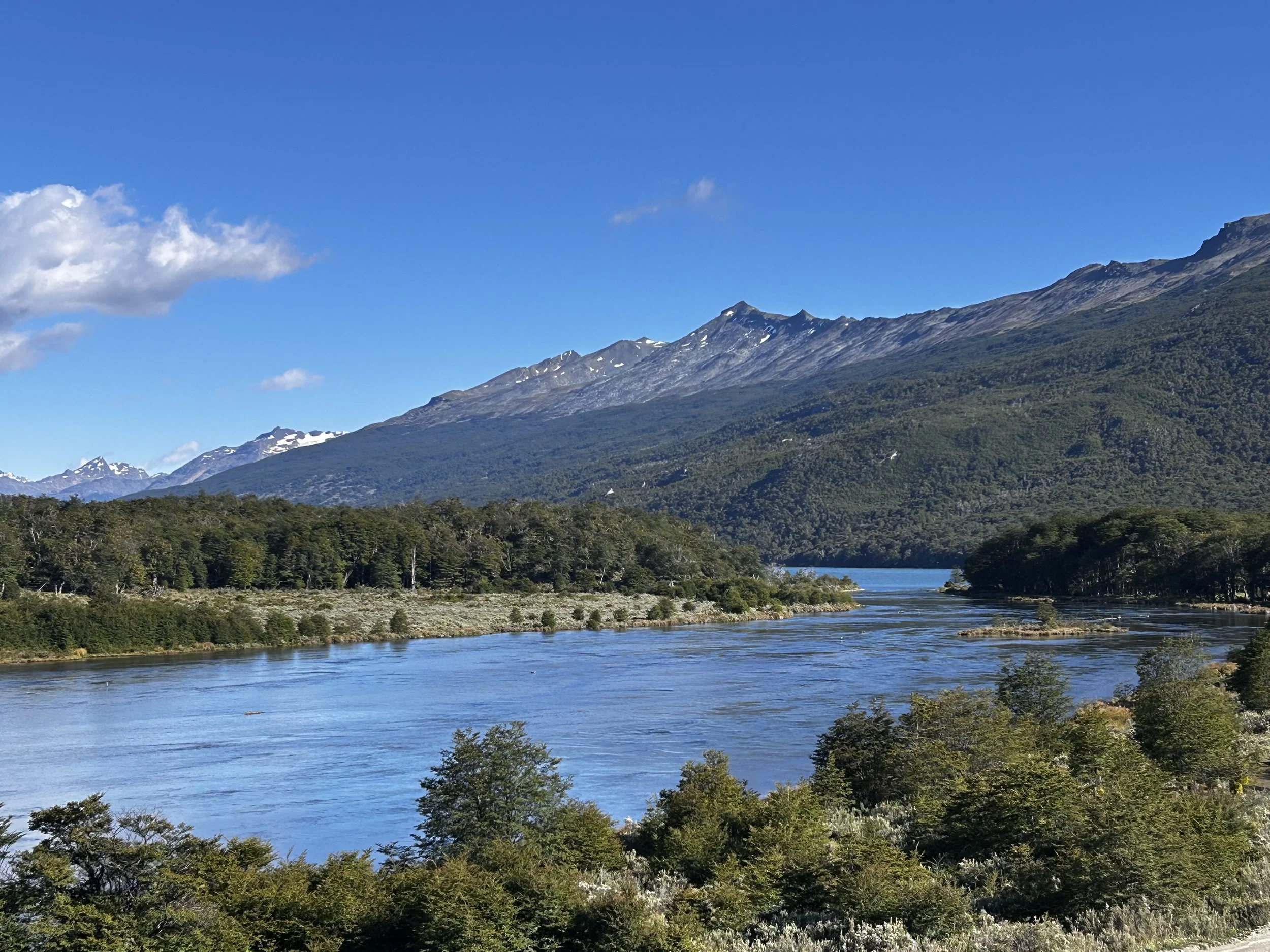
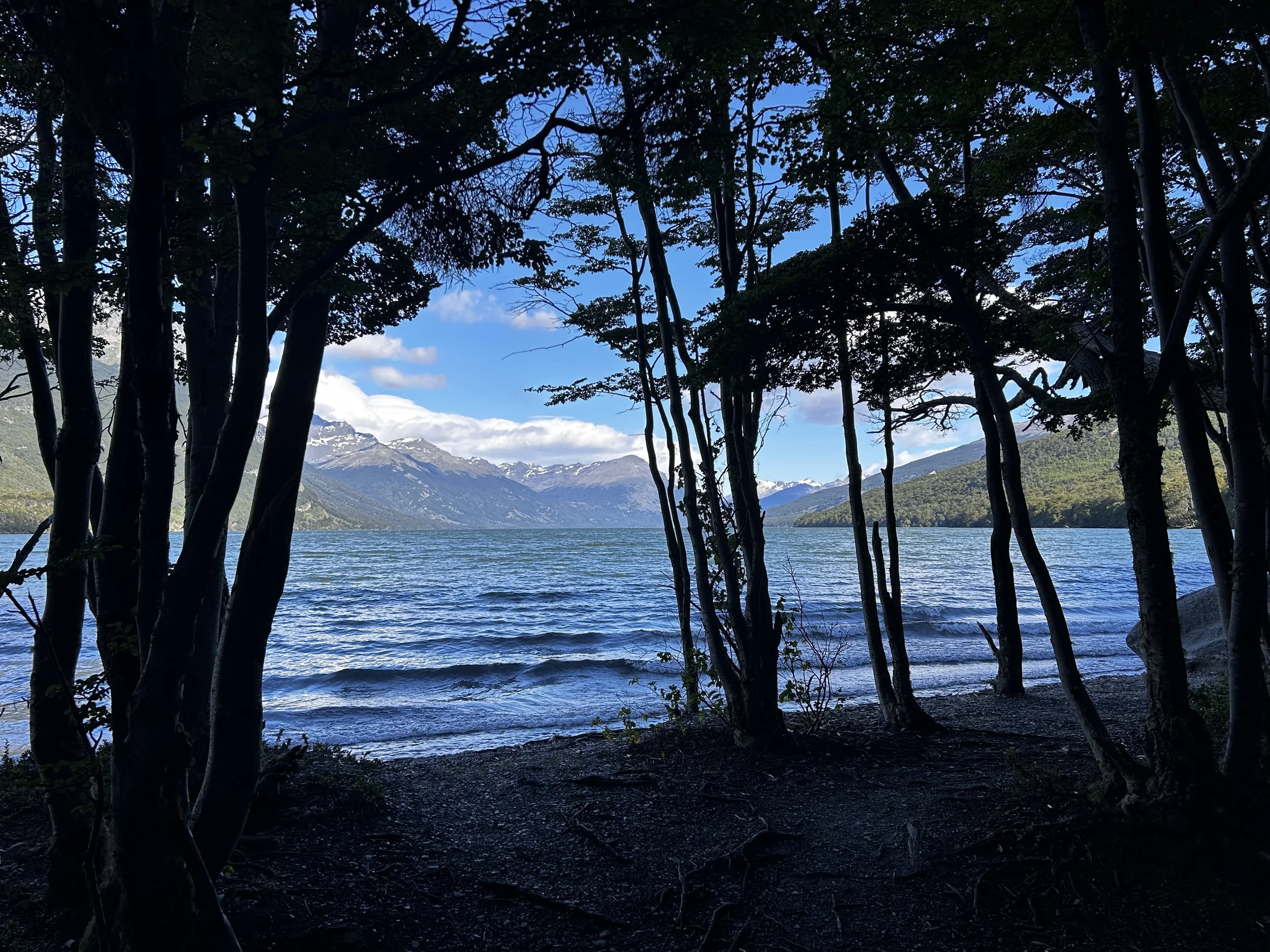
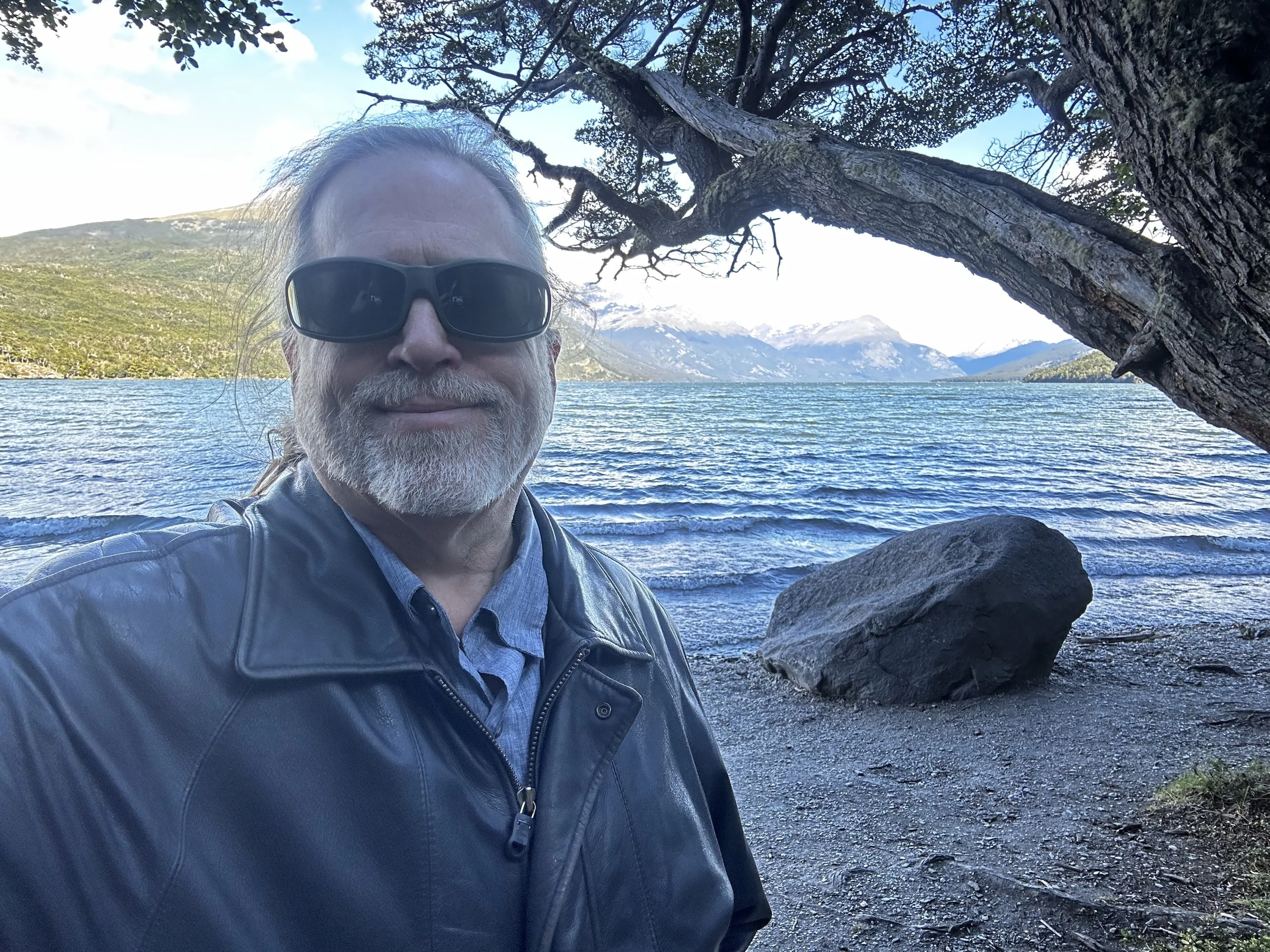
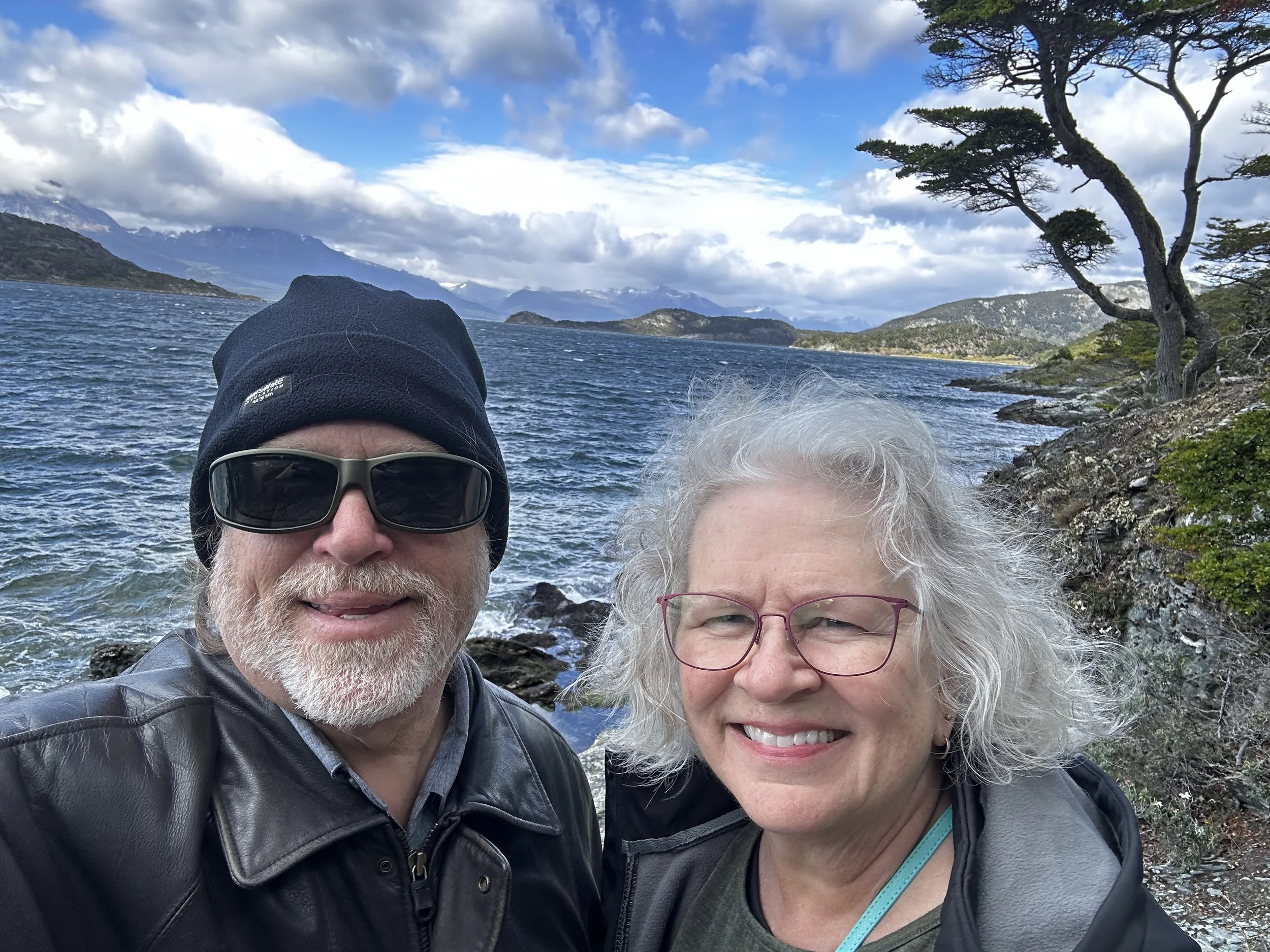
I was surprised at Ushuaia and Terra Del Fuego. Both were way above my expectations. But then, I live in Houston, so I don’t have very high expectations. Ushuaia is the furthest city south in the world and a really nice place to visit. In their summer. Which is our winter. It is a place to avoid in their winter. Which is our summer. We rode thru Terra Del Fuego National Park and the forest was amazing with the tallest trees I have ever seen outside of the Redwood/Sequoias of California. The guide explained that Northerners (which would be every person in the world not residing in Ushuaia) had introduced several animals to this area in years far past that have wreaked havoc on the environment. Relocated beavers adapted quickly to their new land. They killed trees by both eating them and cutting them down to build their dams. Additionally, the resulting ponds and lakes the dams created then kill whole sections of the flooded forests. A gray fox was introduced that is competing with resources from the native red fox. Mink eat penguins and other bird eggs only found in this region. Finally Chinook salmon, brook and rainbow trout were introduced and are threatening local aquatic species. Sounds like the introduction of non-indigenous Northerners didn’t win any prizes either!
Finally, on to Antarctica. But first we had to round Cape Horn. Cape Horn is actually spelled Cape Hoorn. It was discovered by a Dutch sailor, Willem Schouten (write this down, this will be on the test!), who named it after his birthplace, Hoorn. Hoorn is a city in The Netherlands that has been misspelled since 1357. Cape Horn is known as the “sailors’ graveyard.” The line from Cape Horn to the Antarctic Peninsula is referred to as the Drake Passage. It is where the Atlantic and Pacific Oceans meet and…well…those two bodies of water just don’t care for each other. And just like any time two bodies that don’t like each other meet, a fight usually breaks out. This area has the roughest seas due to the currents from the two oceans colliding with the Antarctic Circumpolar Current. That is a fancy way the scientist try to convince us they are smarter than the rest of us to say that it is the only place in the world that a current flows uninterrupted around Antarctica uninterrupted by any land. So I wrote a whole paragraph full of educational crap and I could have just wrote “It’s gonna be rough!”
The ship had seminars on the sea days when we didn’t make a port. The first seminar at 10:15 am was always about nature or wildlife that we would likely encounter next. There were a couple of extensive seminars on penguins, and several that covered whales, porpoises, dolphins (I now can tell the difference between porpoises and dolphins!), seals, and albatross and other birds. We learned that a group of penguins on shore are referred to as a waddle.
Penguins resting on the surface at sea in a group are a raft. Penguins in their breeding and nesting grounds are a colony or a rookery. Whales, dolphins, porpoises, and seals can be referred to as a pod, but seals on shore, especially in breeding grounds, are referred to as a harem. A group of obese cruise passengers huddled around the buffet is referred to as glutton.
The other seminars, usually at 11:15 am following the nature presentation, focused on shipwrecks and disasters. This was evidently to prepare us for the Drake Passage. The seminars included:
Captain Ernest Shackleford in his failed attempt to cross Antarctica when the sea ice caught, then over weeks crushed his ship, aptly named The Endurance.
The story of Captain Cheap and his ship HMS Wager when it wrecked rounding Cape Horn.
A seminar called “Shipwreck and Survival in the Falklands” that I missed because I was busy preparing in the event we wrecked in the Drake Passage. I was ensuring I knew where my life vest was in the room and could don it quickly. I organized my cold weather clothing and located the fasted route to the muster station. And I made a list of which passengers I would eat first when the food ran out.
The ship made announcements and put handbills in the rooms on avoiding seasickness. In addition to medications such as patches worn behind the ear or Dramamine, they recommended drinking ginger tea, eating green apples, or staying home next time and watching reruns of “The Andy Griffith Show.” Dana and I never got sick but a lot of people did. I was in line toasting a bagel for breakfast and the woman behind me was talking to her friend how nauseated she was from the swaying of the ship thru the swells. I observed her plate had four times the food mine had. I had missed the instructions on how to avoid seasickness by gorging like a buzzard on road kill.
The captain informed us of the terms and sayings sailors have given the southern latitudes. Starting at 40-49 degrees south latitude (Around Puerto Madryn, Argentina - our stop with the penguins a few days out) is referred to by mariners as the Roaring 40’s. The Furious Fifties are from 50-59 degrees south and starts at the north end of Terra Del Fuego. Finally the Screaming Sixties are from 60-69 degrees south starts in the middle of the Drake Passage. Whalers said that below 40 degrees south, there is no law. Below 50 degrees south, there is no God.
There was an in-person seminar by Daniel Burton, the first person to bicycle to the South Pole. He wasn’t ever clear on why he wanted to bicycle to the South Pole, other than it hadn’t been done, that some famous bicyclist had failed recently in an attempt, and he would get into the Guinness Book of World Records. Unlike all the other non-nature seminars I attended, he didn’t wreck, get stranded, or have to be rescued. Perhaps Shackleford, Cheap, and other captains should have carried some bicycles in their holds.
So we survived the Drake Passage and finally made it to the archipelago islands that precede the Antarctic Peninsula. During the daily announcements by the captain, he would update our position, heading and speed. When we finally cleared the Drake Passage and a brewing storm, he announced our position as “upright”!
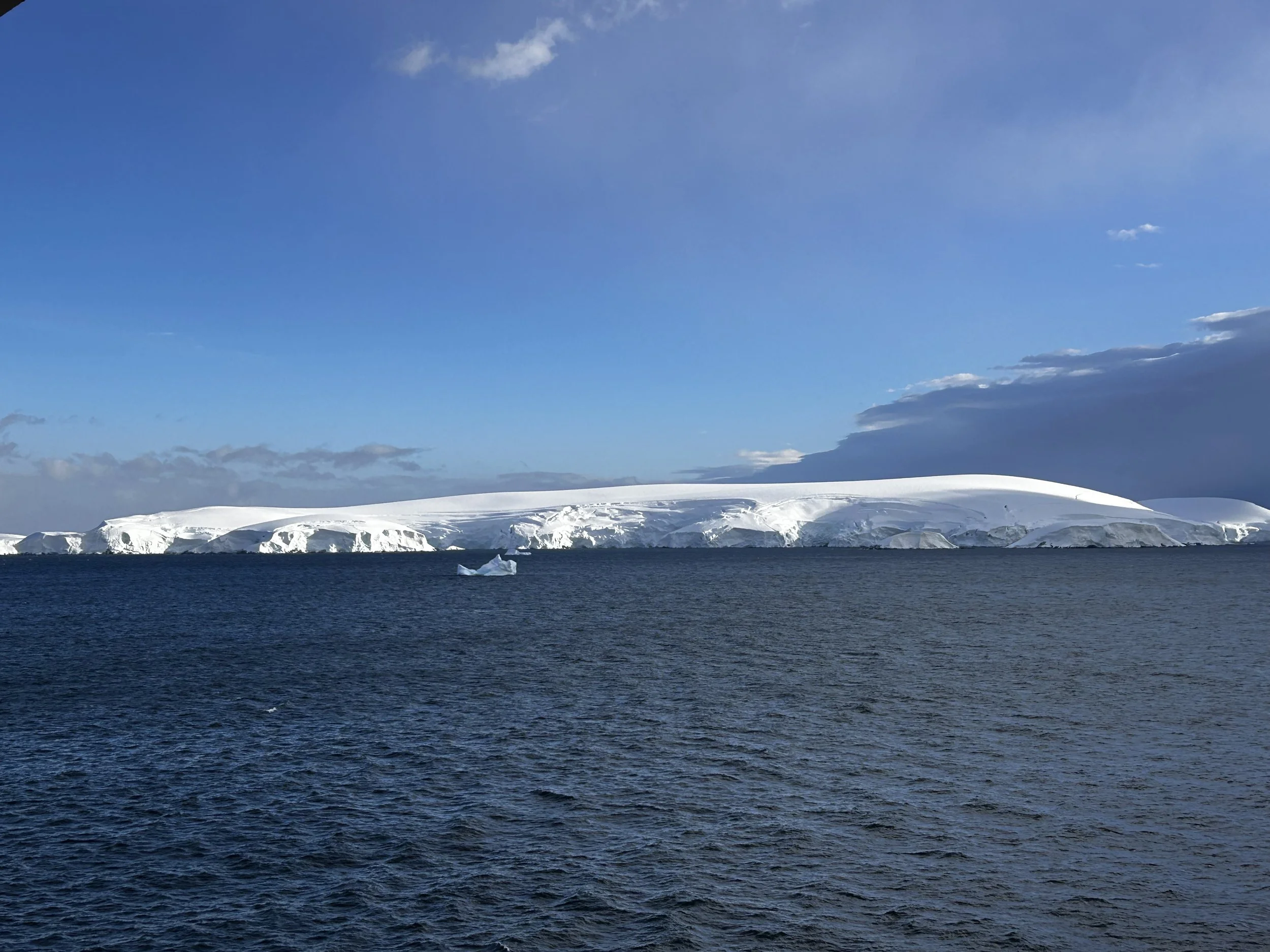
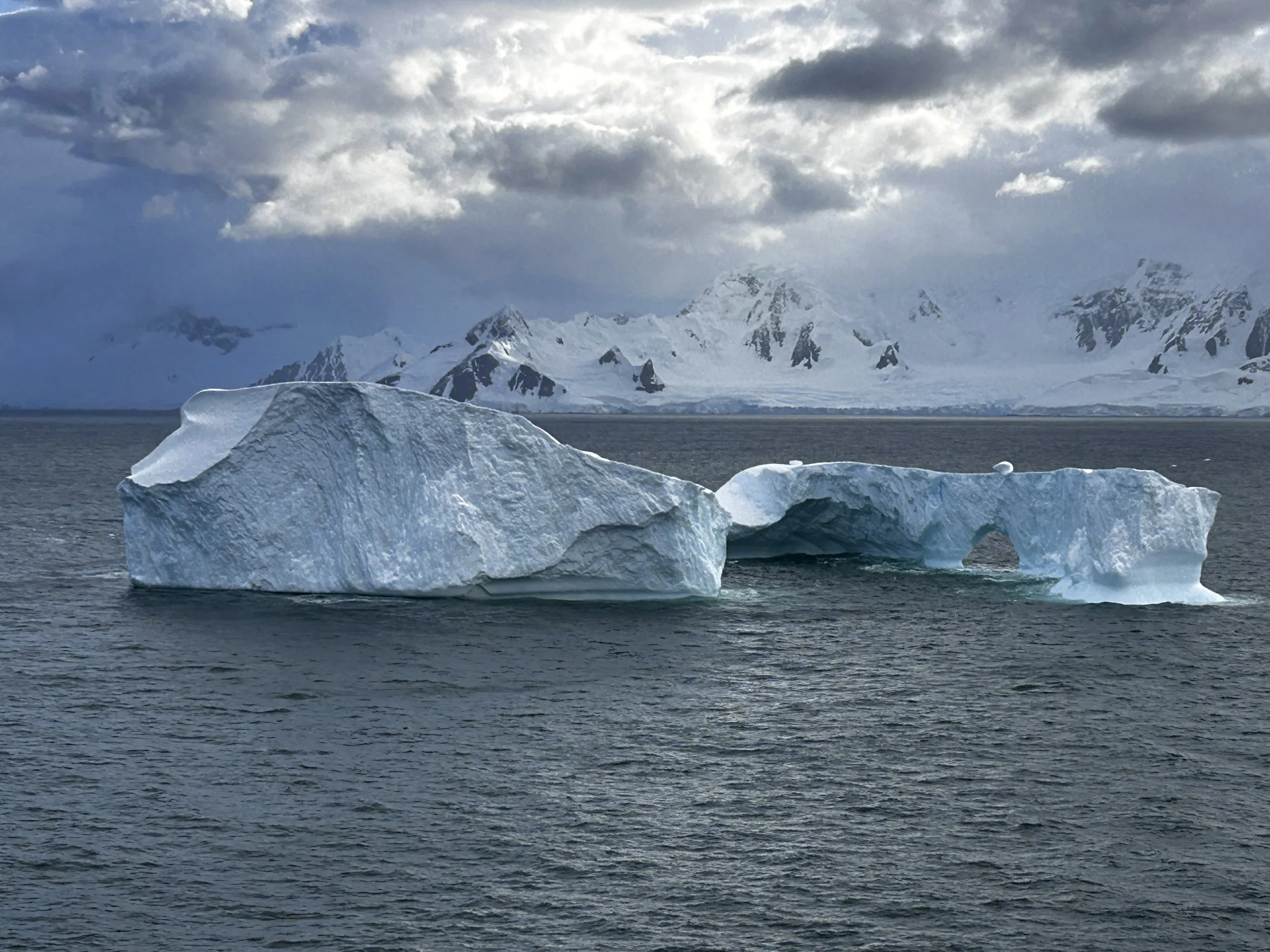
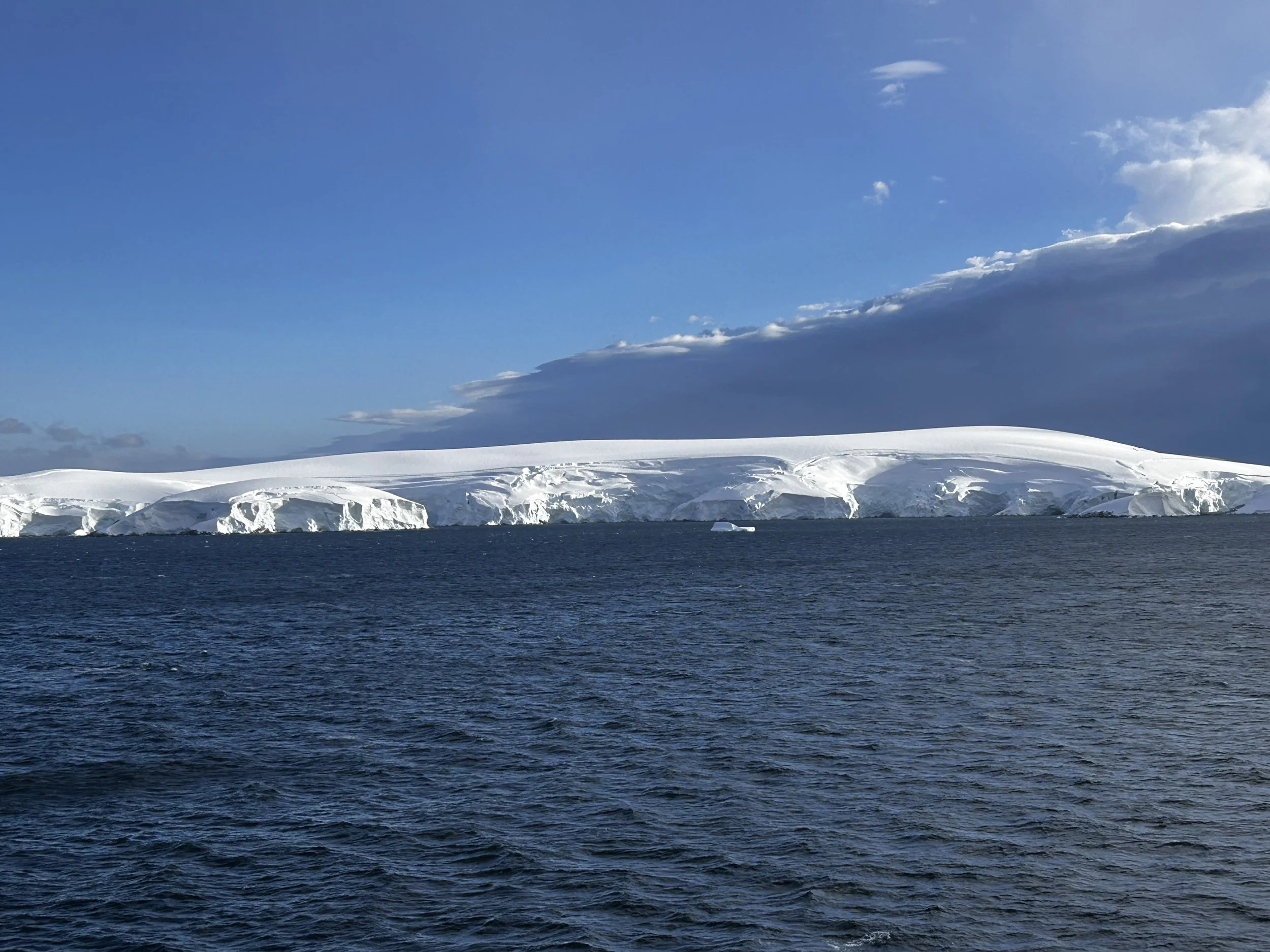
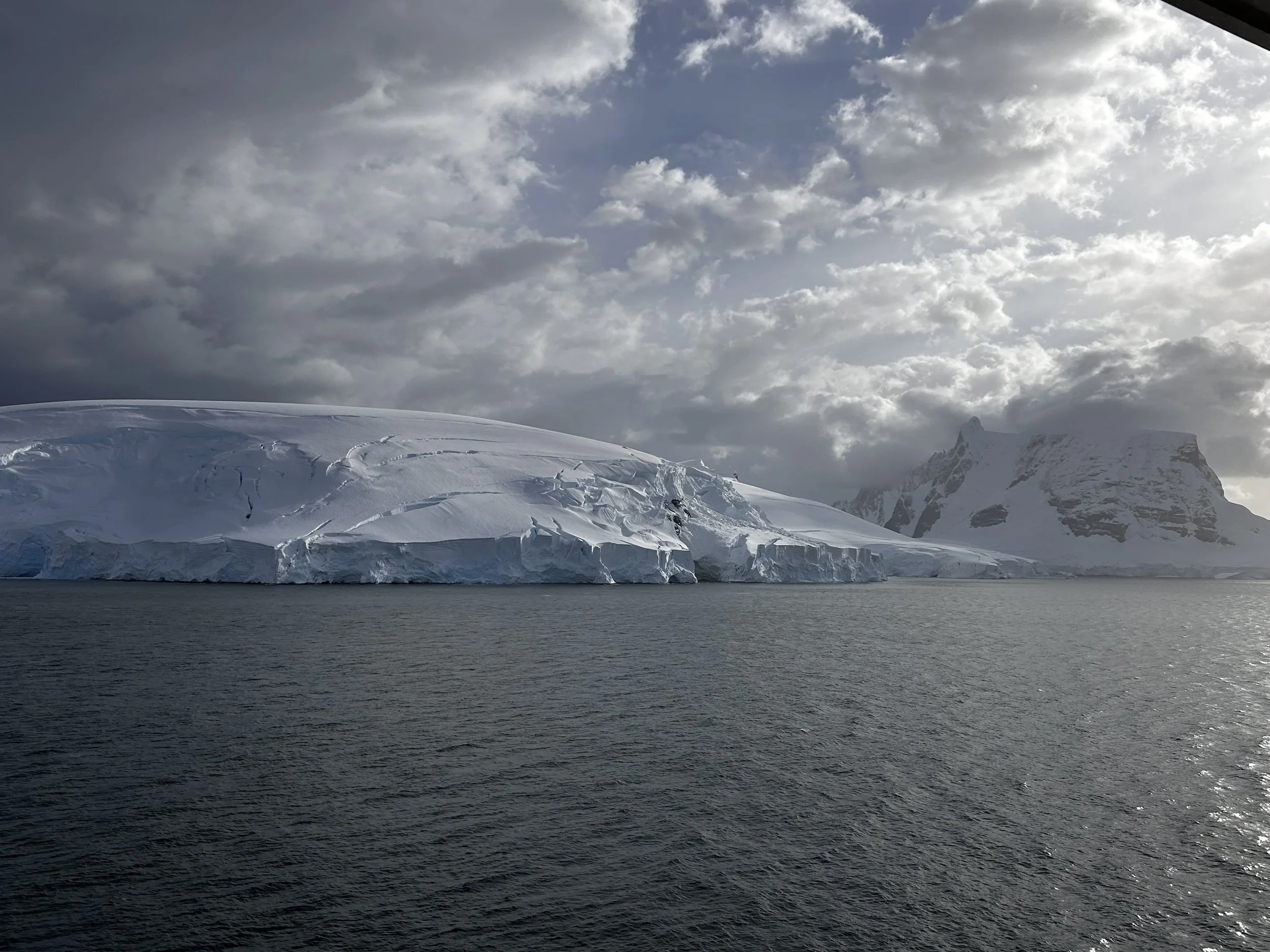
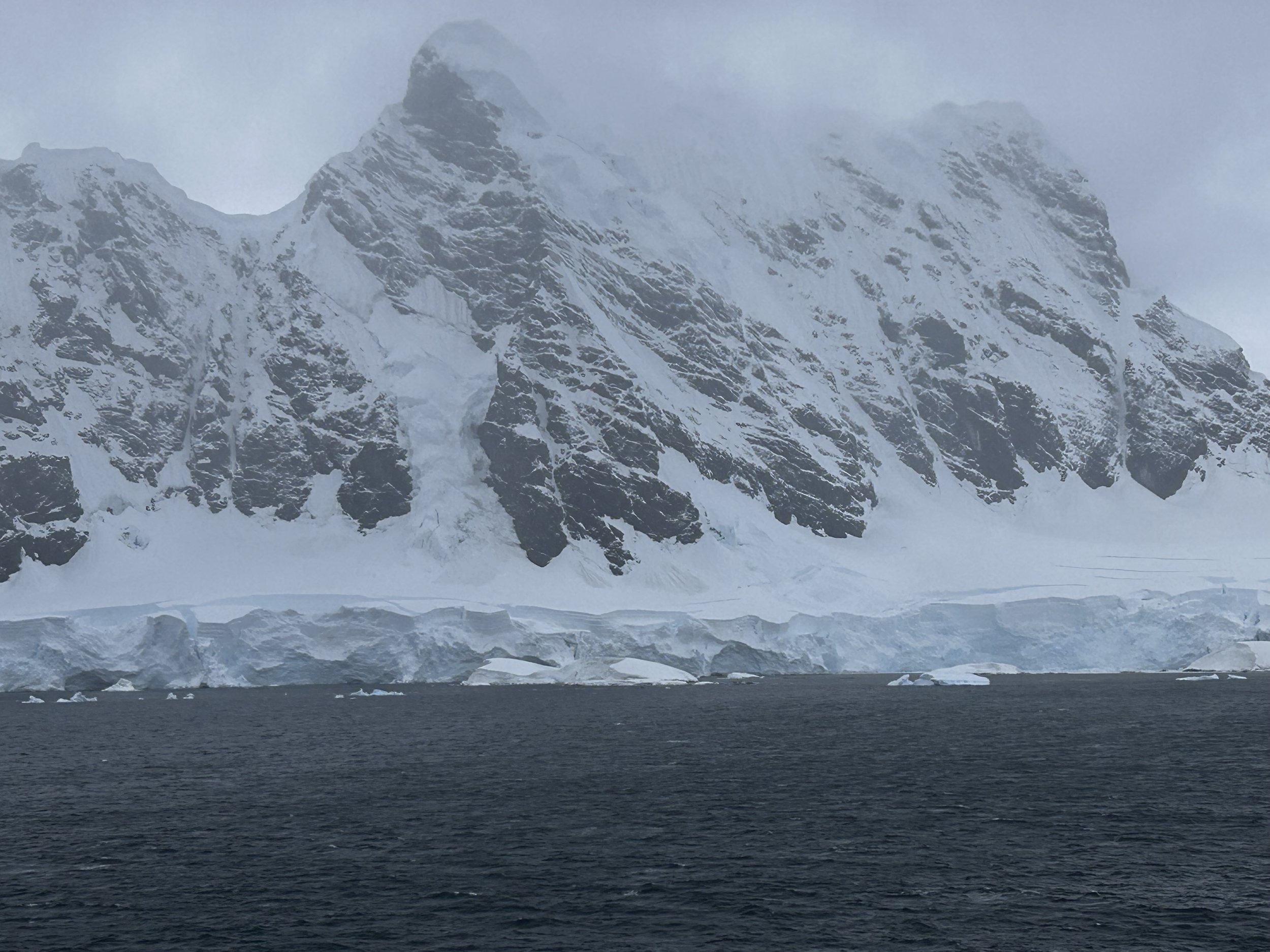
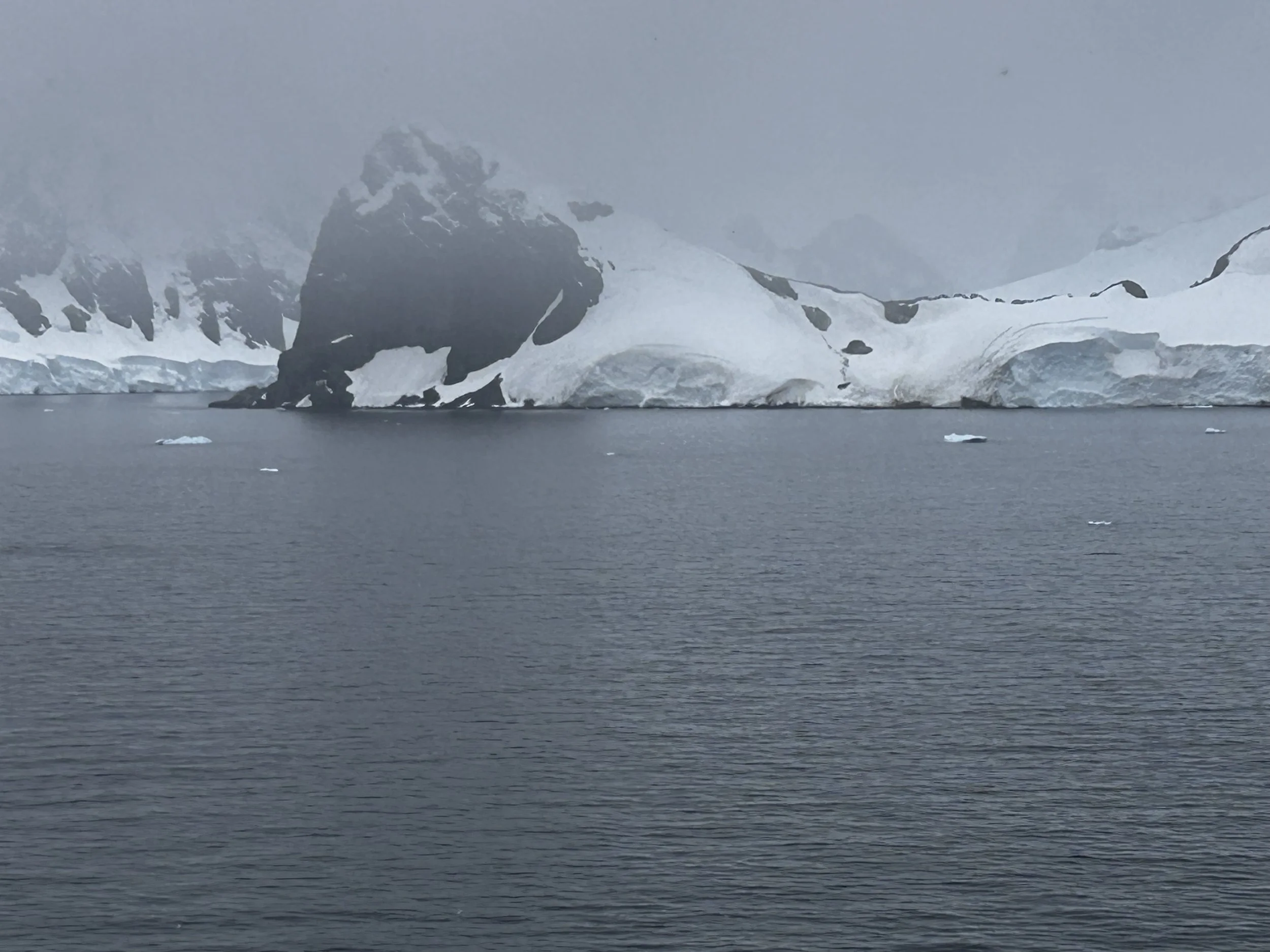
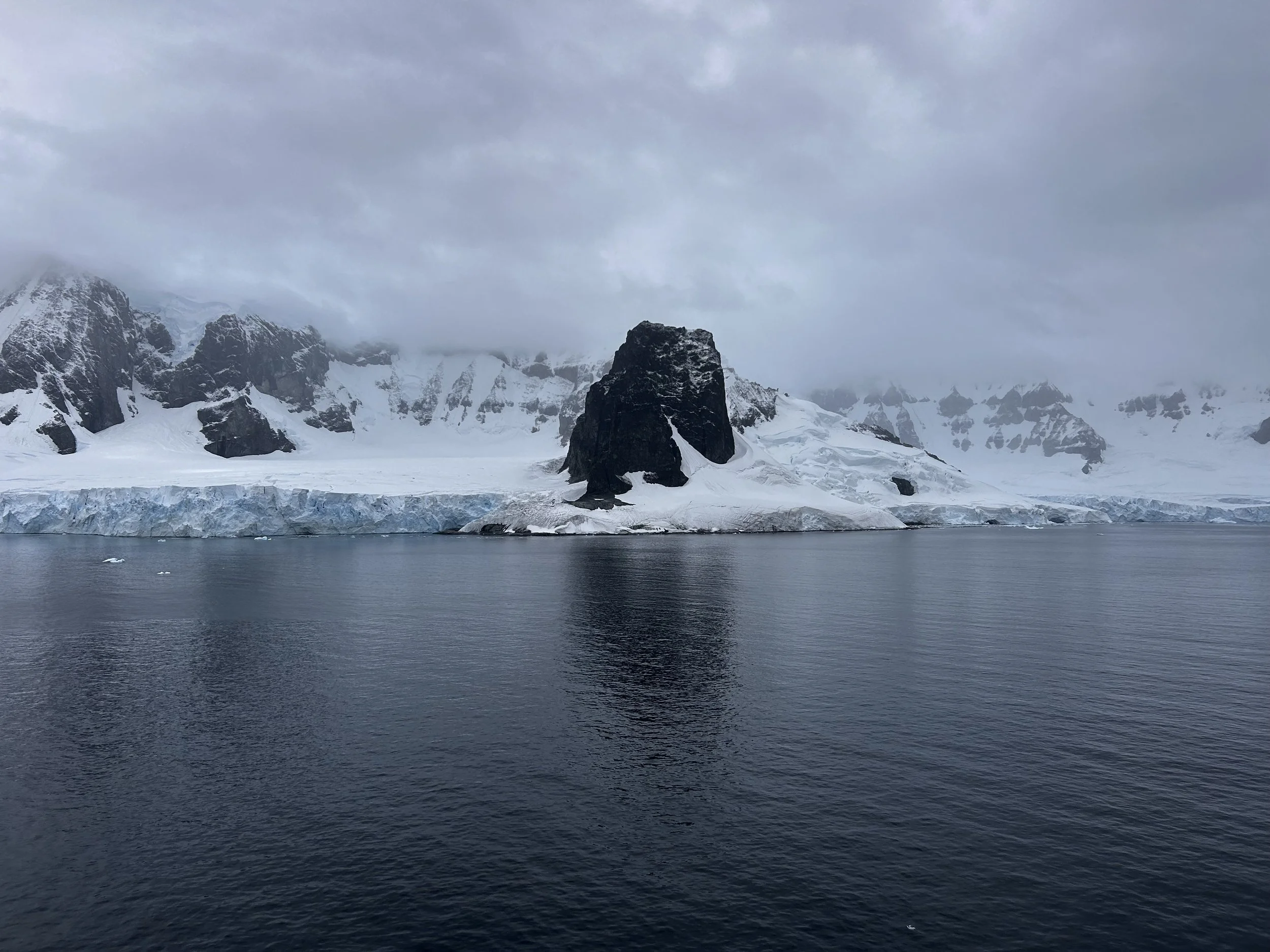
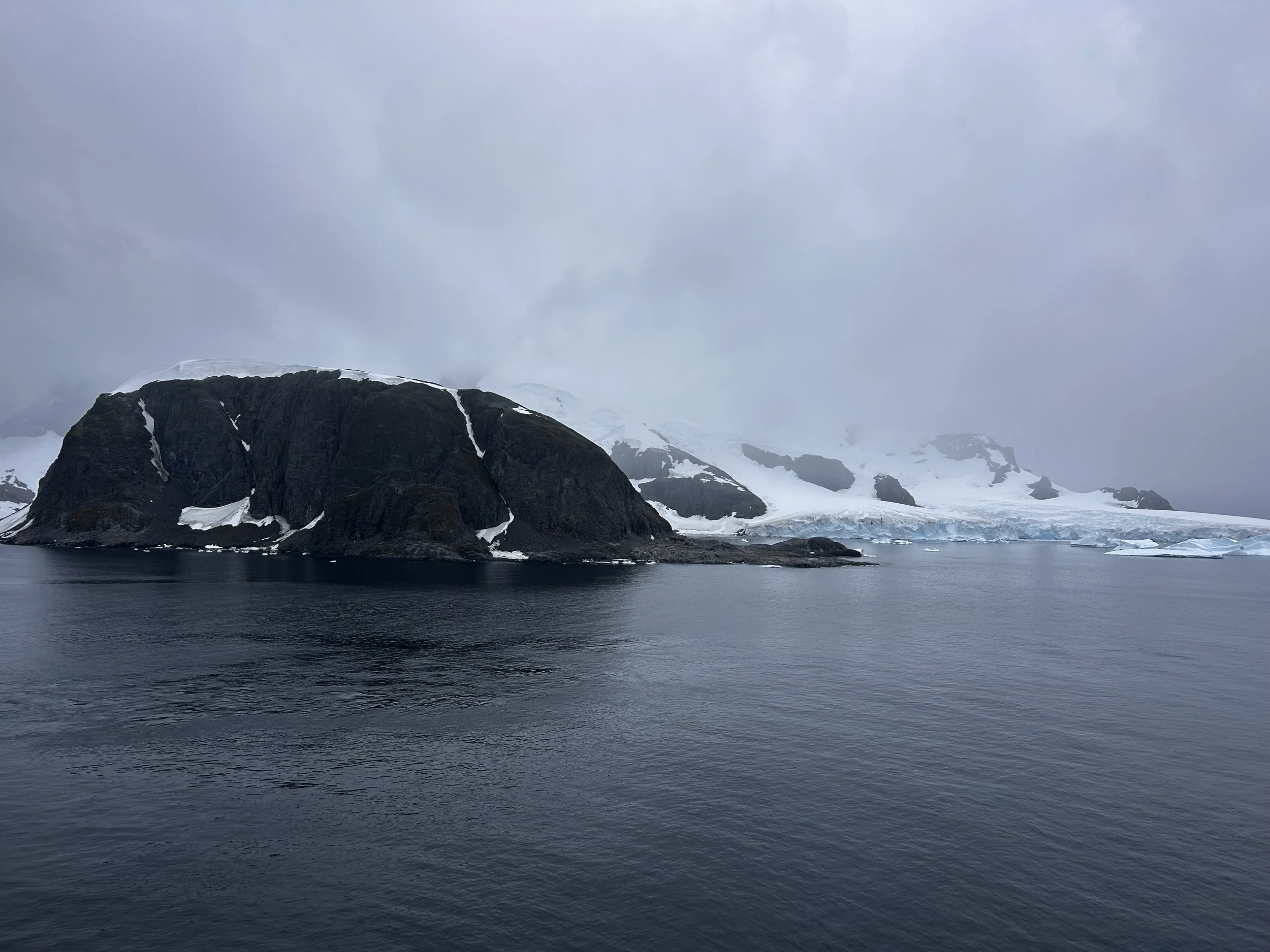
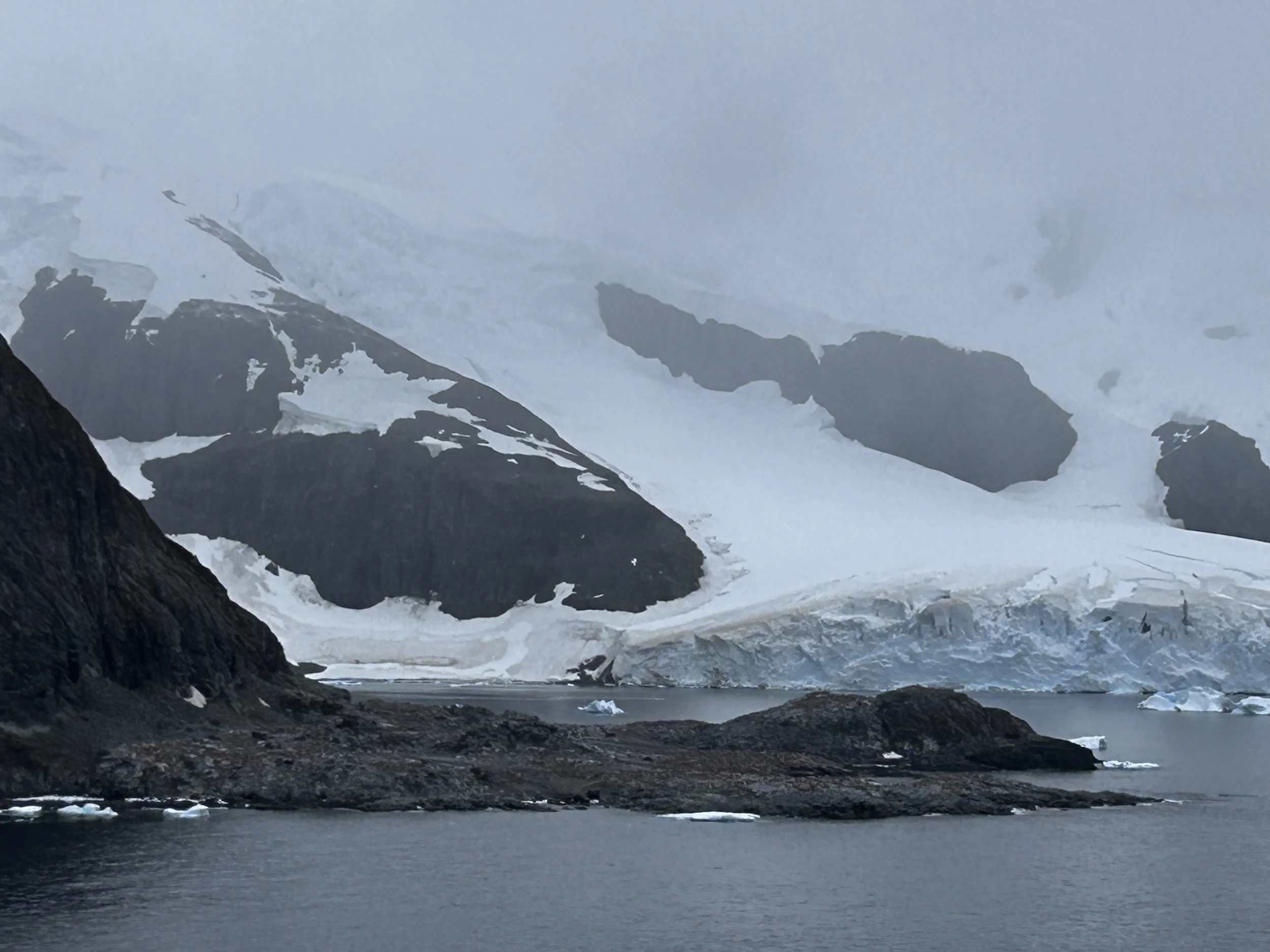
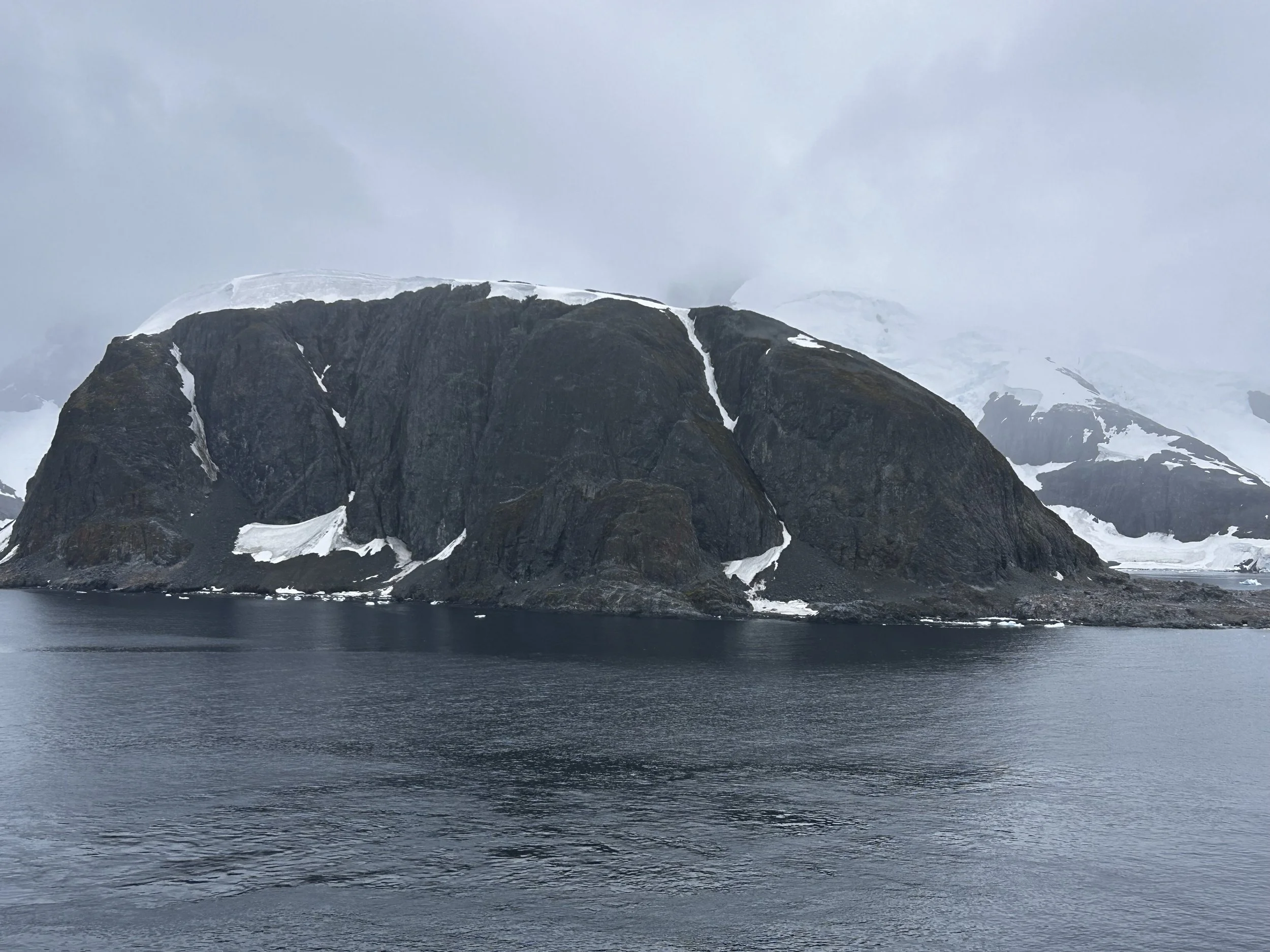
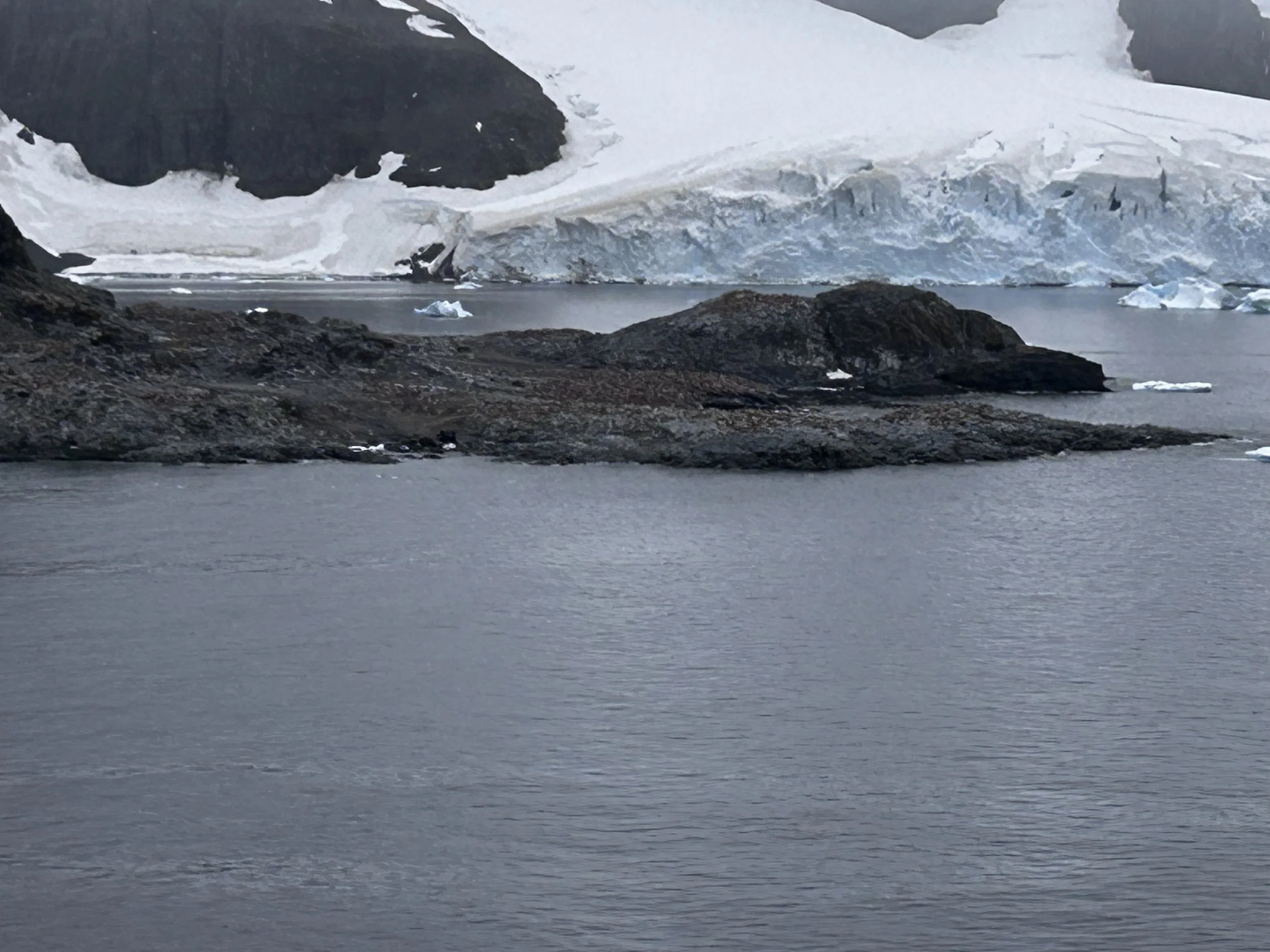
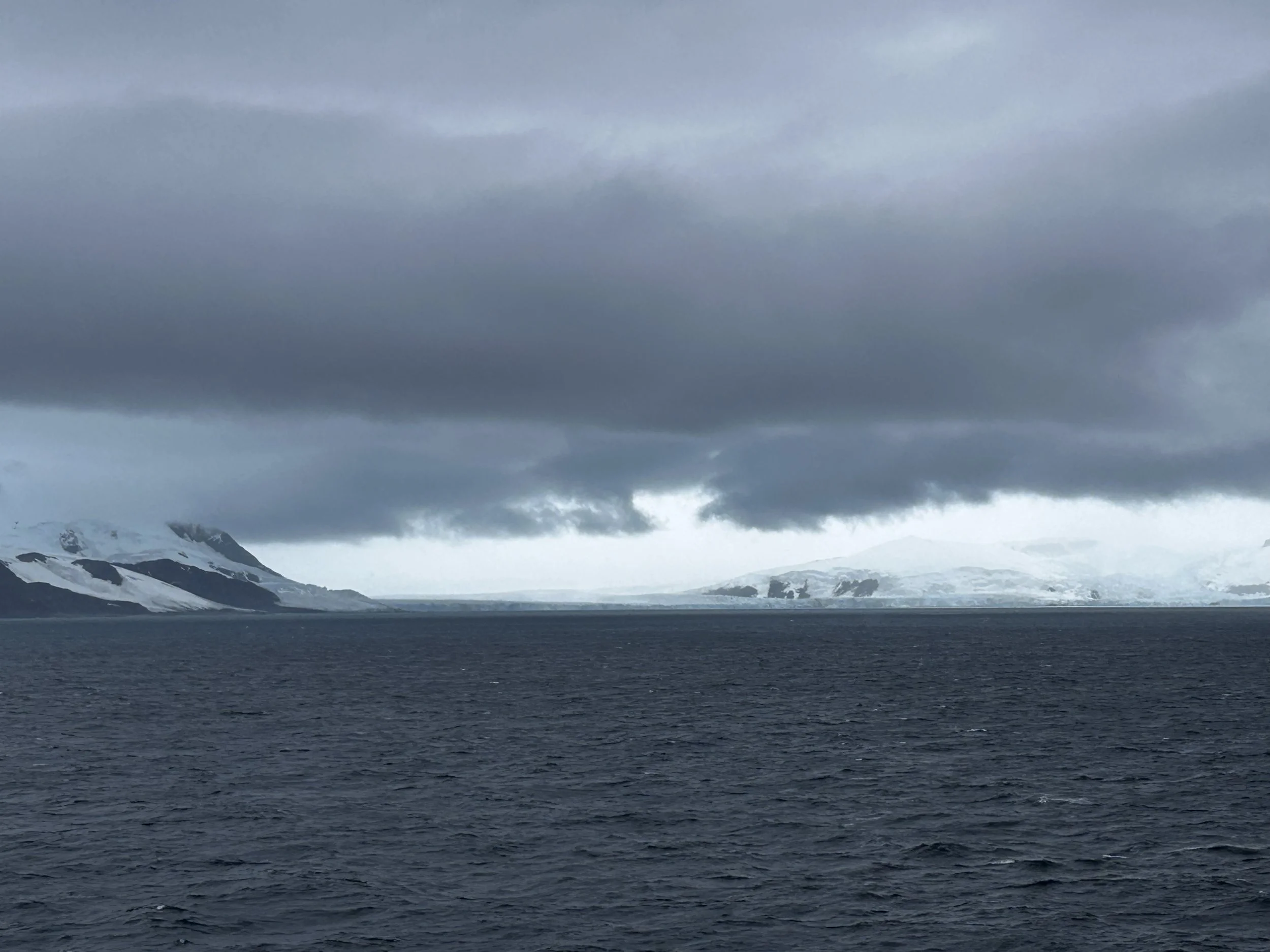
Antarctica was impressive with all the mountains, snow, and glaciers. But even more impressive was when we entered Paradise Bay. No matter which direction you looked in the water, there were penguins and whales. The penguins in the water were feeding. I would spot an area of the water that appeared to start boiling and it would be 20-30 penguins that would come to the surface, grab a quick breath, and then dive again. Then, as soon as they were done, another group would start up. There was always one happening close to the ship. We came to a complete stop and started rotating slowly next to a penguin colony on shore with thousands of penguins just standing. From our educational seminars on penguins, these were one parent charged with standing on the nest with the eggs or young chicks while the other parent fed. If you don’t know, both parents take turn gorging themselves, then return to the nest for their turn at standing on the nest. They also disgorge (vomit!) food in their throat that the chick eats directly from. In scanning the colony closely with binoculars for 30-40 minutes I never spotted one of the thousands of penguins on land actually moving! Just a wild thought, but I thought it was a strange coincident that after seeing thousands of penguins, the menu at the fancy-pants restaurant had turkey and dressing that evening. Hmmm…I wonder where they got 200 turkeys resupplied while we were in the remote Antartic?!
Humpback whales were also in all directions in Paradise Bay. These would be further off. They would surface for a few seconds, then show tail as they dove to propel themselves deep. As soon as the last of a pod all dove, another pod would be spotted surfacing. There may be other areas around Antarctica just as good, but Paradise Bay was very impressive with never a moment where you couldn’t see something in the water or on shore.
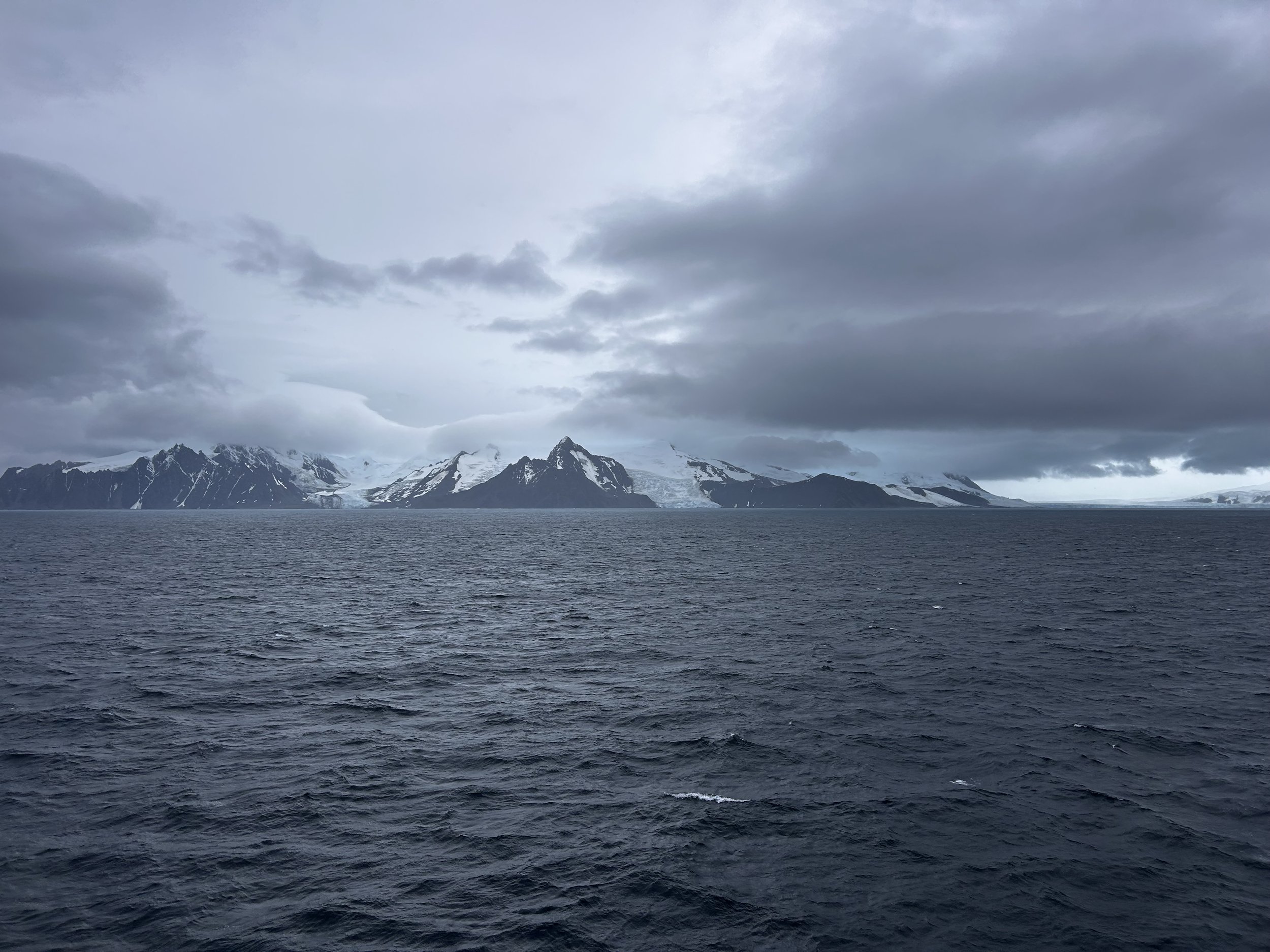
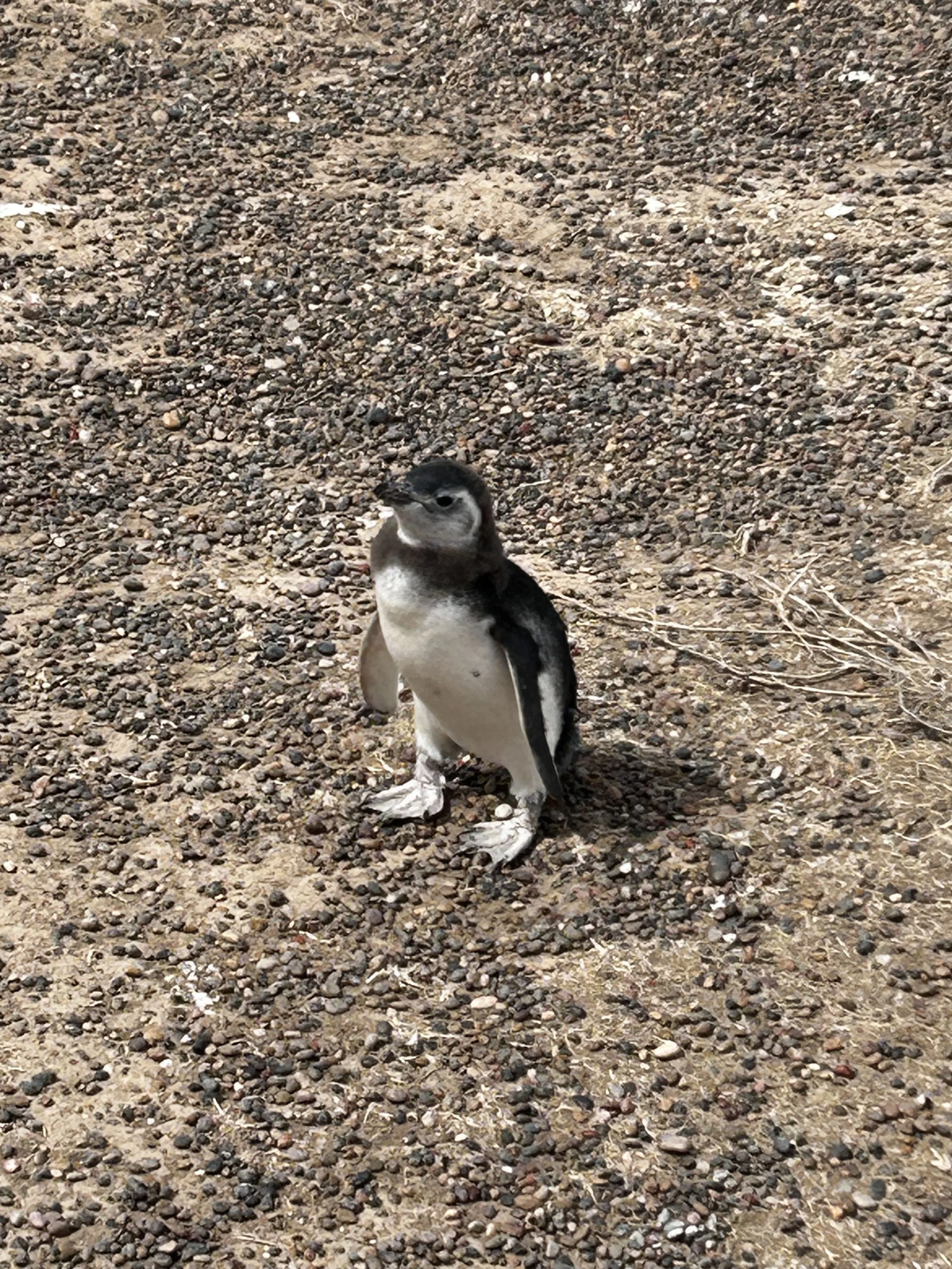
From Paradise Bay, we cruised up the peninsula to the archipelago islands and to Elephant Island, named after Sir Horace Elephant. Just kidding. – it was named after the elephant seals that sealers would hunt. It is also a site of…wait for it…shipwrecks! But there wasn’t much to see after Paradise Bay. Just the occasional whale, but you had to be looking by chance in the right direction to spot one before it flipped you off, or it’s tail off, and was gone. This was when the captain announced we would not be able to stop at Port Stanley in the Falkland Islands. Gale-force winds were forecasted and the port had notified all scheduled arrivals that the port would be closed. This was particularly disappointing because we were scheduled to see a penguin rookery with three different species of penguins. The naturalist on board had informed us there were six species of penguins found in this part of Antarctica: king, gentoo, chinstrap, rockhopper, magellanic and macaroni. The gentoo penguins were the ones I observed in Paradise Bay. In Argentina, we would see the magellanic penguins, which are obviously named for Amerigo Vespucci. Or was that Ferdinand Magellan?
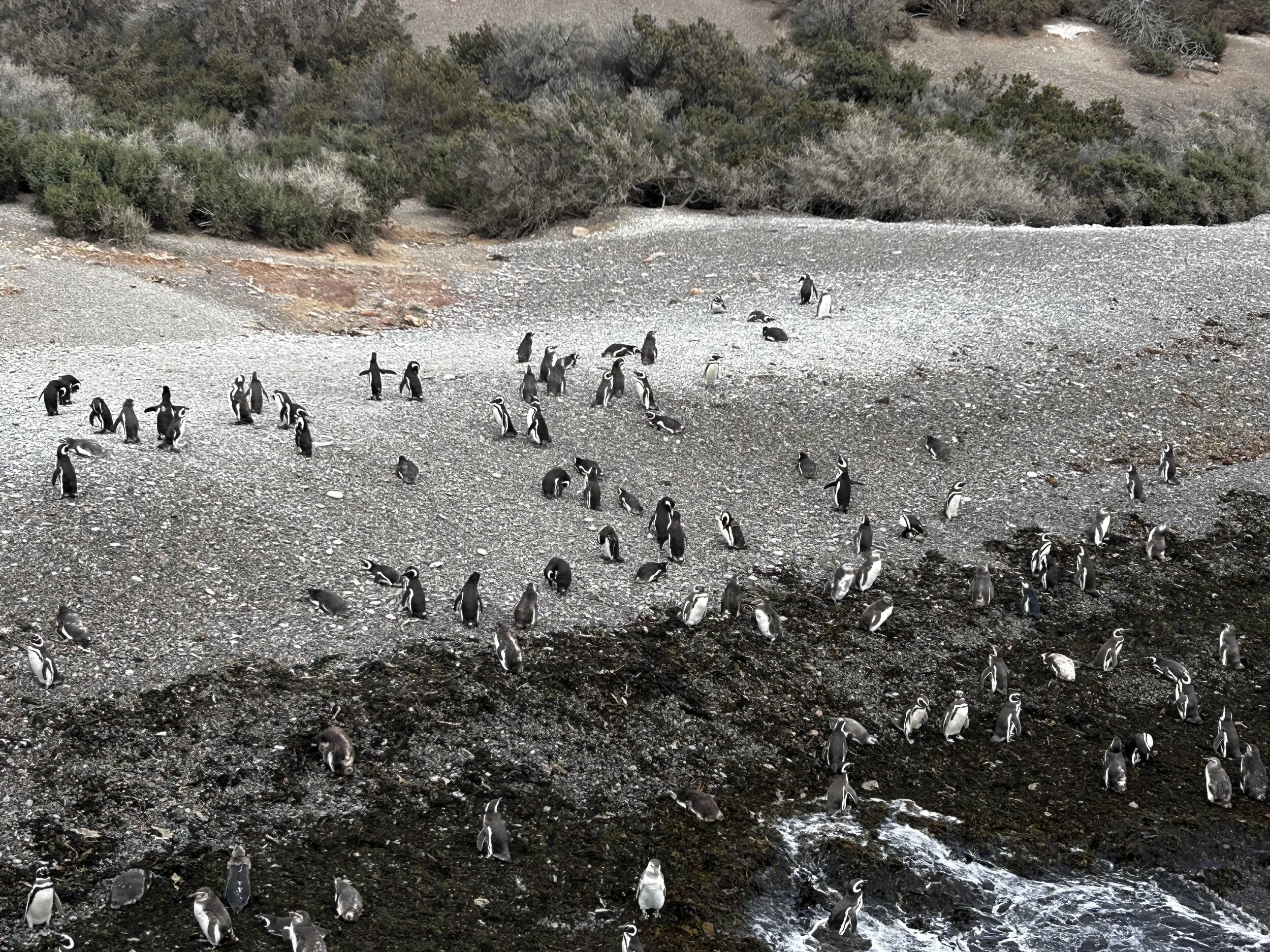
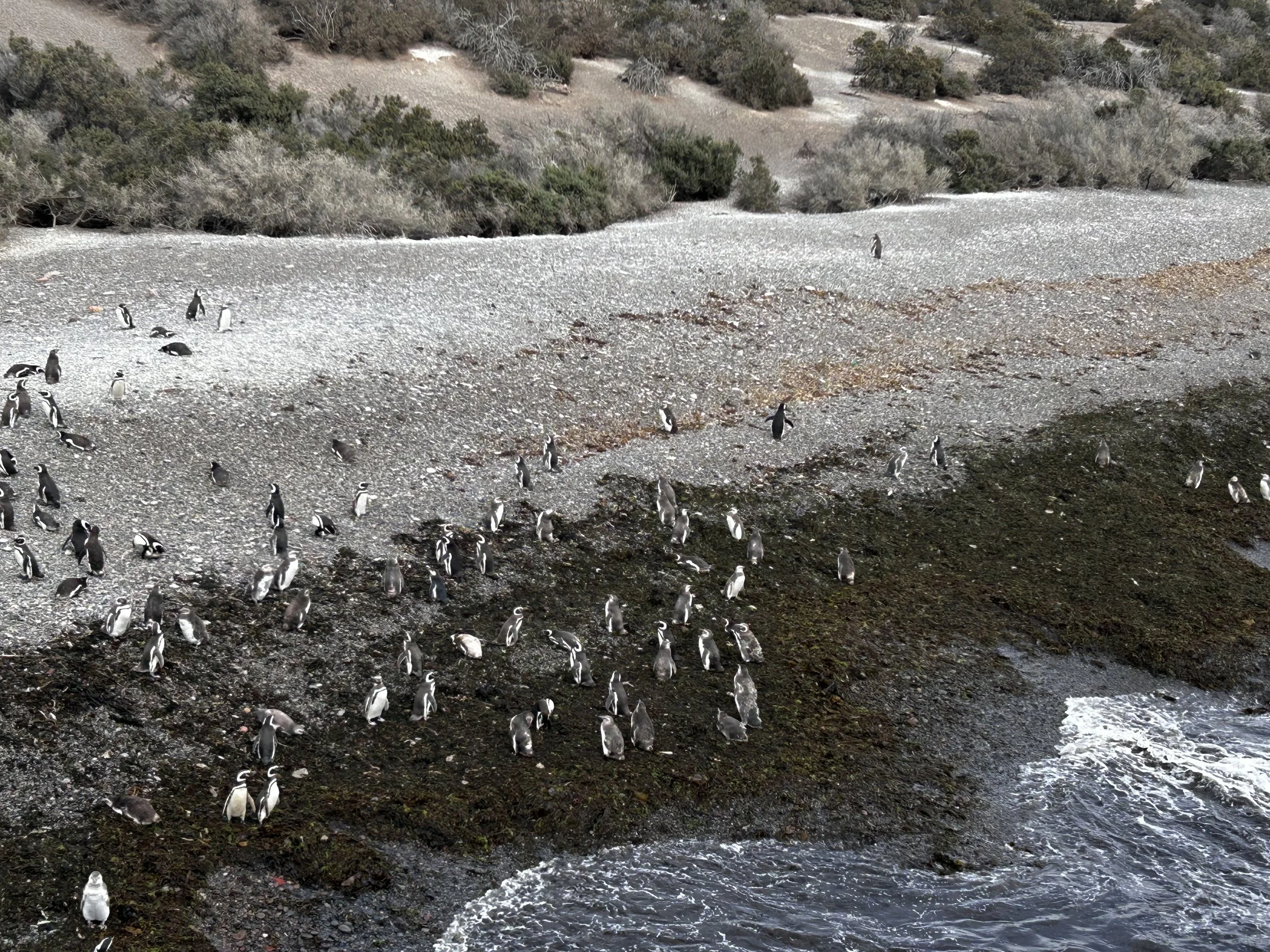
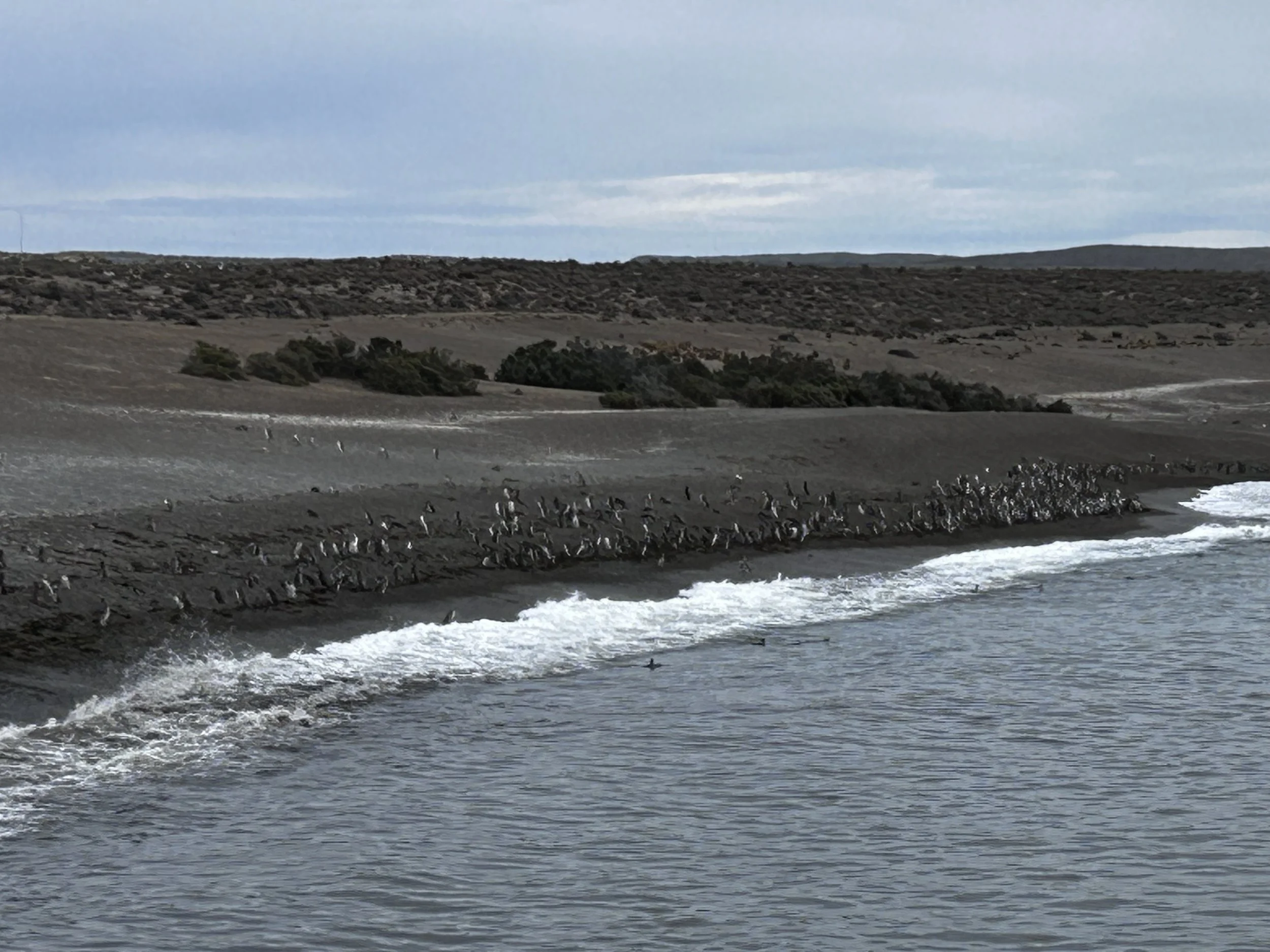
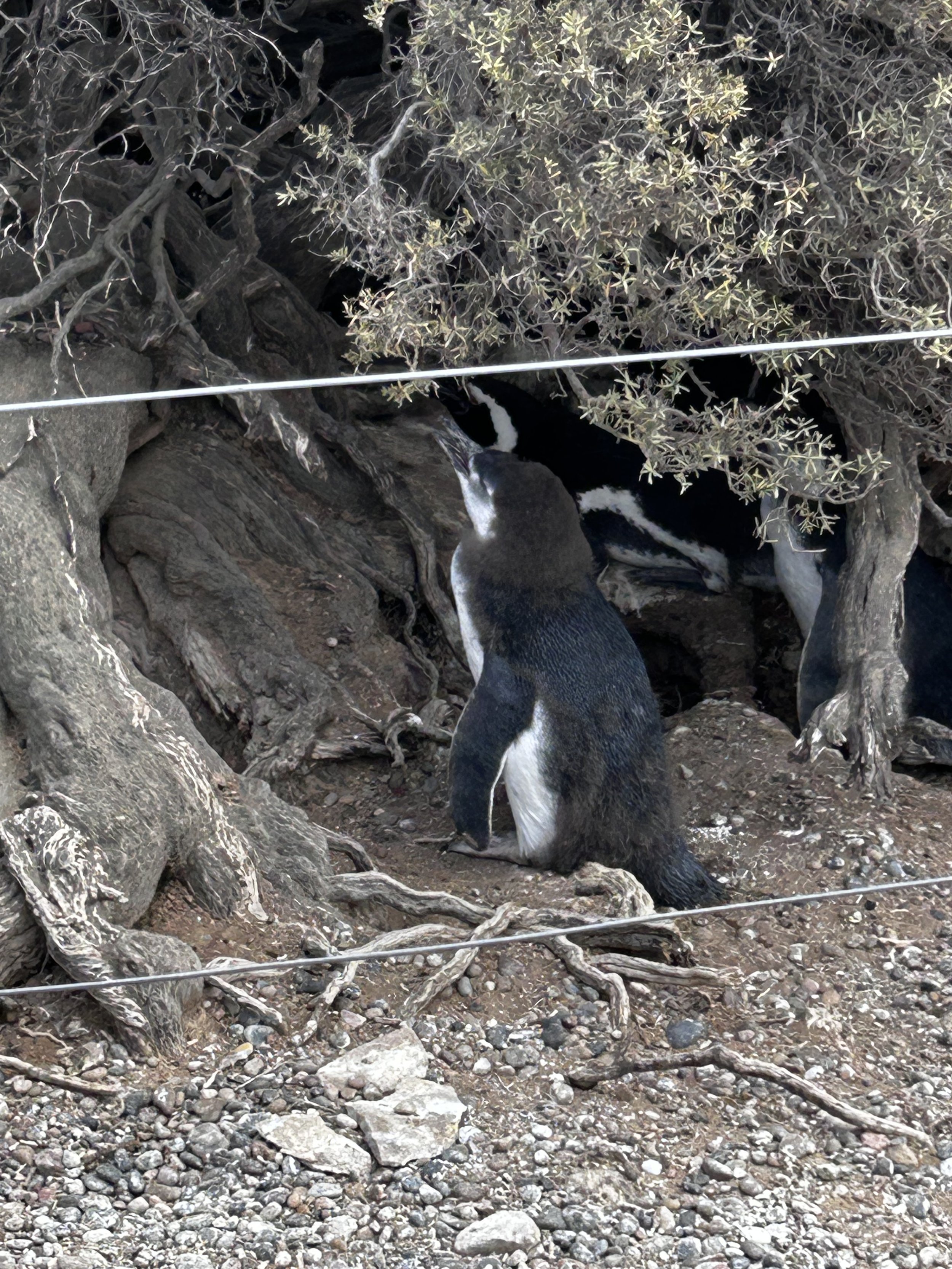
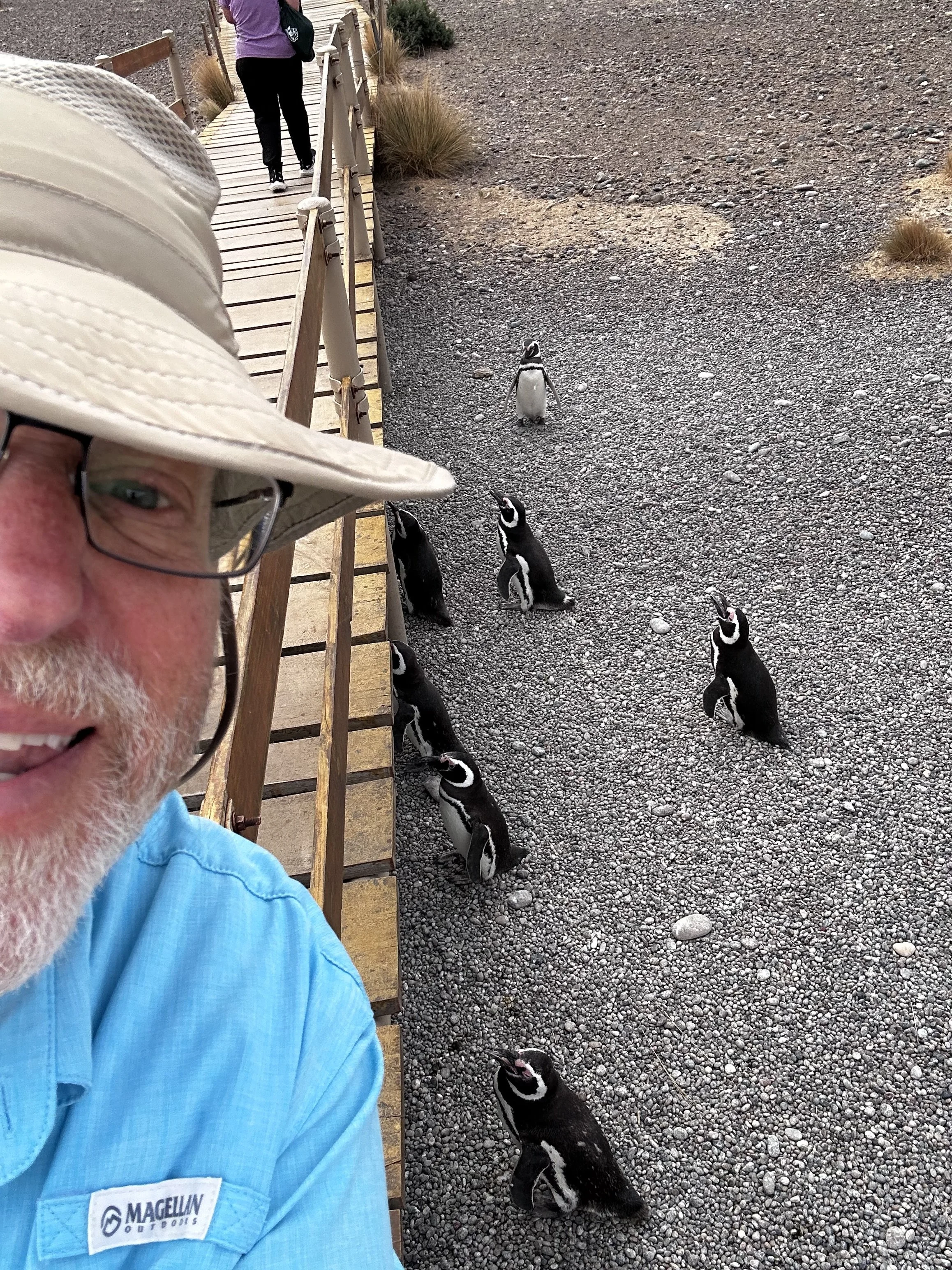
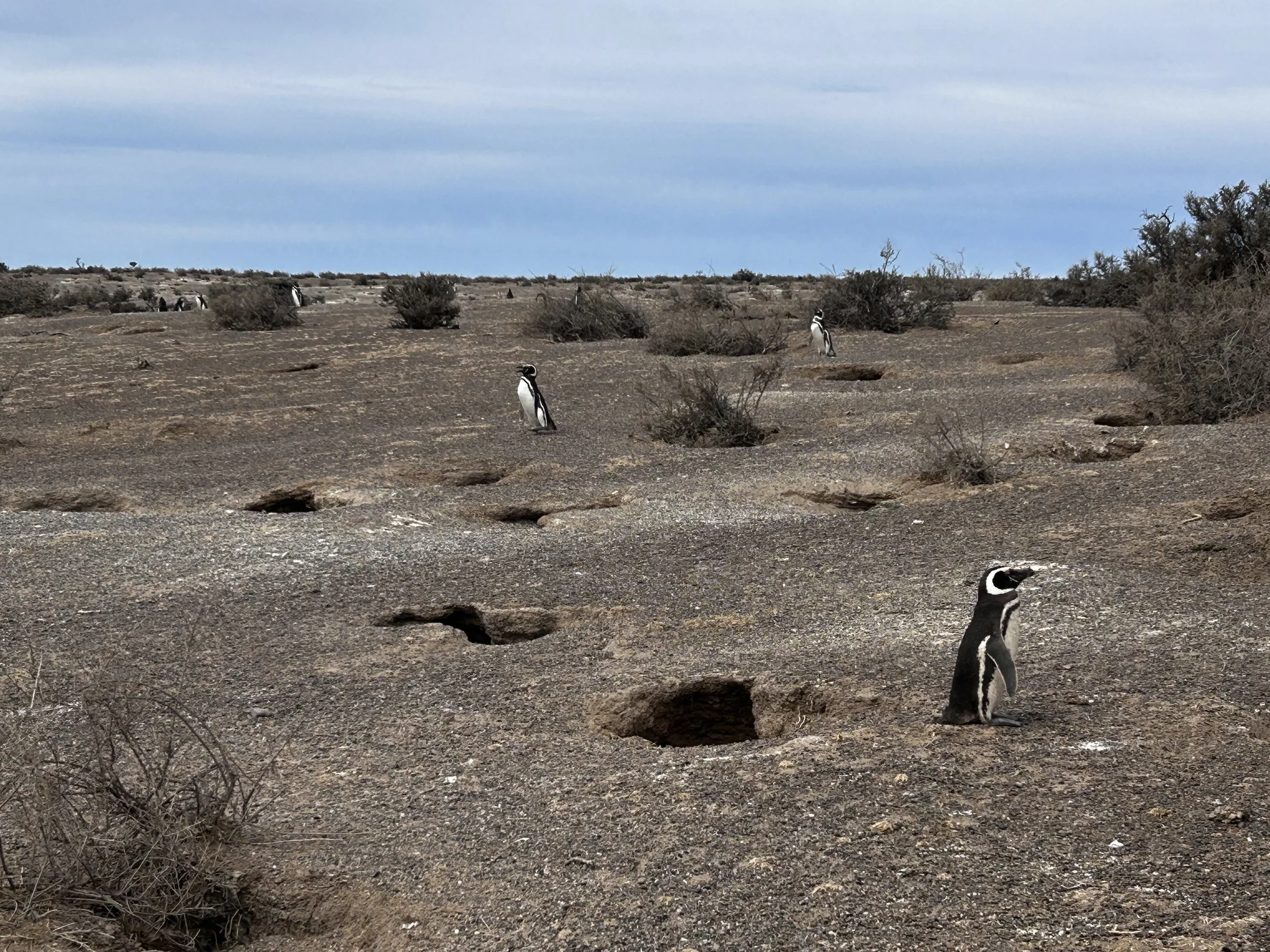
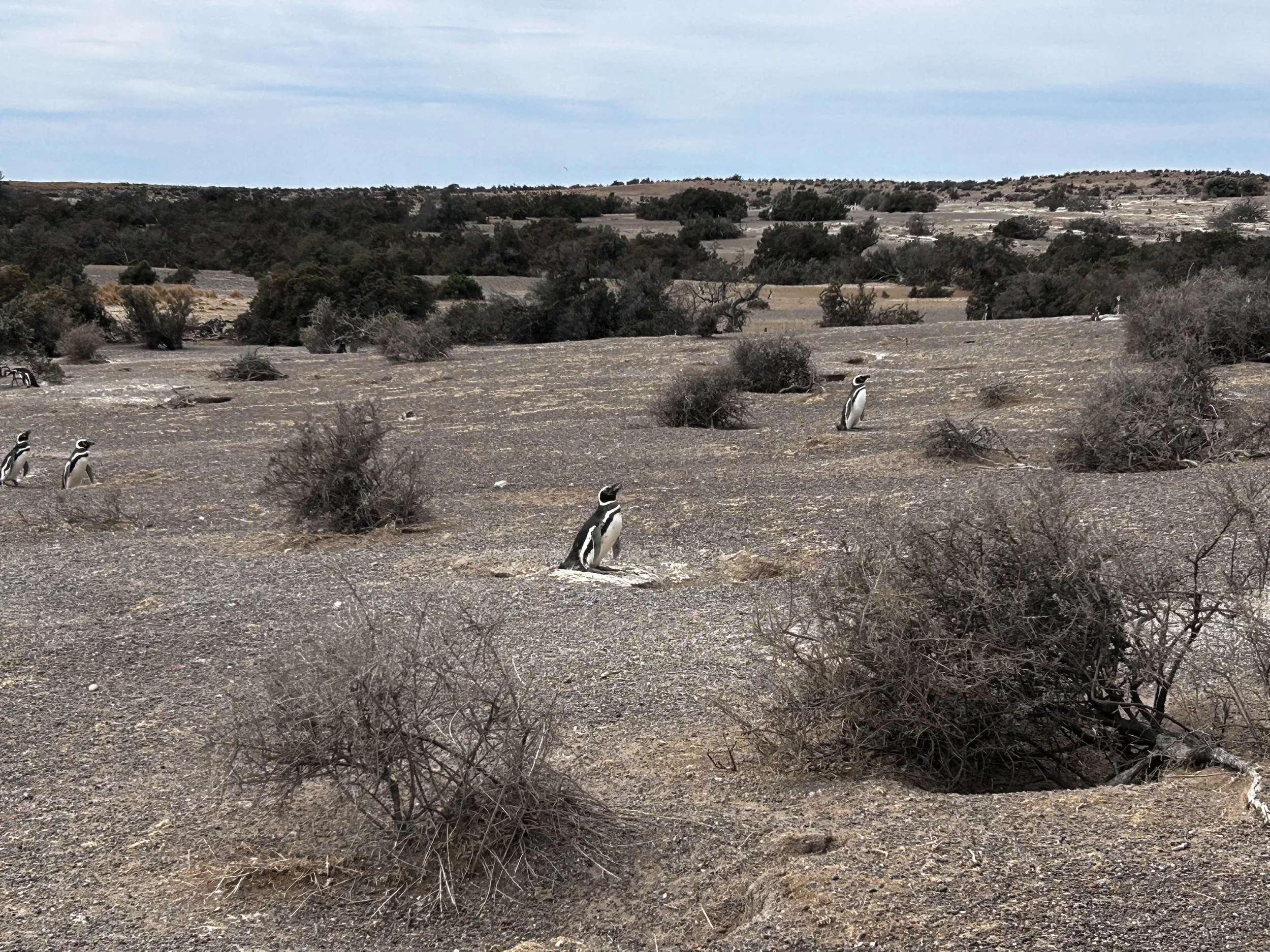
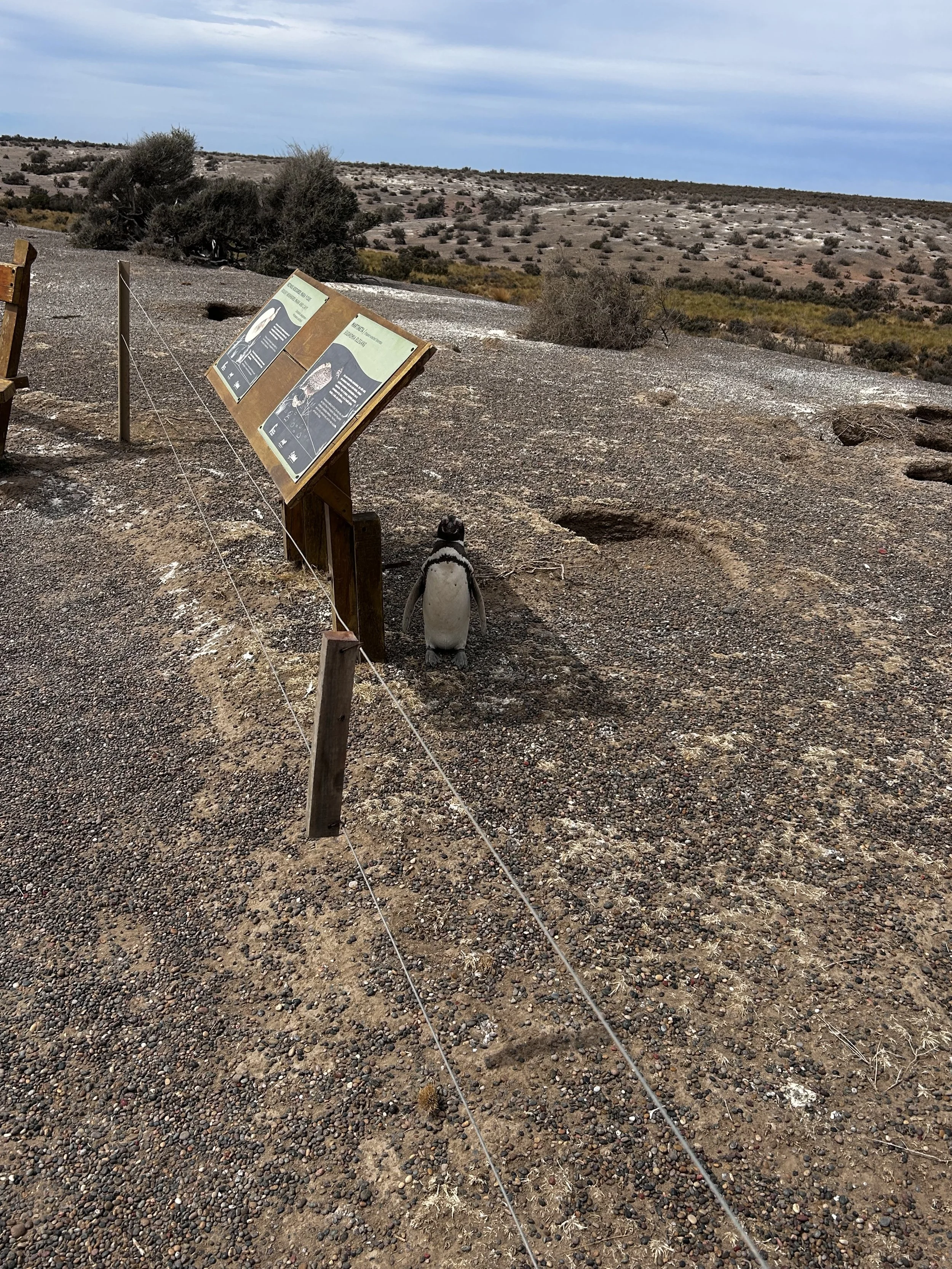
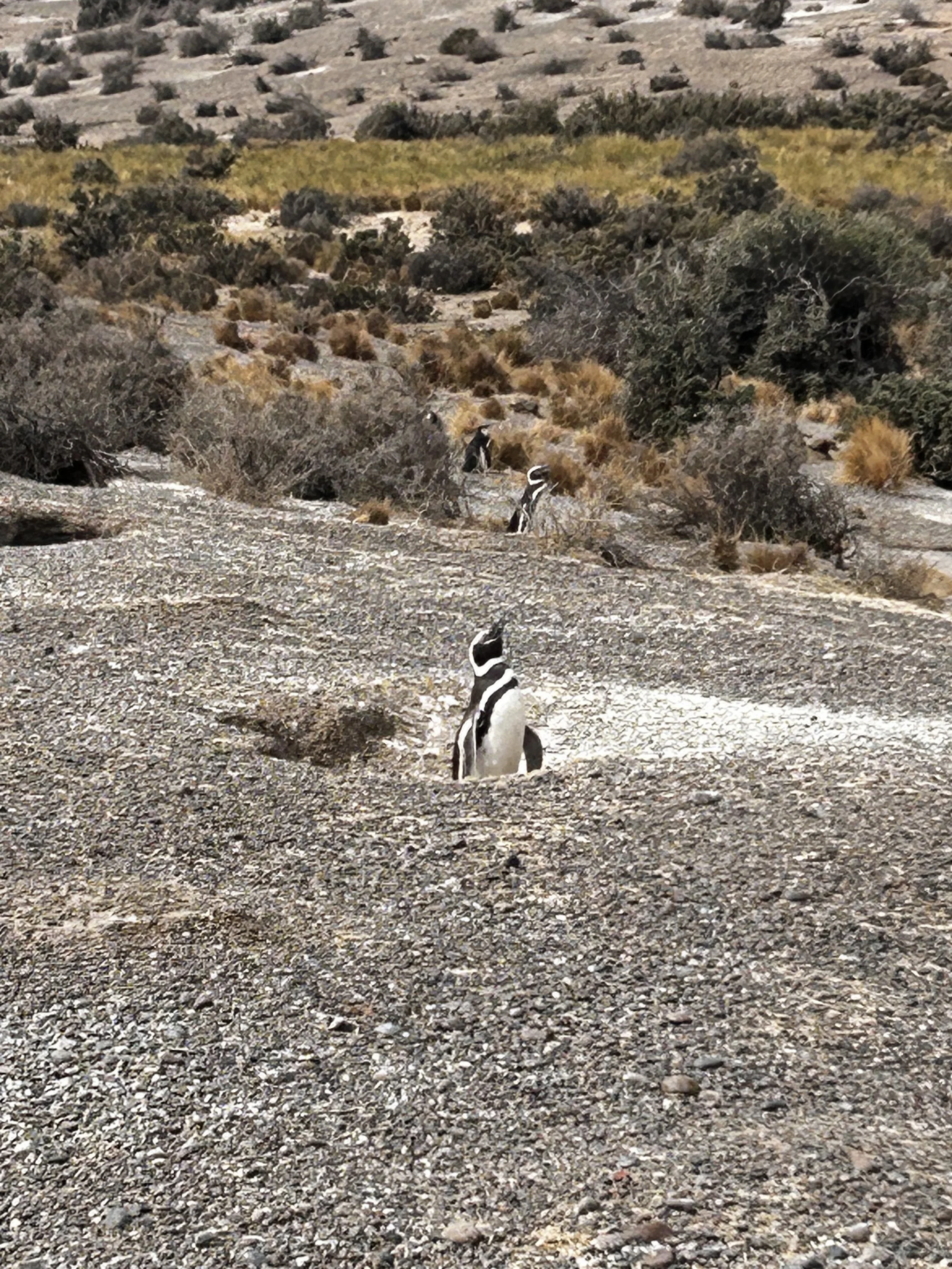
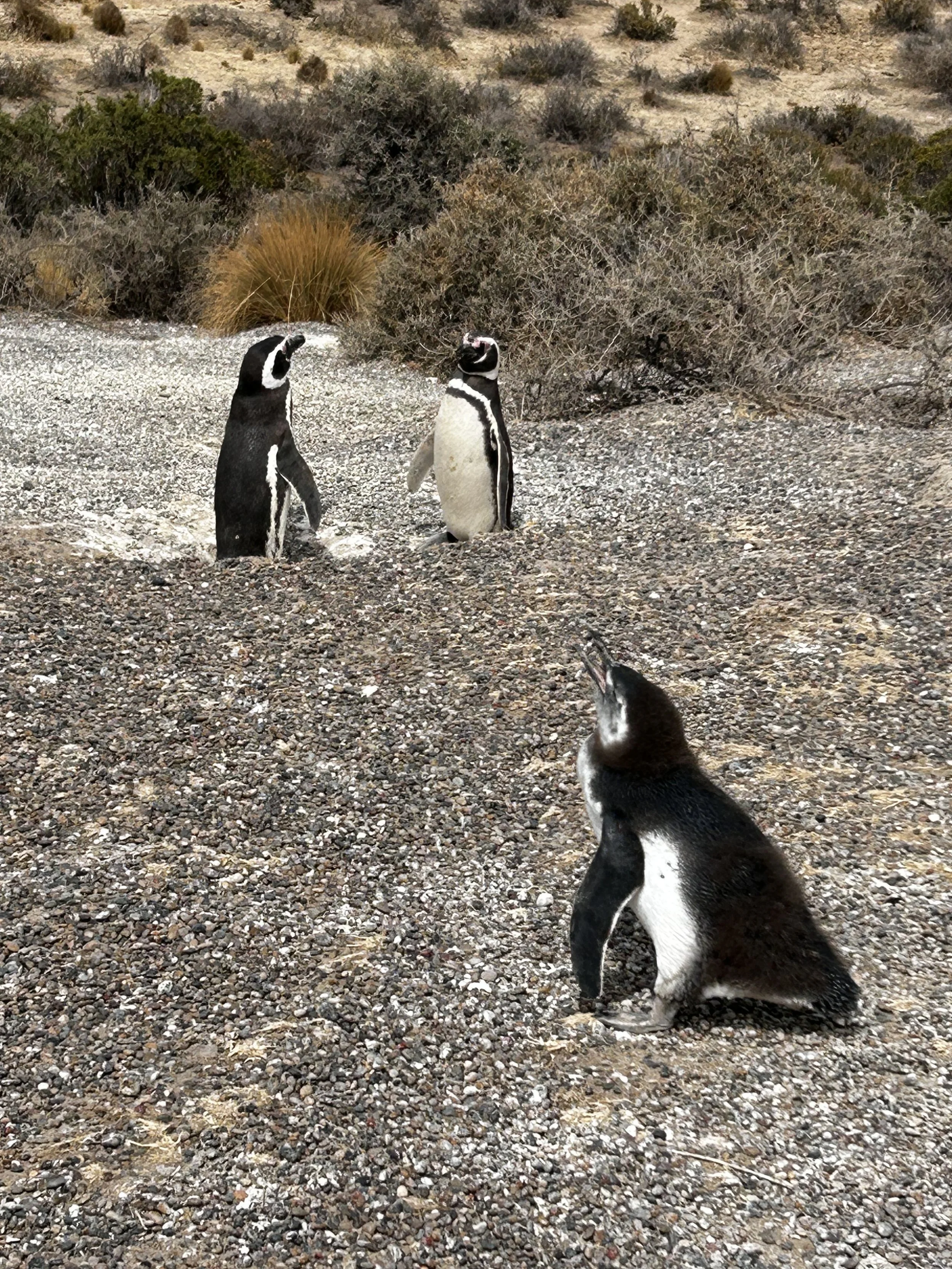
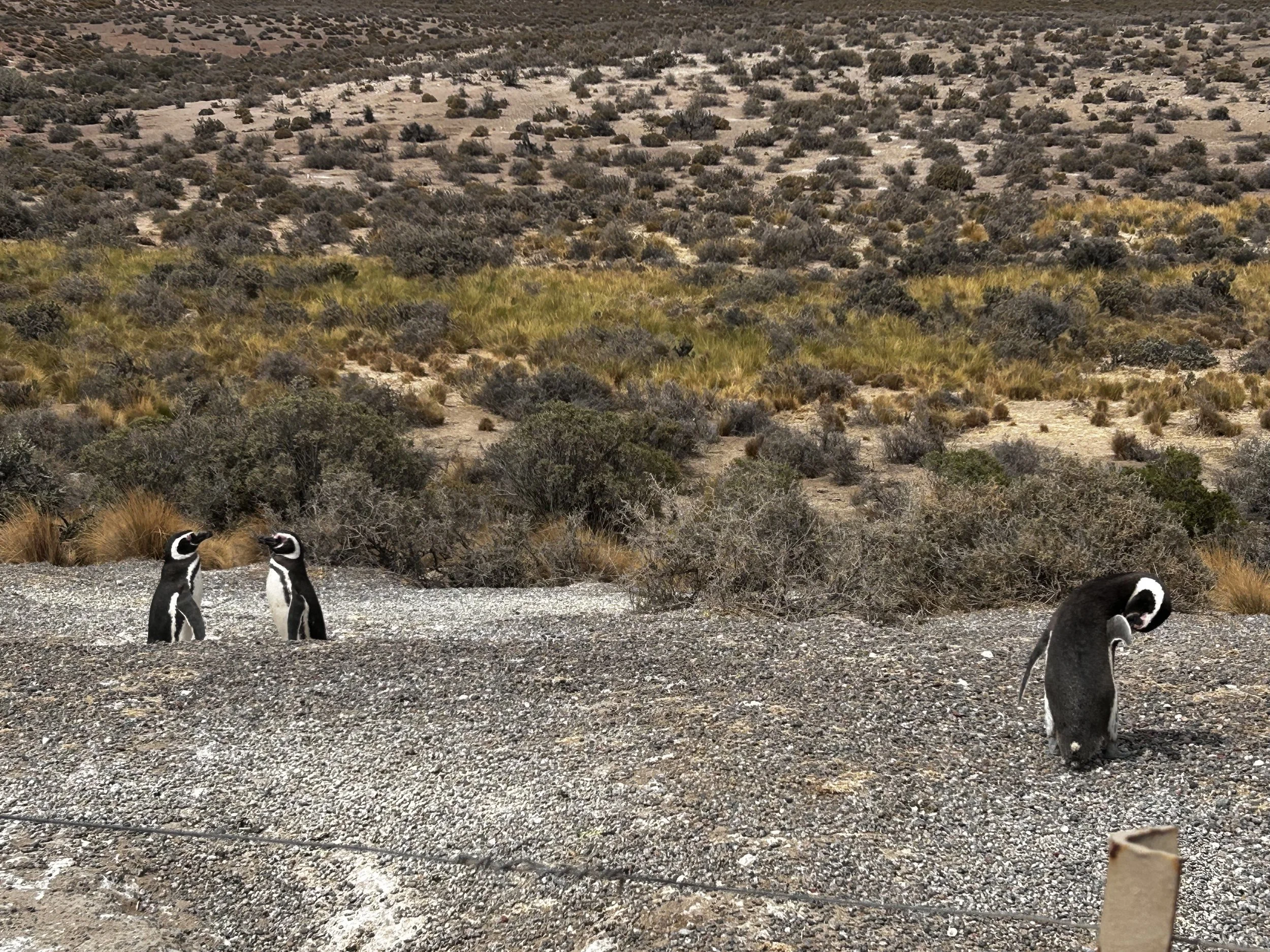
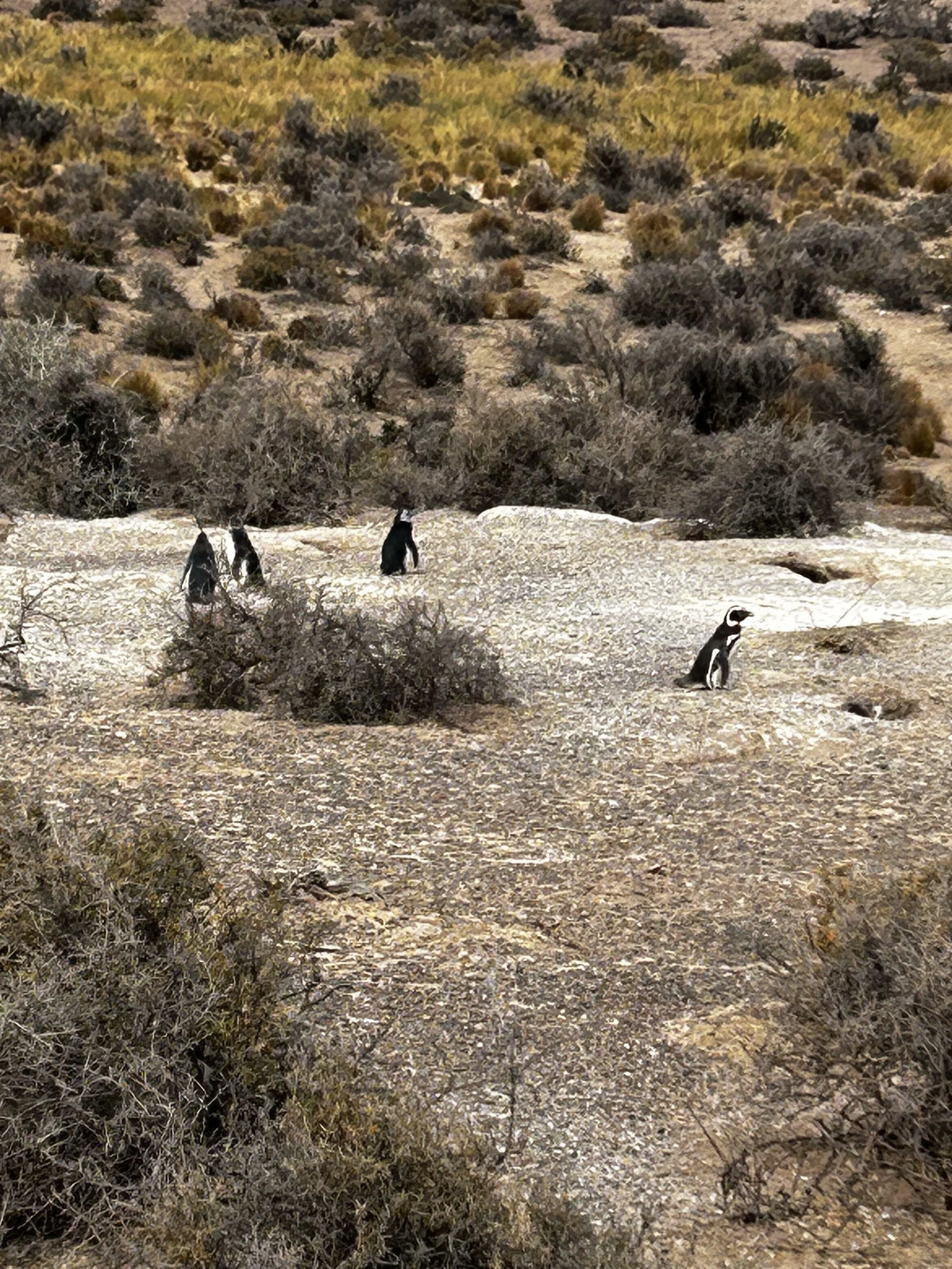
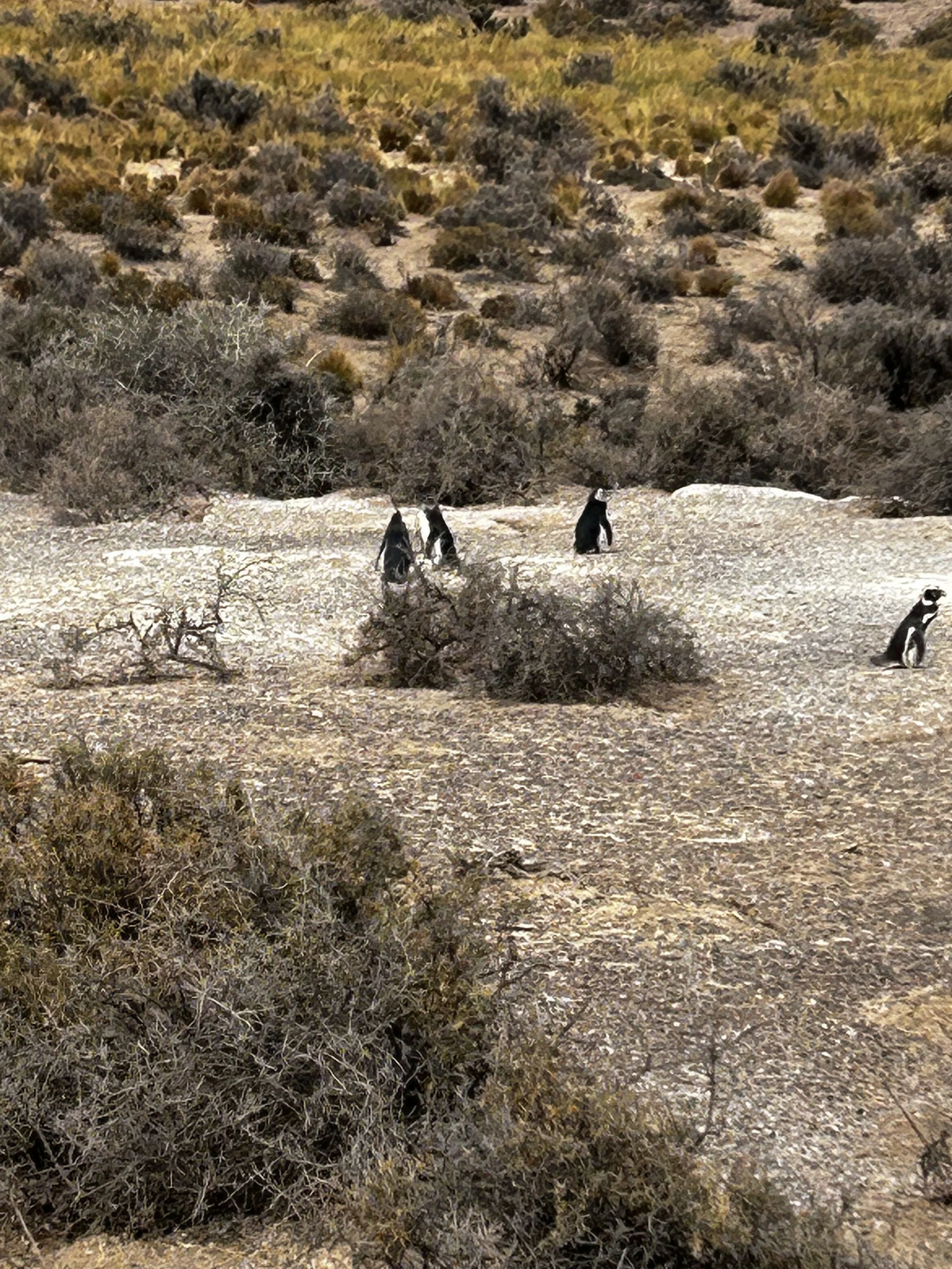
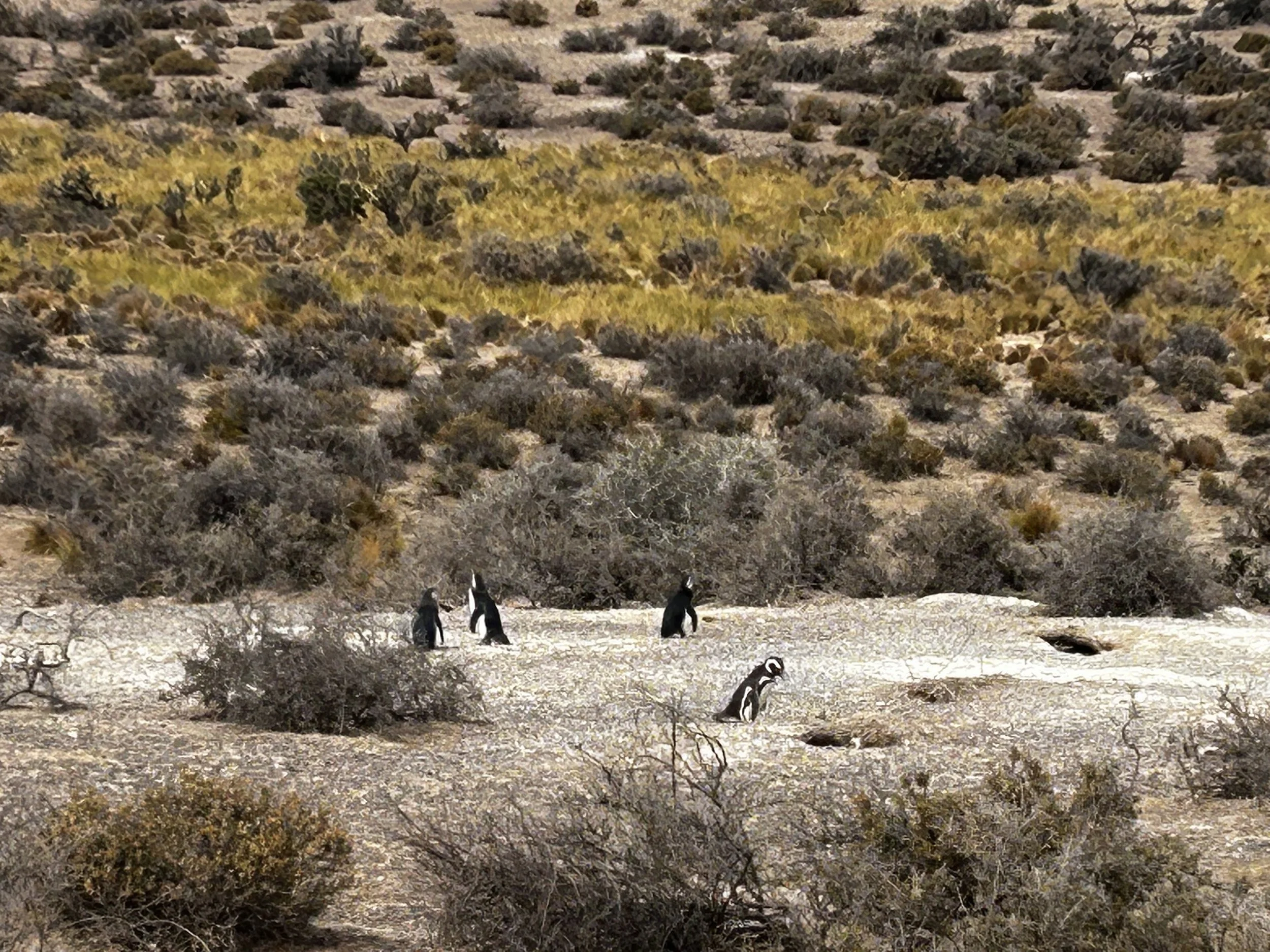
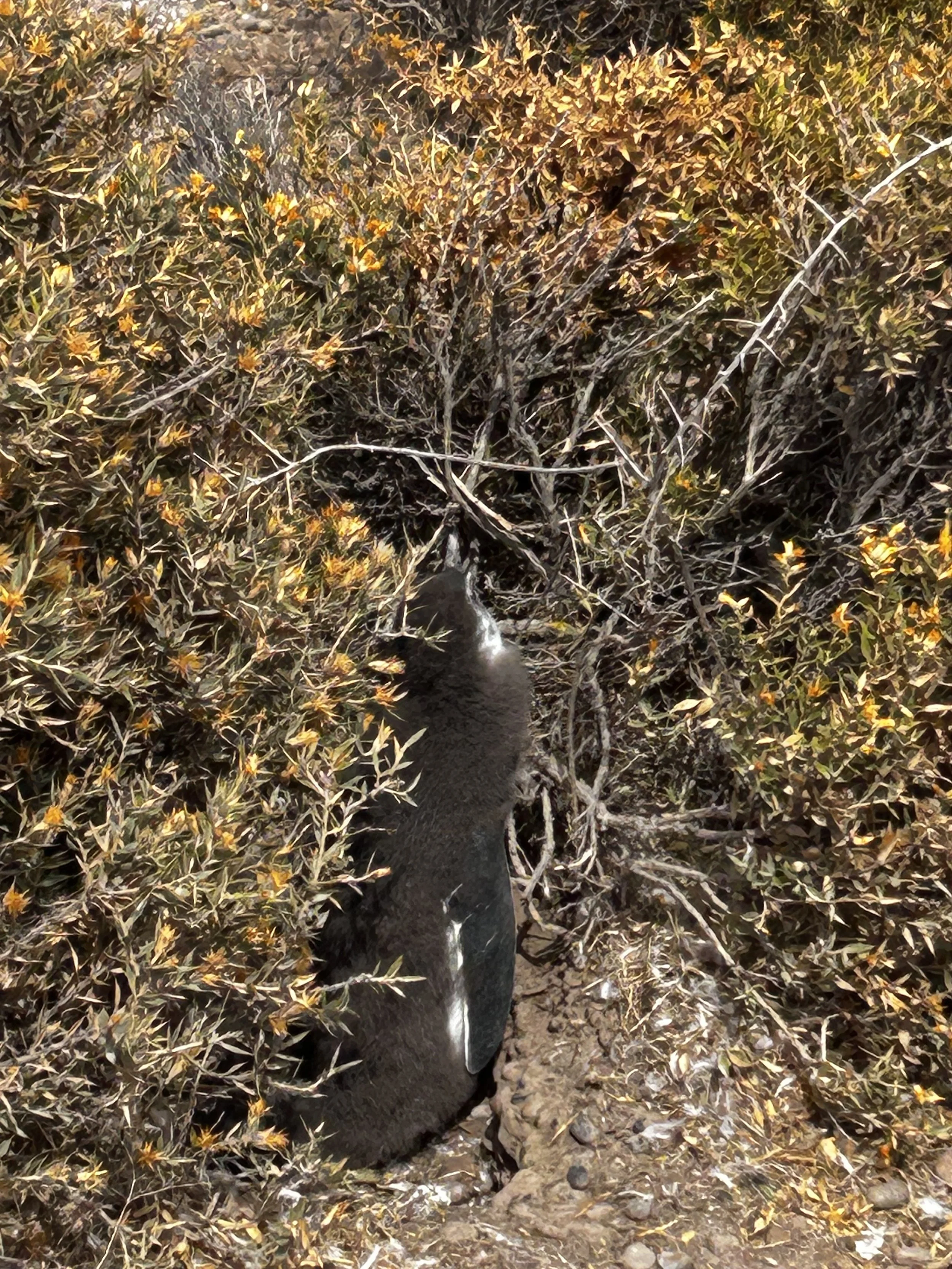
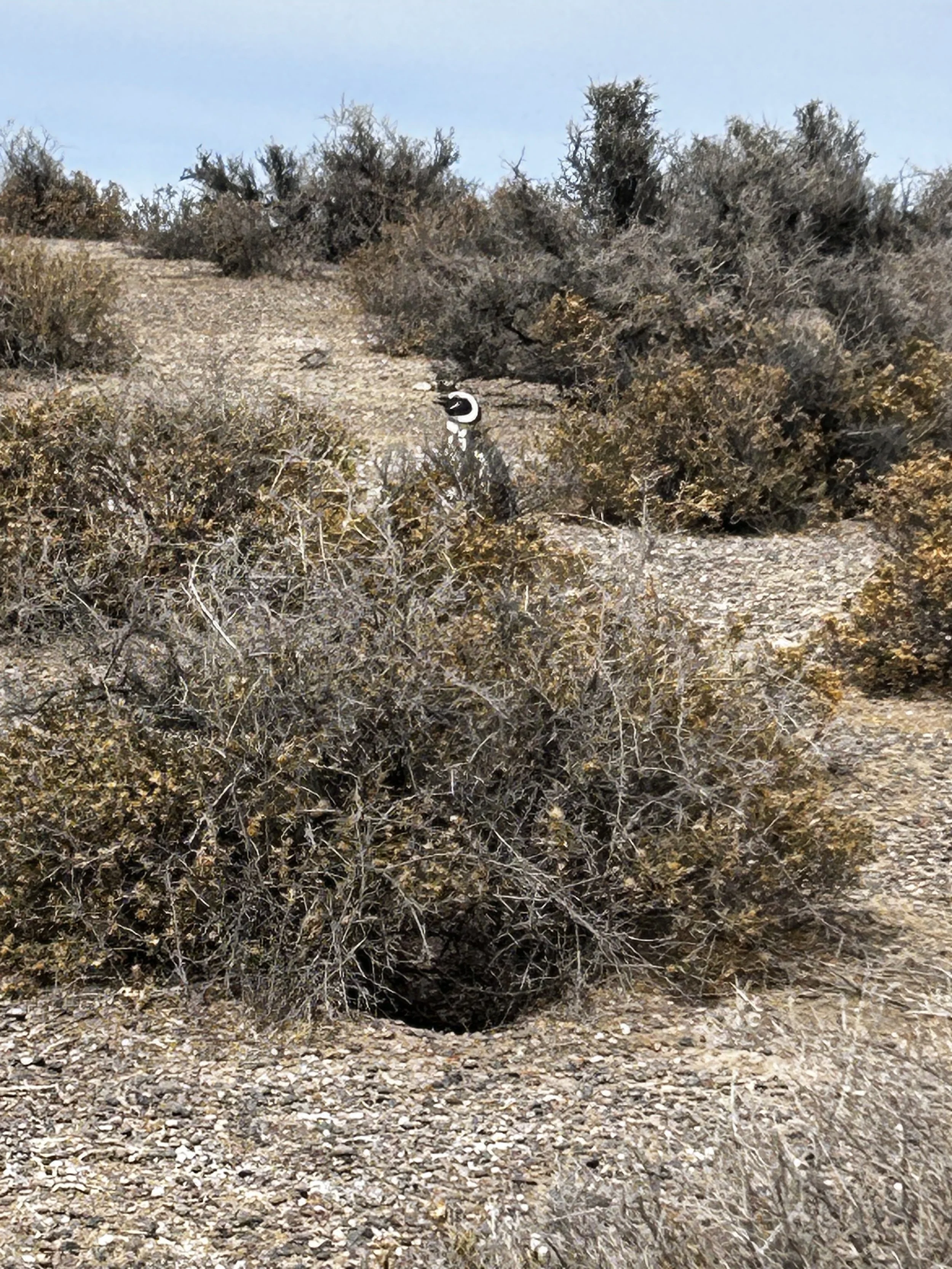
After several sea days, we finally arrived for an overnight port in Puerto Madryn, Argentina. We took an excursion south to Punta Tombo, the largest penguin colony in the world outside of Antarctica. It featured magellanic penguins who, unlike other penguins in colder conditions, burrow into the ground and lay two eggs. The naturalist had warned everyone that there would be so many penguins, the temptation would be to stop and take photos from the beginning. She strongly advised everyone to resist the temptation to photograph from the beginning. Instead she said the best way to get the best pictures and view of the penguins was to go the couple of miles to the trail head first, then take photos coming back. She said the sheer numbers of penguins doing cute penguin things, like walking, were much more plentiful in the back of the site with much much better photo opportunities. So with a plan in mind, and limited time (only 45 minutes!) the bus emptied out and everyone rushed thru the entrance with the trail head as a goal, until they spotted the first penguin under a bush 50 yards from the entrance and stopped to take several hundred photos. I fought through the crowd like Tennyson’s “Charge of the Light Brigade” and ran to the end. There were several hundred penguins at the trail head standing on the beach with a few floating like ducks on the ocean. Penguins were everywhere! It was impressive to see so many and be so close. As my time ran short and I made it back to the bus as my 45 minutes expired, I ran into several persons from our group that had made it nearly 200 yards and were on their 3rd or 4th penguin. Those first few lone penguins close to entrance were photographed more in that 45 minutes than all the Kardashians cumulatively have been in the last 20 years.
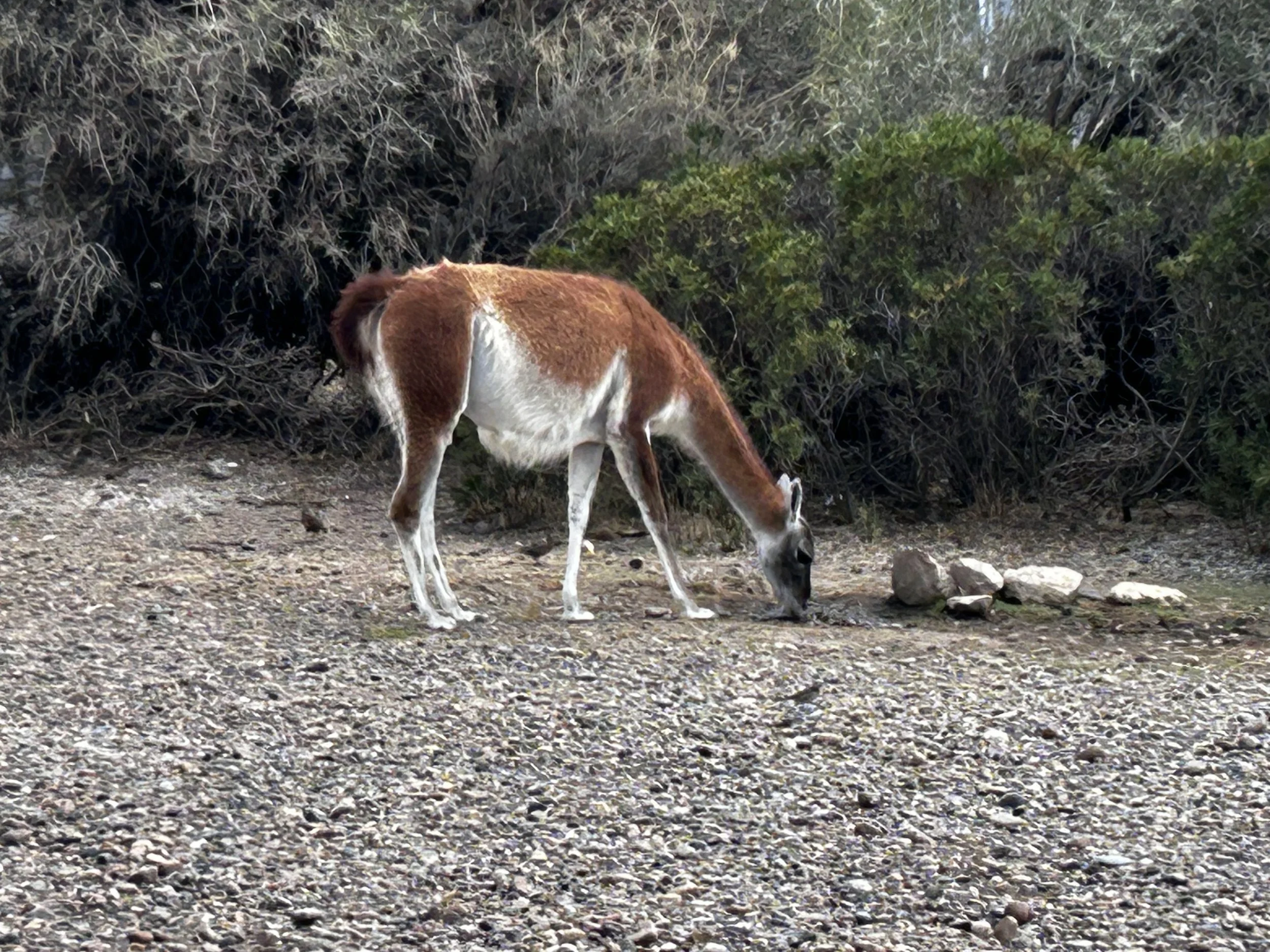
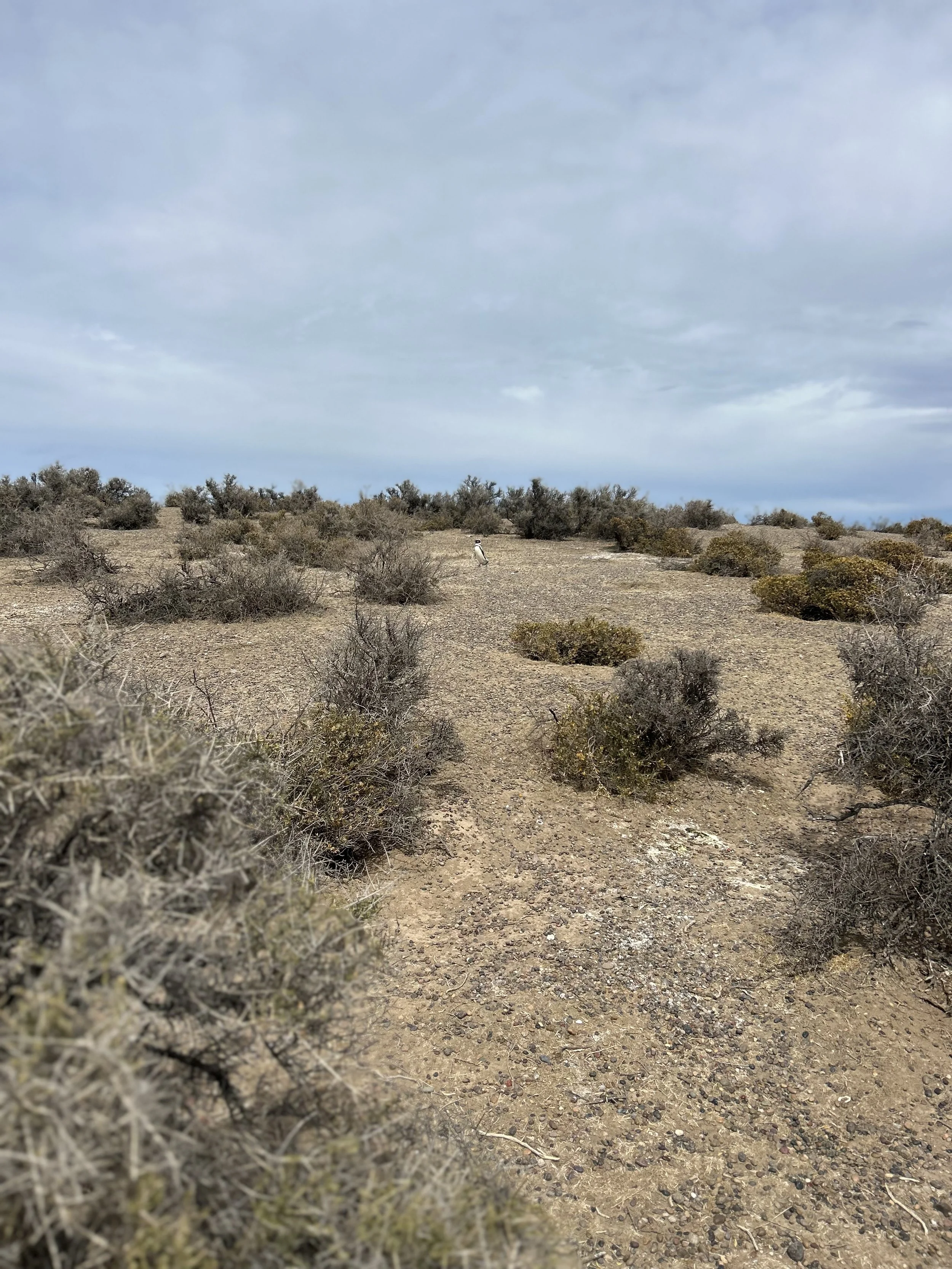
The land around Punta Tombo could easily pass for the land north and west of Midland, Texas into southeastern New Mexico where I have spent a lot of my last 10 years prior to retirement. It is desert covered with small scrub brush. We saw several dozen guanacos on our drive. Guanacos look almost exactly like Llamas or Alpacas, but have never been domesticated nor developed an easy to pronounce name. Another critter we were on the lookout for, but never saw or properly pronounced, was a choique. Choique is a large ostrich or emu-like bird native to the Patagonia region of South America.
By the way, and I have stated this before, and further this is 100% me if you need anyone to blame, but every country and/or tourist site in the world needs to issue a limit on the number of photos any one individual can take. It can be high, say 5,000. But once anyone exceeds the limit, they have to surrender their camera or phone, or else go home. You know who you are! There are always some that would exceed this limit in mere hours. Maybe minutes. With stupid photos of manhole covers, fence posts, feet, or 40,000 photos of the exact same penguin. On one ship we cruised on last April, there was one lady that would take photos of all 300 items on the buffet along with a shot of the accompanying sign stating what it was. For each %$#&^ meal! And this was always during meal times while she held up the lines. She was at the top of my list of people to eat first in the event of a shipwreck and stranded until food ran out.
Montevideo, Uruguay was our next-to-the-last stop. Montevideo translates to “I see the mountain.” For a point of reference if you should travel to Montevideo, there is no mountain. I haven’t Googled the fool who named the town. More importantly, per the BEEN app, Uruguay is my 87th country! Not much unique to see, but a nice city with ornate buildings in the older section, some decorated thoughtfully with tacky graffiti. Reminded me of Athens, Greece, the graffiti capital of the world. Like many tourist cities, some of the streets had been converted to pedestrian-only walkways which allow an easy 1.5 mile stroll from the port to the city square where the old city stopped and the newer section began.
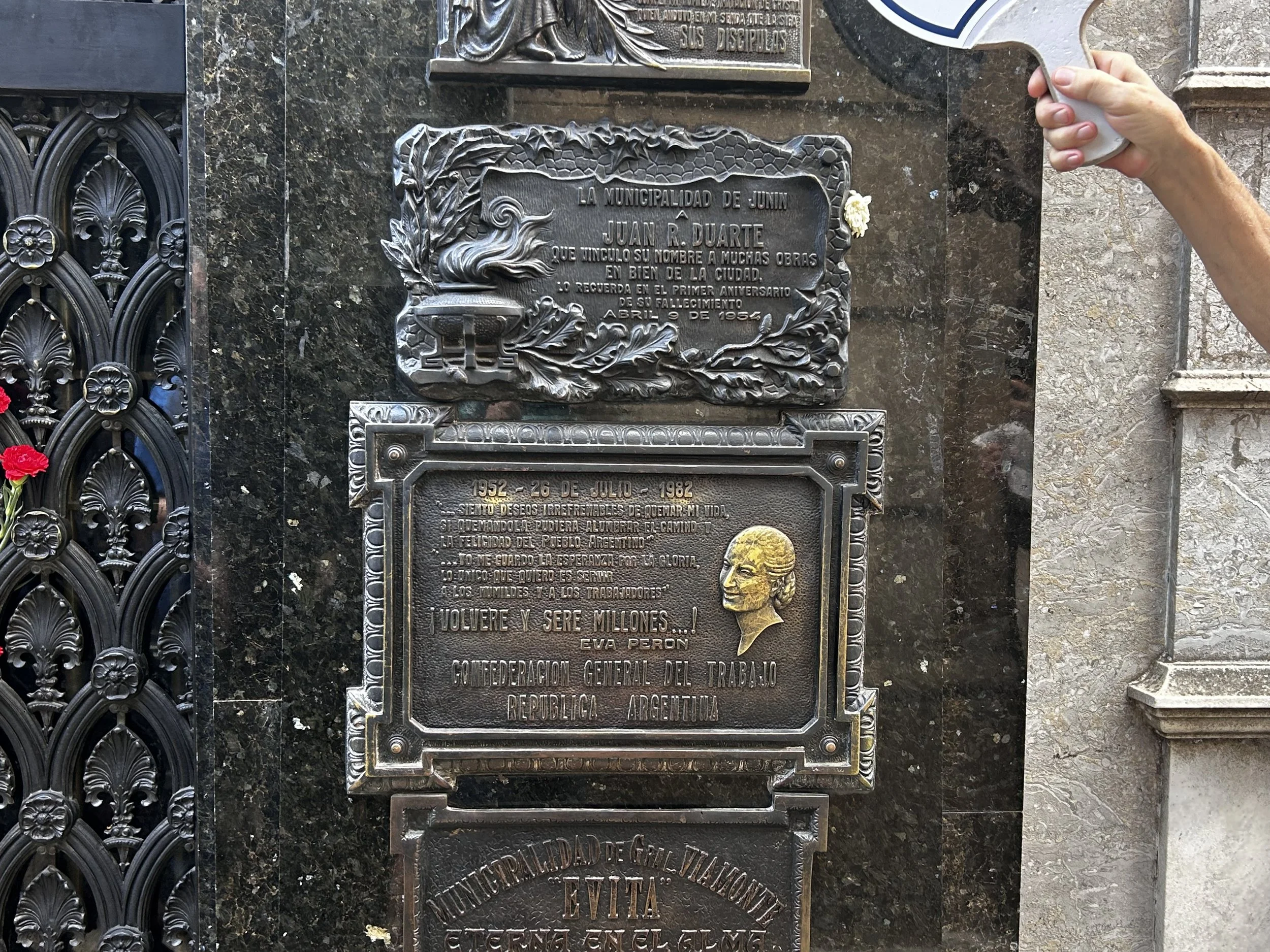
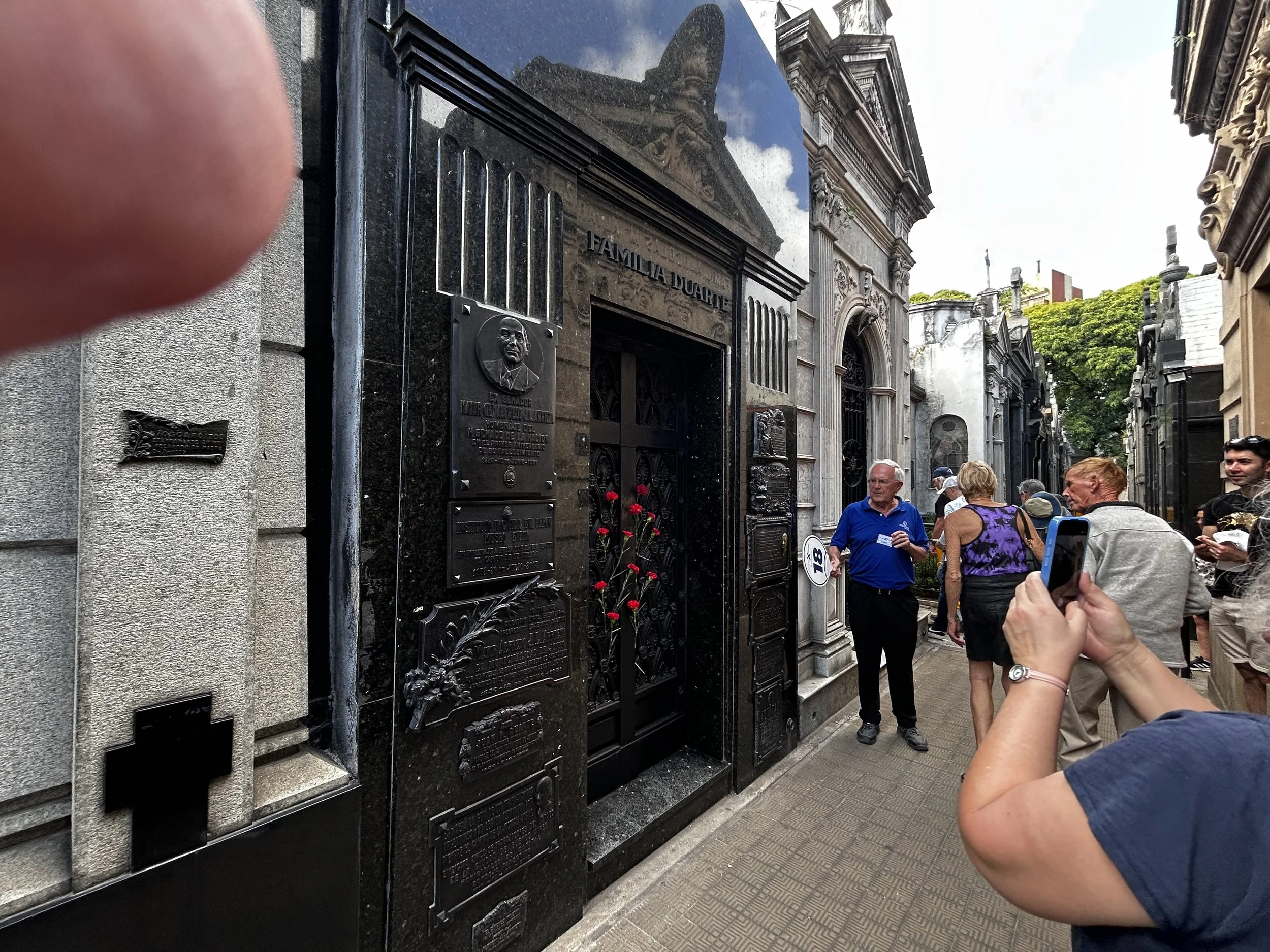
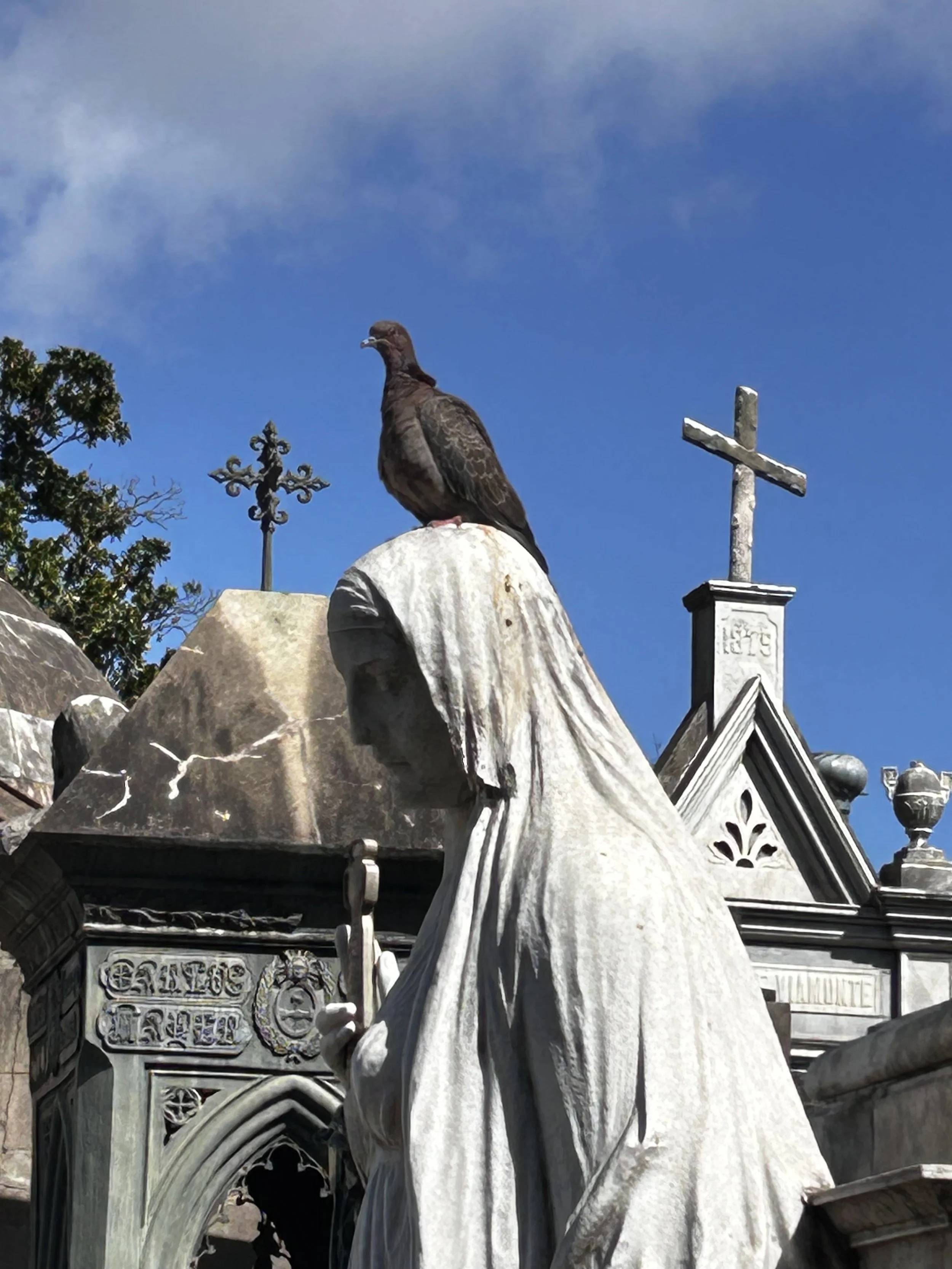
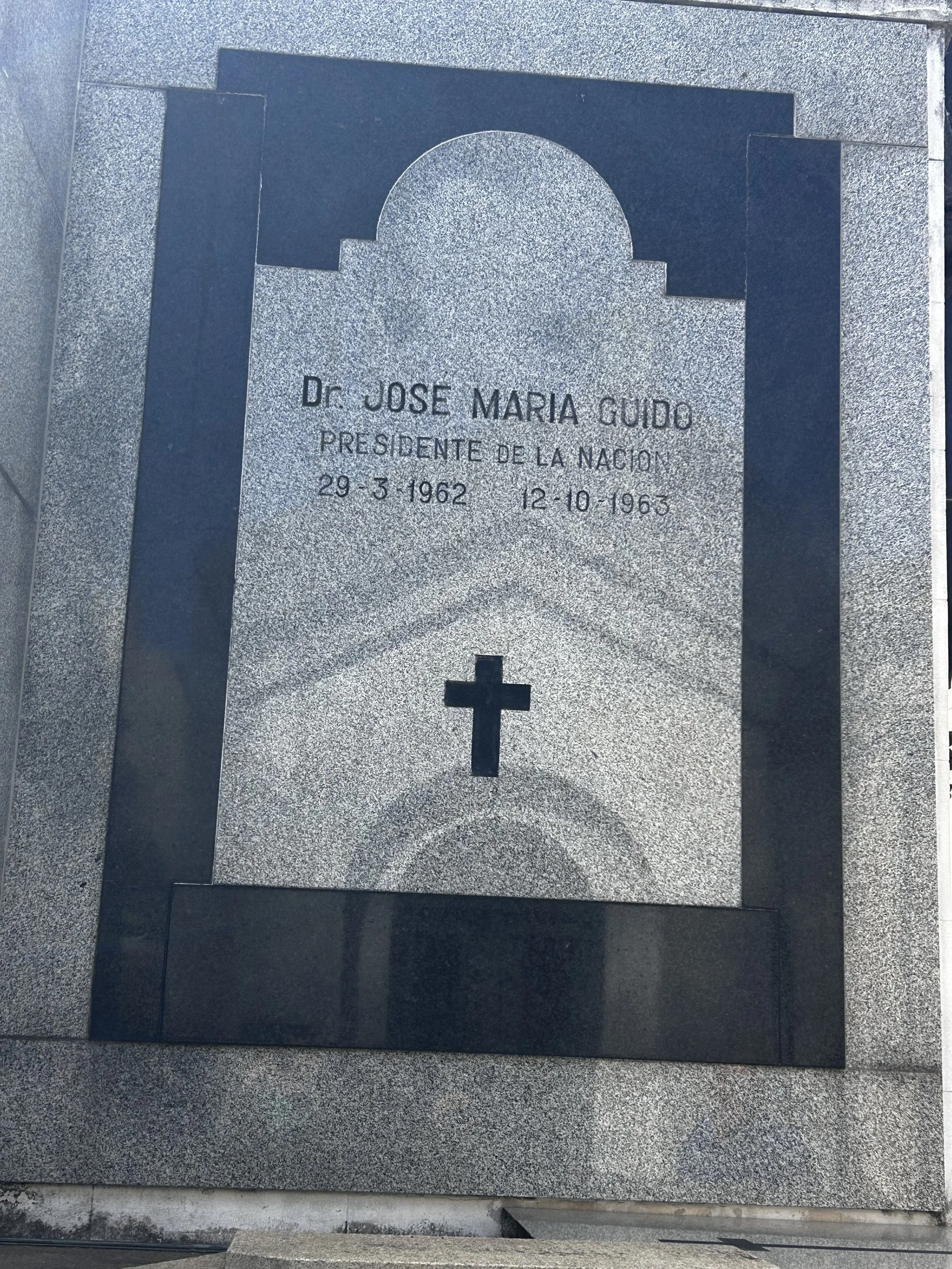
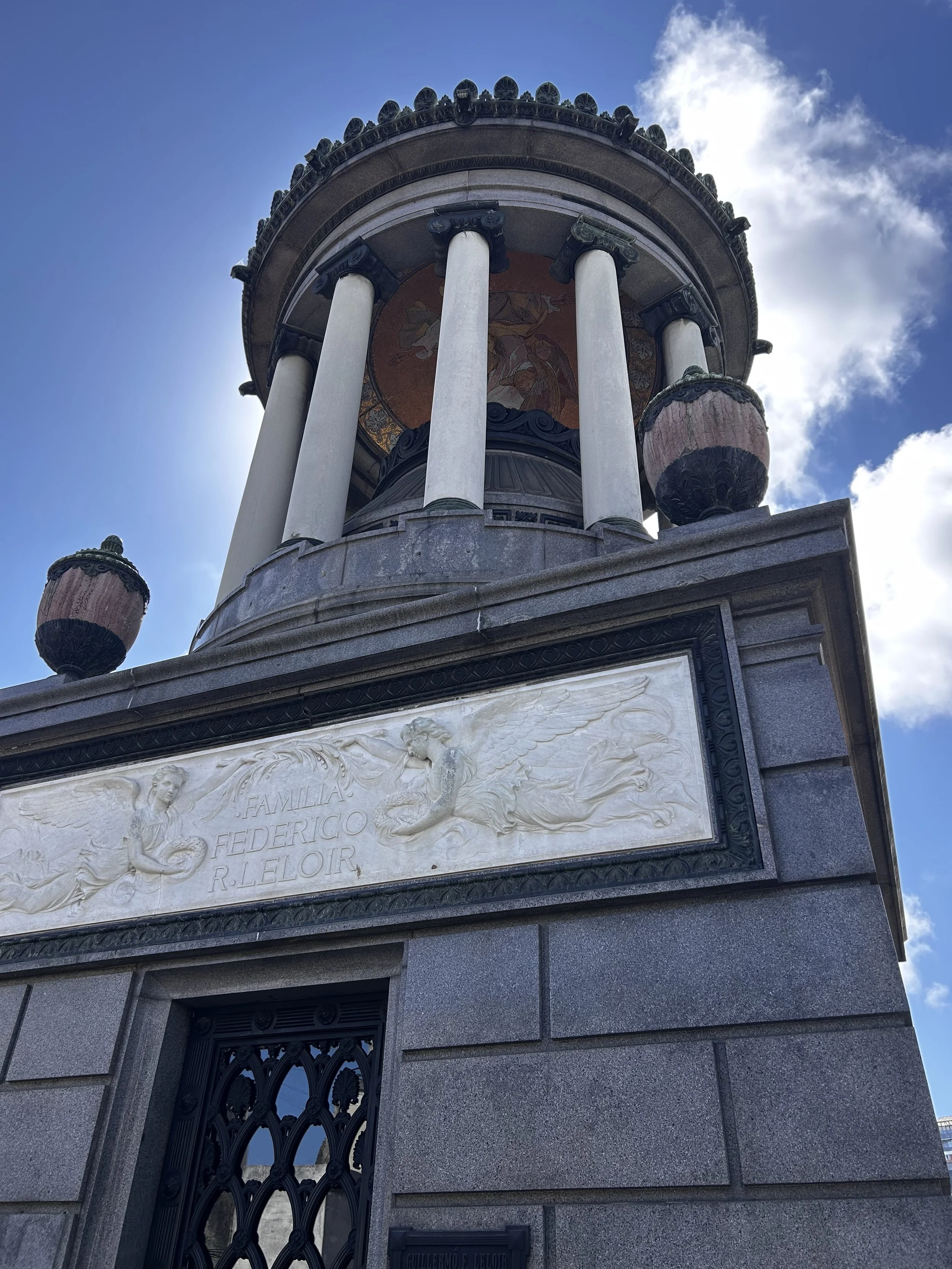
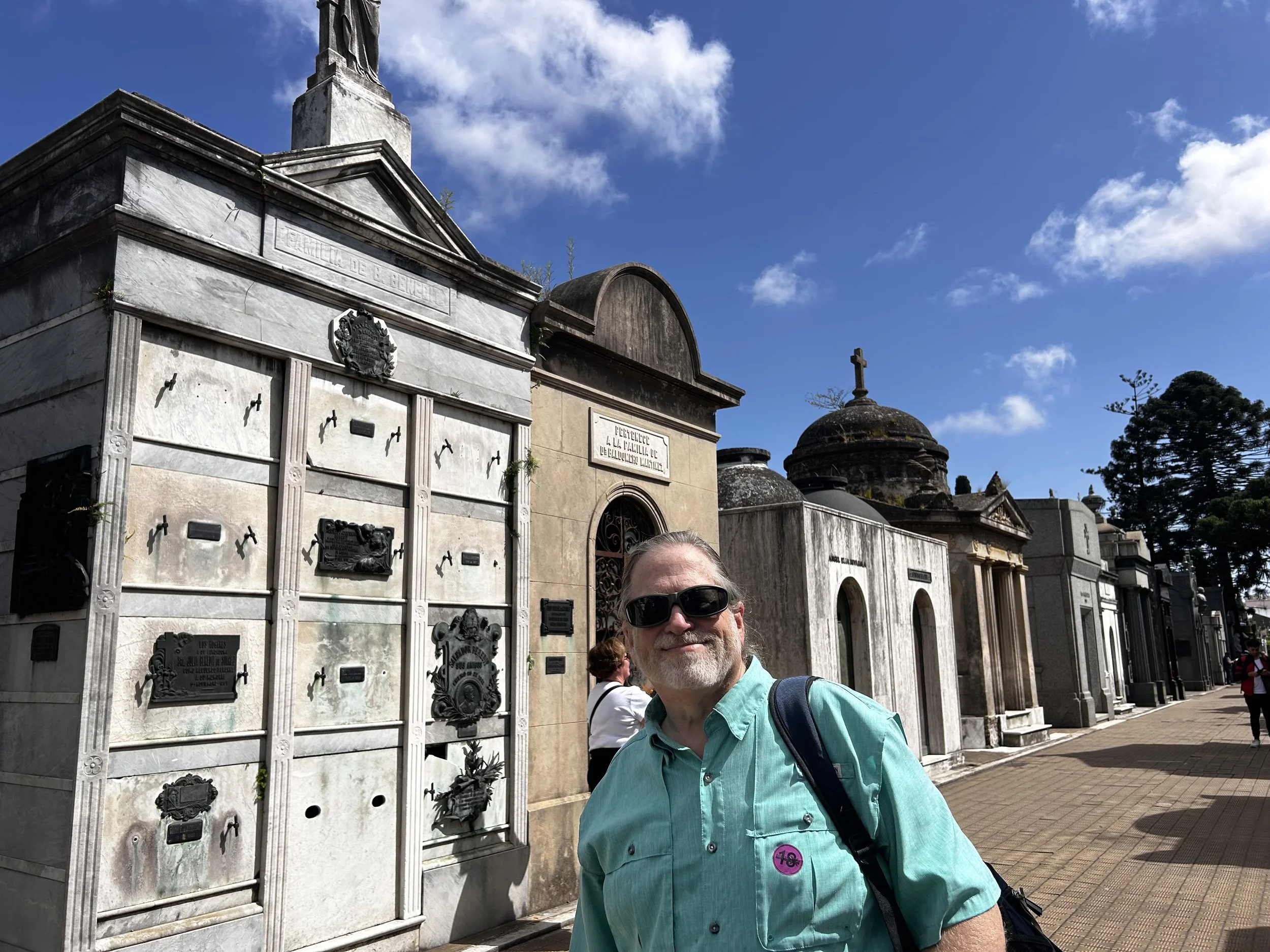
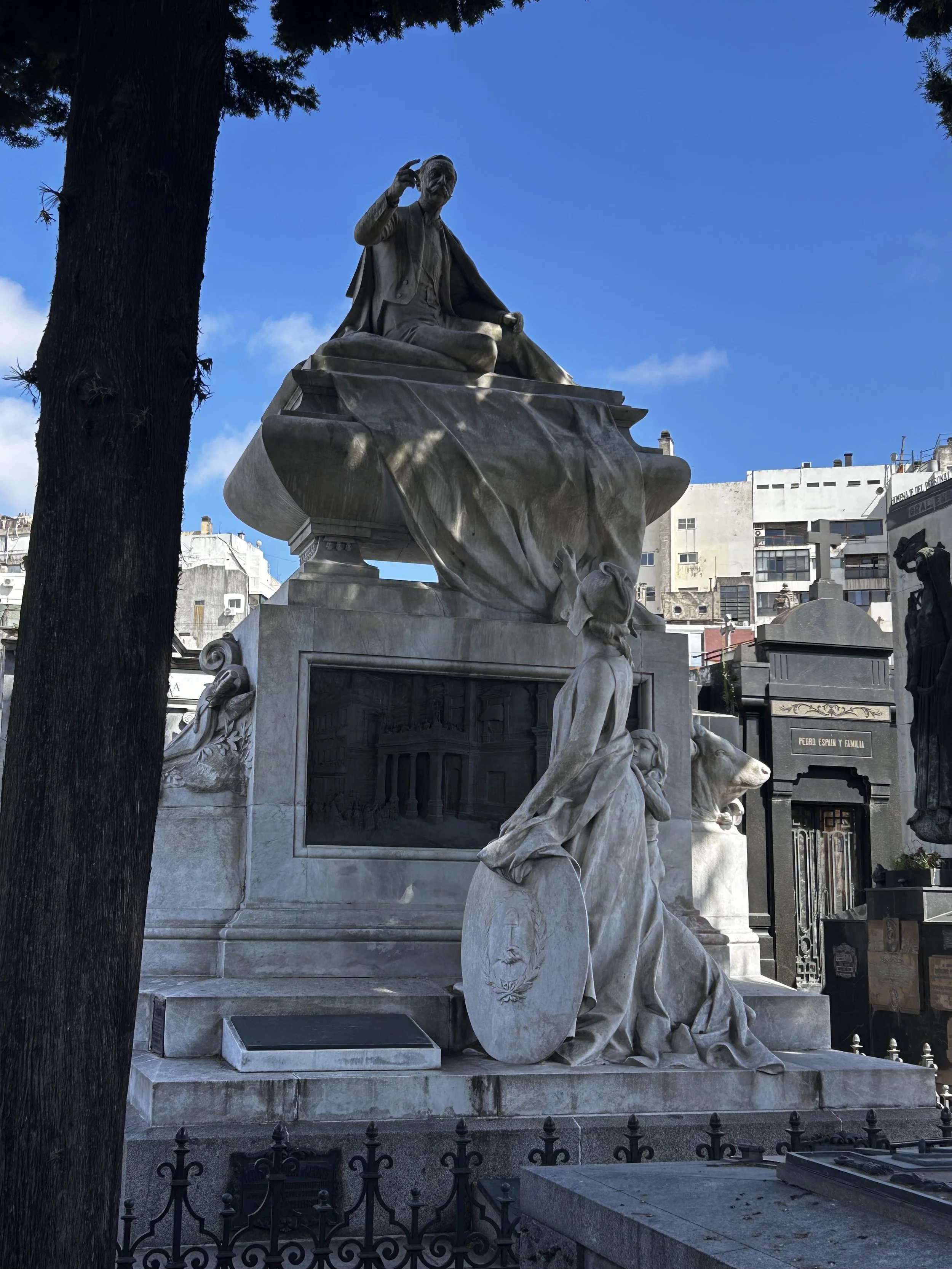
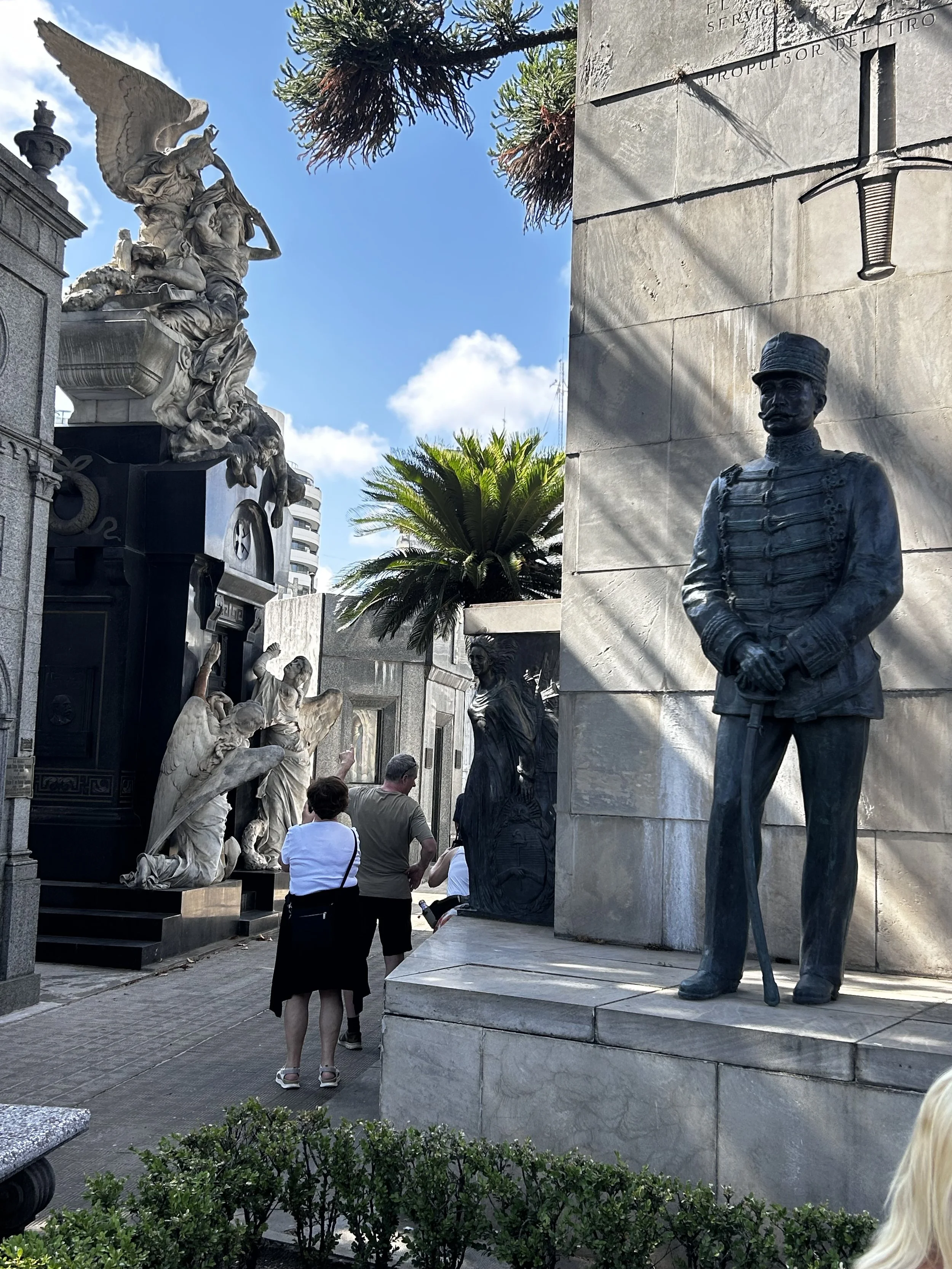
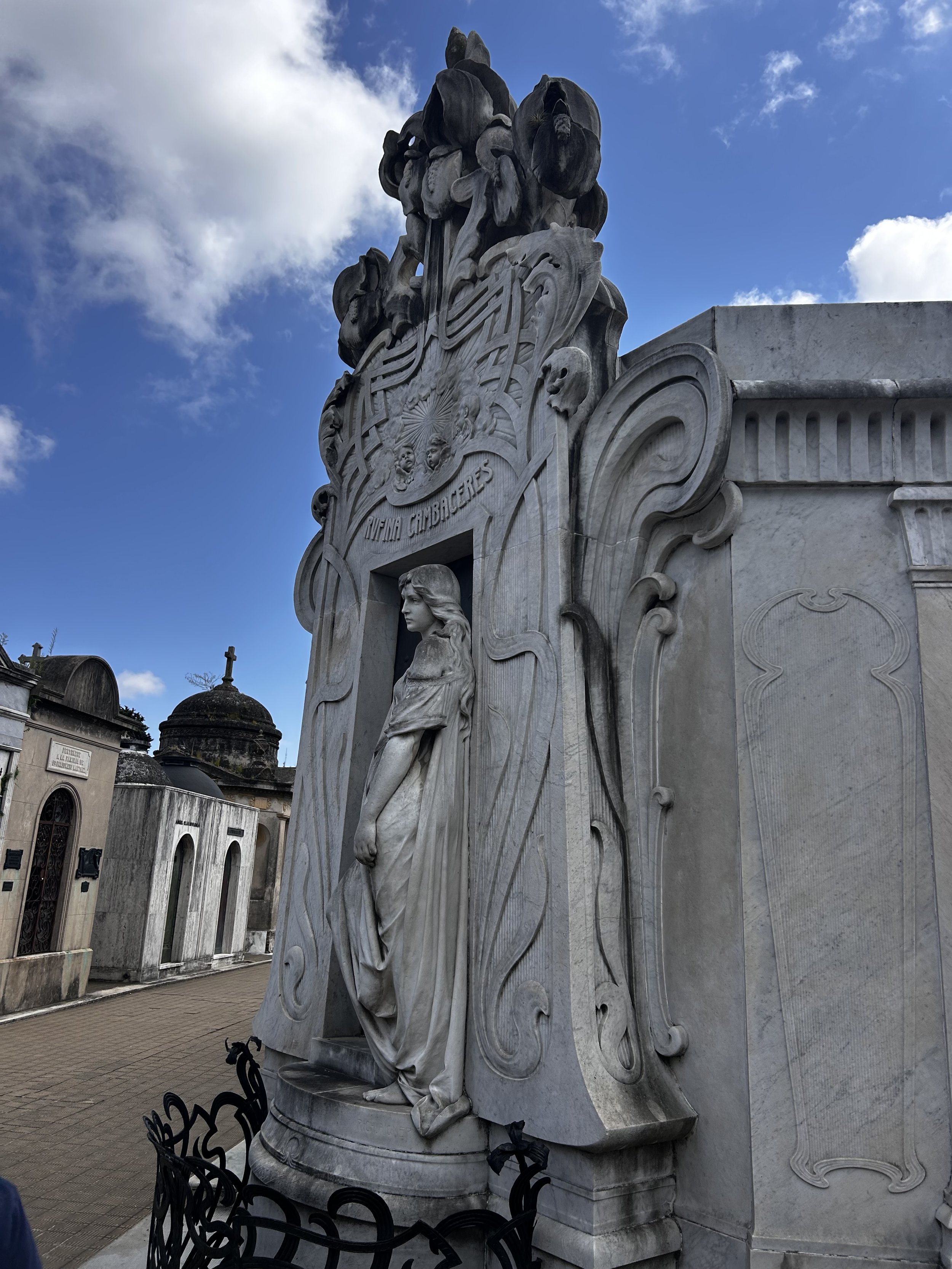
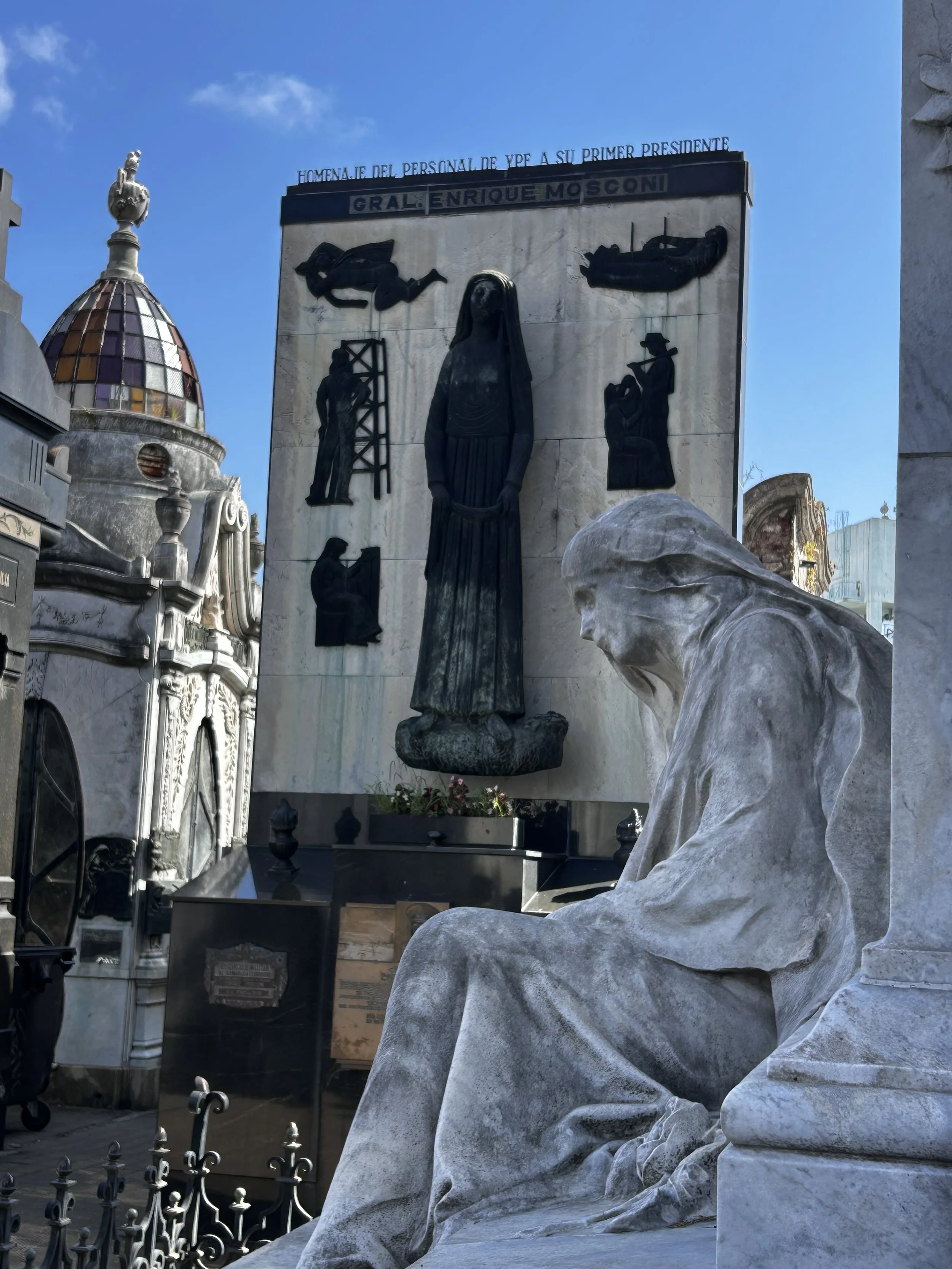
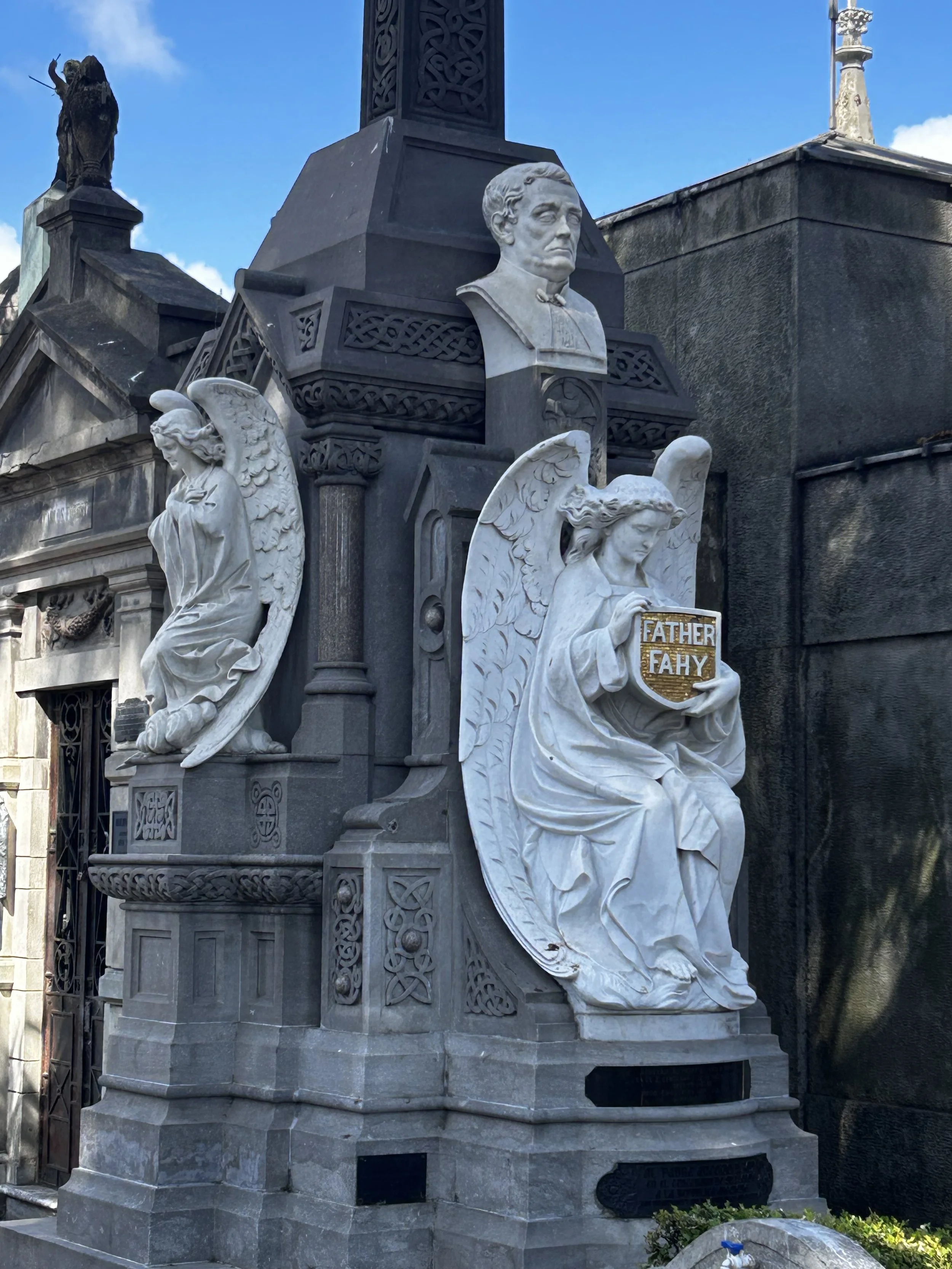
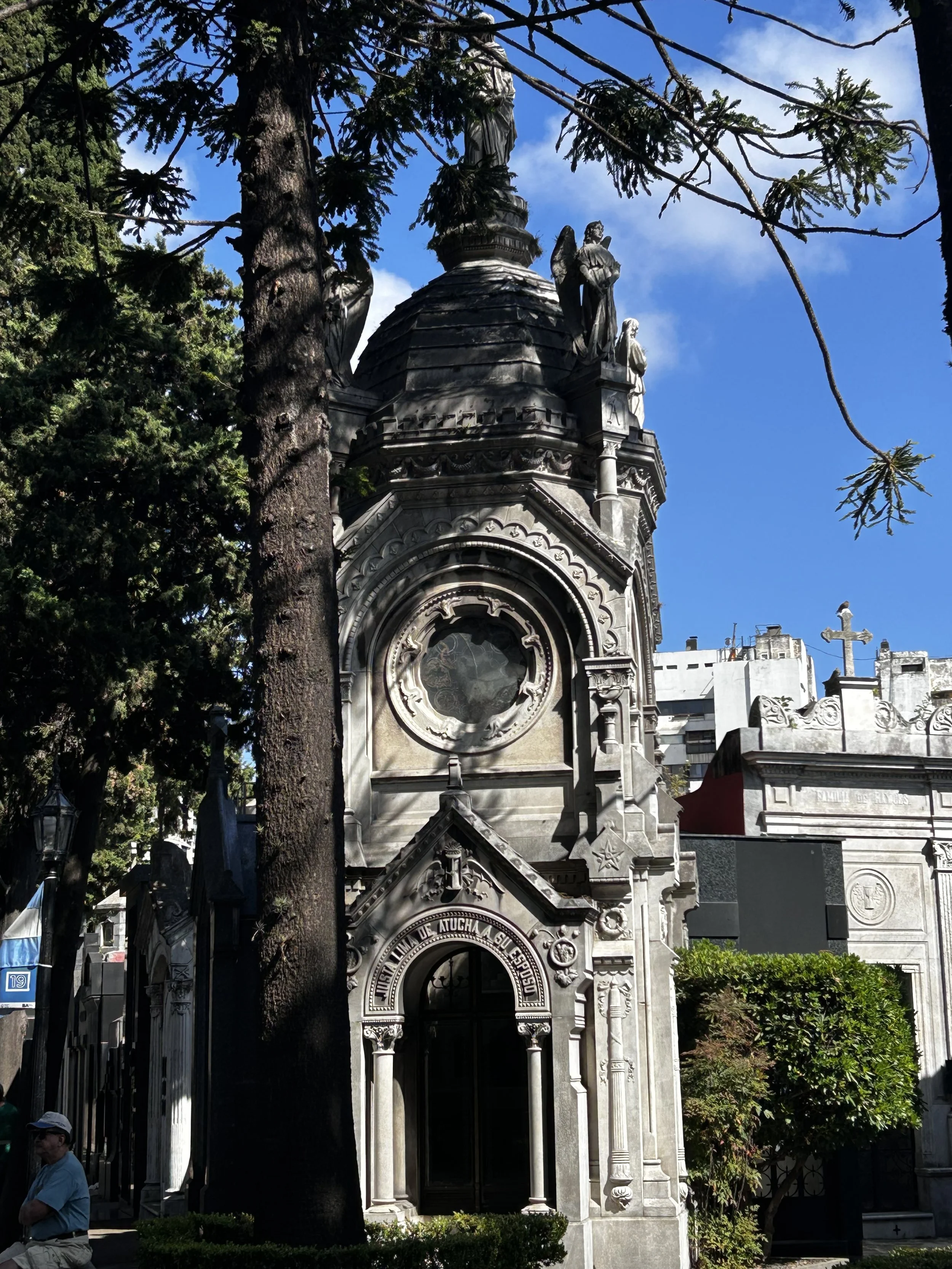
We said goodbye to the Celebrity Equinox and disembarked in Buenos Aires to mass confusion. The cruise port is part of the major shipping port and they bus you around containers and container cranes until you reach Chile. Then they drive back until the reach the cruise building where passengers are going, coming, and crying for mama. We walked back to Chile to catch our bus that toured the city, pointing out the presidential palace, various government buildings, embassies, and then dropped us off at the Cemeterio de la Recoleta, or the Cemetery of Recoleta. This is where the rich build elaborate mausoleums for entire families on plots that average 10’ x 10’. But the crypts cram a lot of space on that small plot of earth, rising up 15’ - 20’ and having underground chambers as well. Those with glass doors show coffins stacked on top of each other. Sometimes the families will re-inter the bodies into smaller coffins as the bodies decay to allow room for the next generation. Eva Peron, a former First Lady of Argentina who is famous for Madonna playing her in a 90’s movie when anyone still cared who Madonna was, is buried in her family’s crypt. The guide said that the cemetery plots are very expensive and annual taxes must continue to be paid. If the surviving family members can’t pay the taxes, the government takes possession and resells the plots. The new owners are responsible for disposing of the existing remains. A really run-down crypt across from Eva Peron’s that was very small, maybe 8 feet wide, sold for $200,000 USD a few years back. One of the family crypts honored a 19-year-old daughter that they accidentally entombed alive. Workers the next day heard some banging on the wooden coffin lid and freed the frightened girl. She actually died for real a week later and the family put her in a marble coffin this time so she couldn’t get out. But they also did a full life statue of her, probably out of guilt.
What do you think the #1 ethnic/nationalist group in Argentina is? Would you believe the Italians make up 47% of the population? After the fall of the Roman Empire, Italy became split up into several nation states. As the unification of these states into the country we know today zenithed, many Italians relocated to the west and Argentina was one of the major recipients. Spanish decedents are the second national heritage, but command the language.
Finally we arrived at one of, if not the most, inefficient airports in the world, EZE. The United luggage belt wasn’t working and there was no contingency plan. Lines went everywhere and no one was providing any guidance. We spent over an hour trying to just drop off our self-tagged luggage, another hour getting thru security and immigration, then about 45 minutes trying to board (group 2) while our carry-on luggage was hand-scanned for liquids. This was after the security check at the x-ray machines where there was a sign saying liquids were allowed in your carry-on bags and not to pull them out or dispose of them. This is socialism in action. Create jobs for about 200+ people (seriously, 10 per gate at boarding time, seven days a week, maybe 18 hours per day) to look for liquids instead of having the first security just screen all liquids out. By the way, yes I am slamming United specifically. I had a friend that flew out on American about a half hour before our scheduled departure that self tagged his luggage. His time from going to drop off luggage to the gate was about 20 minutes. Mine was just over two hours. So perhaps I need to take some of that back about EZE and blame United on disorganization and complete lack of contingency plans when something happens.
Lots of disappointments on the trip with the port call at the Falklands canceled and that opportunity to see different breeds of penguins. Then the excursion to the penguins at Punta Tombo cut to only 45 minutes due to poor planning by the tour company and road construction. Then the fiasco with United at the airport. But overall a great trip. Ushuaia, Bay of Paradise, and Punta Tombo were all awesome. Save up those pennies (I have suggestions to help with this if you read Travel Cheaper and Loyalty Points on my website) and go on an Antarctic Cruise!
Warmest regards,
Keith